Plenty of games ask you to fight to the rhythm. Tied to the Beat has a slightly stranger proposition: what if the actual words in the song started messing with you too?
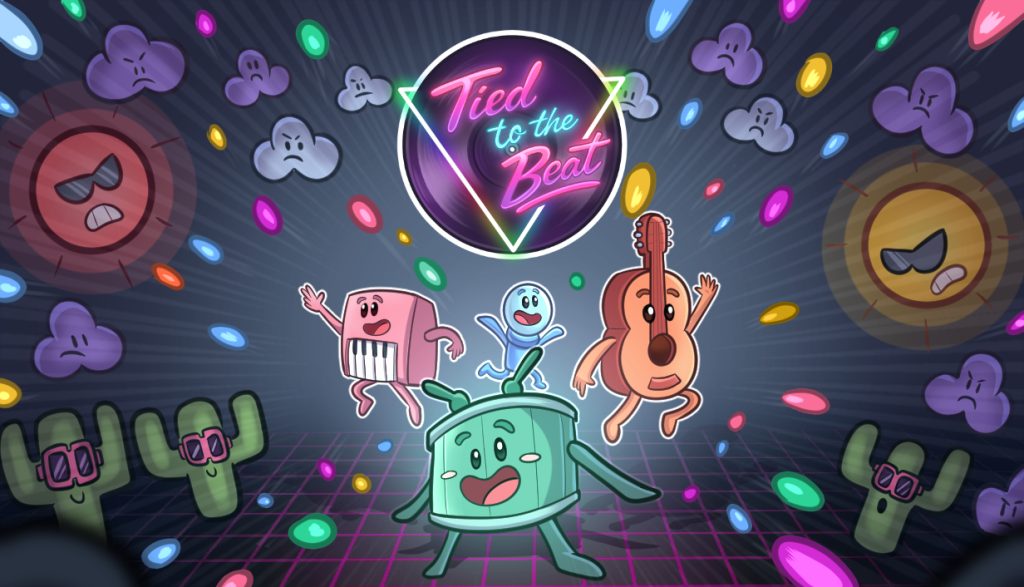
Created by solo developer Javier Lianes García under Lianes8 Studio, Tied to the Beat is a music-driven arena survivor where players take control of a musical instrument, build up attacks and attempt to survive until the song ends.
The twist is that lyrics are not simply something happening in the background.
Words appearing in a track can trigger effects across the battlefield, changing what is happening around you as the song progresses. The full game contains more than 1,000 of these lyric-driven effects, alongside eight playable instruments, four themed worlds, more than 50 included tracks and the ability to bring your own music into the game using synced lyrics.
Players can even share custom tracks through Steam Workshop, meaning Tied to the Beat has the slightly terrifying prospect of having to cope with whatever the community decides constitutes suitable battle music.
Tied to the Beat recently reached version 1.0 following a relatively short Early Access period, so we caught up with Javier to talk about making language part of combat, designing around music he cannot predict, building an entire engine himself, and why some of the game’s included tracks come with an AI-generated label.
Tied to the Beat trailer
Before we make someone’s favourite song actively hostile, could you introduce yourself and tell us a little about your background? How did Lianes8 Studio come about, and where did the original idea for Tied to the Beat begin?
I’m Javier Lianes, and I’ve been working as a software developer for nine years, at companies like Indra, Airbus and Worldline. I’ve always loved video games, and Lianes8 Studio is where I make my own.
Tied to the Beat started with something very simple: I wanted to play a game while listening to my own music on Spotify. I started looking into whether I could use the Spotify API to make a game react to whatever I was listening to, but that wasn’t possible. So I turned it around: if the game couldn’t follow Spotify, it would follow the songs themselves, beat and lyrics included. That’s where the idea came from.
Rhythm games normally care about beats, tempo and timing, but Tied to the Beat also pays attention to lyrics. What made you look at the actual words in songs and decide they could become part of the battlefield?
There are a lot of rhythm games out there, and most of them work with the beat and the timing. But I couldn’t find any game where the words of the song were the thing deciding what happens in the gameplay. That felt like the part nobody had tried yet, so that’s where I wanted to go with Tied to the Beat.
The full version of Tied to the Beat has more than 1,000 lyric-triggered effects. How does that system actually decide what a word should do? Are effects based on literal meaning, categories and keywords, or is there considerably more interpretation happening behind the scenes?
Most of the time it’s literal. Take fire: “fire”, “burn”, “burning”, “burned”, “burns”… all of those end up as flames on the battlefield, and the enemies around you catch fire. Words are grouped by meaning and by their different forms and conjugations, which is why the real number is much bigger than 1,000. If you count every variation, it’s around 5,200 words.
For each lyric line, the game picks one word. Take “dancing in the rain”: if it picks “dancing”, the enemies start dancing. If it picks “rain”, it starts raining, and the enemies slow down. If it lands on “in” or “the”, those are generic words with generic effects, although each one still has its own animation. Generic words are 50% less likely to be picked, and they never trigger on two lines in a row, so the song’s meaningful words are the ones that really shape the fight.
Every effect in Tied to the Beat also comes with its own animation, so you can actually see the lyric happening on screen, not just feel it in the numbers.
That must create some wonderfully strange combinations when players import their own songs. What is the funniest, most chaotic or completely unexpected lyric-to-gameplay interaction you have encountered so far when testing Tied to the Beat?
That’s the fun part of the game: you can play the same song 20 times, and it’s never the same run, because the word picked on each line changes every time.
The funniest moment was actually a balance problem. Some words make you invincible for a moment, and if you chained a few of them in a row, you were basically immortal. I had to add cooldowns and a few similar rules so the lyrics stay exciting without breaking the game.
Players can bring in custom music with synced LRC lyrics, which means you are designing around songs you could never possibly test yourself. How do you make sure a three-minute pop song, an eight-minute metal track and something completely experimental can all produce a playable run?
The game can generate the LRC file from an MP3 by itself. The algorithm isn’t perfect, so it asks for a minimum number of recognised words. If a song doesn’t reach that minimum, the game offers to use it as a soundtrack instead, and then the effects come out randomly instead of from the lyrics.
Songs can be anywhere from two to eight minutes long, and everything in a run works in percentages of the song, not in fixed seconds. In a two-minute song, the enemies scale up faster; in an eight-minute one, they take their time, so both end up balanced.
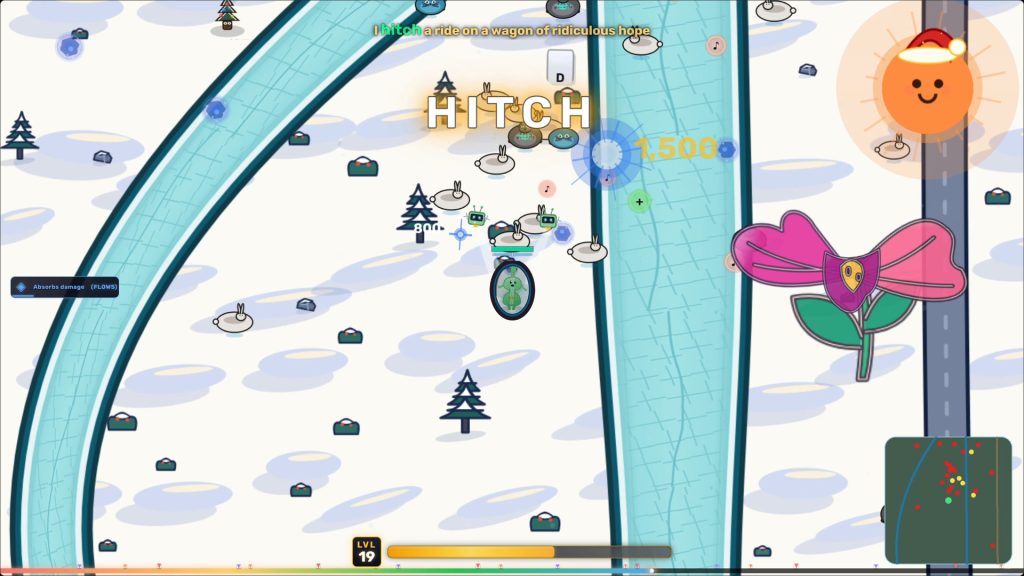
There are eight playable instruments, including guitar, drums, violin, piano, flute, trumpet, tambourine and microphone. Are these essentially different character classes, and how much does choosing an instrument change the way somebody approaches a run?
Yes, they work like classes. Each instrument has its own stats and its own way of attacking; they’re not just skins. The flute and the guitar fight up close, the drums throw three drumsticks at a time, one instrument has attacks that bounce around, and another has attacks that come back to you. So picking an instrument really changes how you move and how you play the song.
Music-based games can face an awkward balance problem because players naturally want to use songs they already love, but those songs were not written with your difficulty curve in mind. Have you ever had to choose between accurately reacting to a track and creating a fair game around it?
Not really, because Tied to the Beat is built so I don’t have to choose. As I said, everything in a run scales with the length of the song, and the effects the words can trigger are more or less balanced. Even if you tried to cheat by editing the LRC file so it’s full of only good words, those effects have cooldowns, so you can’t stack them forever. I tried to think of almost every way a song could break the game.
You built Tied to the Beat using your own custom engine rather than something like Unity or Godot. For a solo developer, that sounds like deliberately volunteering for considerably more work. Why did you take that route, and what can your engine do specifically for Tied to the Beat that made the investment worthwhile?
I chose it because I wanted to really learn how games are made, from the ground up, instead of putting one together from assets and tools made by other people. Tied to the Beat, Pidgeon Pocket and Maneki Mania are all built on my own engine, and it took years of headaches to get there.
It’s been a really nice adventure, and I learned a huge amount from it. But the engine has its limits, especially on the graphics side, so for my next games I’m moving to Blender renders and Godot. It was the right way to learn, and now it’s time to take the next step.
Tied to the Beat spent around ten weeks in Early Access before reaching version 1.0, which is much shorter than the six-to-twelve-month period originally suggested on Steam. What made you decide it was ready considerably earlier than expected, and what changed most because of player feedback during those weeks?
Honestly, because I had done a lot of the work before Early Access even started. I really thought it would take six months, but everything went smoothly. Things started falling into place: I got Tied to the Beat running at a stable 144 fps, and getting it working on Steam Deck turned out to be really easy. Once all of that was in place, there was no reason to keep it in Early Access any longer.
And the community changed a lot of things. Friends, people on Discord and streamers kept telling me “it would be nice if this menu did this” or “it would be great to have that”, and I added it. Someone said it would be cool to have a bestiary like in Monster Hunter, so I added a bestiary. A big part of the game today comes from them.
Steam Workshop support allows players to publish songs complete with audio and synced lyrics. That is fantastic creatively, but music rights can become complicated very quickly. How are you approaching copyright and moderation when users can potentially upload material they do not own?
Tied to the Beat makes it clear in five different places that whatever goes up to the Workshop is the responsibility of the person who uploads it. People have already started sharing songs, and honestly it’s great to be able to play tracks that other players have uploaded. So far moderation hasn’t really been needed. Mostly it’s been me thanking the people who share their music.
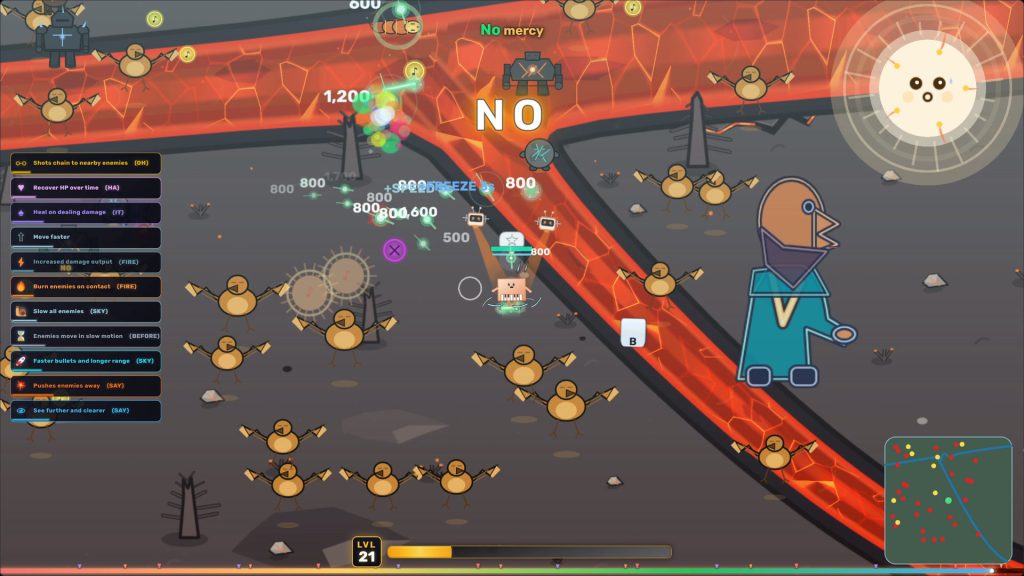
Tied to the Beat supports more than 30 interface languages, while the entire central mechanic revolves around recognising words. Does the lyric system understand languages other than English too, and how difficult is it to make a word-driven mechanic work across completely different vocabularies and writing systems?
This part is a bit crazy. Tied to the Beat supports 31 languages, and they all understand each other. Going back to “dancing in the rain”: if the word picked is “rain” and you’re playing in Spanish, you’ll see “lluvia” on screen. Every word is translated instantly, so it doesn’t matter which language your LRC file is in; the game understands it straight away.
My publisher for Asia did the Asian translations. I did Spanish for Spain and Latin America, English, Portuguese and Brazilian Portuguese myself. For the rest, I used tools like Google Translate, so to be honest, a lot of those translations are quite literal, and some words might not carry exactly the meaning they should. But it’s still much better than leaving those players out.
You disclosed that some included tracks used in Tied to the Beat were labelled as AI-generated by their original creators on Pixabay. Roughly how much of the soundtrack does that represent, and when selecting those tracks, did knowing they were AI-generated affect your decision at all?
To be honest, when I first picked those tracks, I didn’t realise they were AI. It was only later, looking at them more carefully, that I saw some of them were labelled as AI-generated by their authors. I haven’t counted them one by one, because what I was checking was that they were free of copyright claims, but I’d say it’s roughly half and half.
At that point I thought about it again, and I had three options. One, pay for the music, which was impossible for a solo dev with no budget, especially after spending a lot on the game’s art. Two, use songs made by people but with copyright, or with warnings about possible infringement. Or three, keep music from artists who label it as AI-made but release it free of copyright claims, so nobody streaming or recording the game would ever get a strike for it.
Is it the best solution? I don’t like AI or how it’s used, but for this game it was the only viable option. And the rest of the music in the game, the soundtracks, has no AI at all.
There is an interesting distinction here because you did not generate those songs yourself; you sourced music that its original authors had already labelled as AI-generated. But some players would argue that using those tracks still supports the same ecosystem and potentially replaces human musicians. How do you view that criticism?
I think it’s a fair criticism, but it’s the reality. In a game that needs a lot of tracks, with zero budget, there was no other way. I didn’t have a budget for art either, but spending 200 euros on art and another 100 on Steam capsules is doable. Licensing 50 songs would have cost tens of thousands of euros. I understand the criticism, but I think this was a fair decision.
There are also unresolved questions around what music generative models were trained on and whether the musicians behind that material consented to its use. When sourcing royalty-free assets, how much responsibility do you think an indie developer has to investigate provenance beyond checking that a track is legally available under its stated licence? And would you consider allowing players to filter or disable AI-labelled tracks if they would rather avoid them?
I understand all of that, and yes, it’s obvious that these models are trained on other people’s work without asking. But we come back to the same point: what do I do, not release the game at all?
What I can do is give players the choice. Tied to the Beat lets you play your own music, with no limit. If you’d rather avoid the AI-labelled tracks, you don’t have to touch any of the included songs. You can play only your own music and still get 100% of the achievements and finish the whole game.
Finally, Tied to the Beat can now take somebody’s own music collection and turn it into enemies, attacks and unpredictable arena effects. What is the song you personally keep coming back to when testing the game, and is there any track you have discovered is an absolutely terrible idea to play?
I play the One Piece openings on loop. For me, they feel like home. I also put on The Lord of the Rings soundtrack and let the game play itself in DJ Session mode. That’s pure peace of mind for me.
As for a terrible idea: any song packed with insults. The game penalises swear words and slurs, so if one comes up, it slows you down and slows the screen down too. Play a track that’s full of them, and it becomes practically unplayable. That one is on purpose, though.
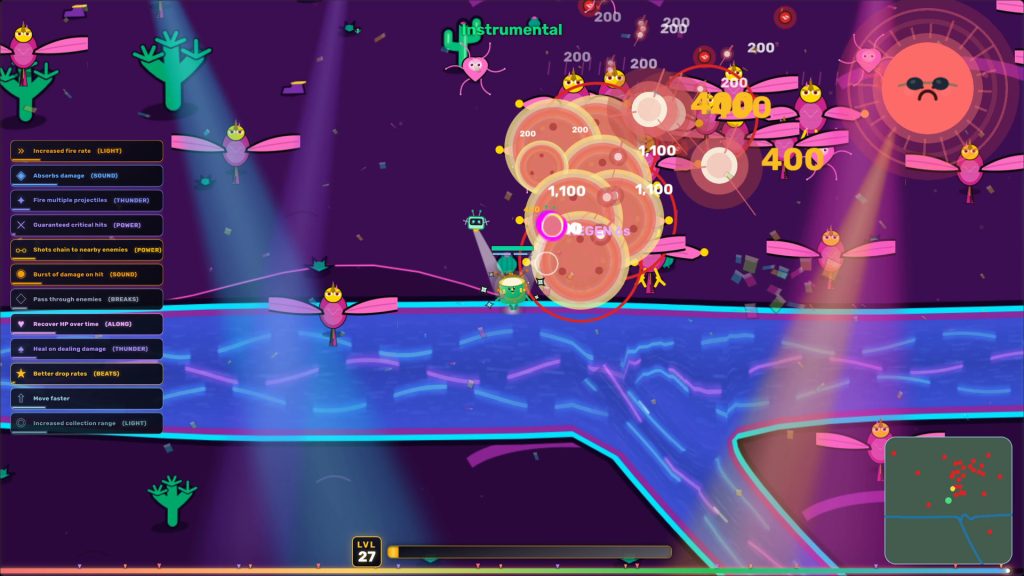
A big thank you to Javier Lianes García for taking the time to speak with us about Tied to the Beat.
Making a game react to music is already difficult when you control the soundtrack.
Letting somebody throw virtually anything at it is a much less sensible proposition.
That unpredictability may also be where Tied to the Beat becomes most interesting. Two players can choose the same instrument, enter the same world and understand exactly how the basic combat works, only for their music libraries to turn those runs into completely different problems.
Then somebody uploads something ridiculous to Steam Workshop and all bets are presumably off.
The AI-generated tracks included in the existing soundtrack raise a different question around choice. Disclosure tells players that material is there, but the wider debate increasingly extends beyond who pressed the generate button and towards where those tools came from, what they were trained on and whether developers should consider that when sourcing assets.
For a game fundamentally built around celebrating music, that feels like a conversation worth having.
Choose your instrument. Choose your song. Maybe read the lyrics first.
Fancy reading more Q&As? Head over to our Interviews section.