Games are far from the only place where independent creators are finding ways to tell personal stories.
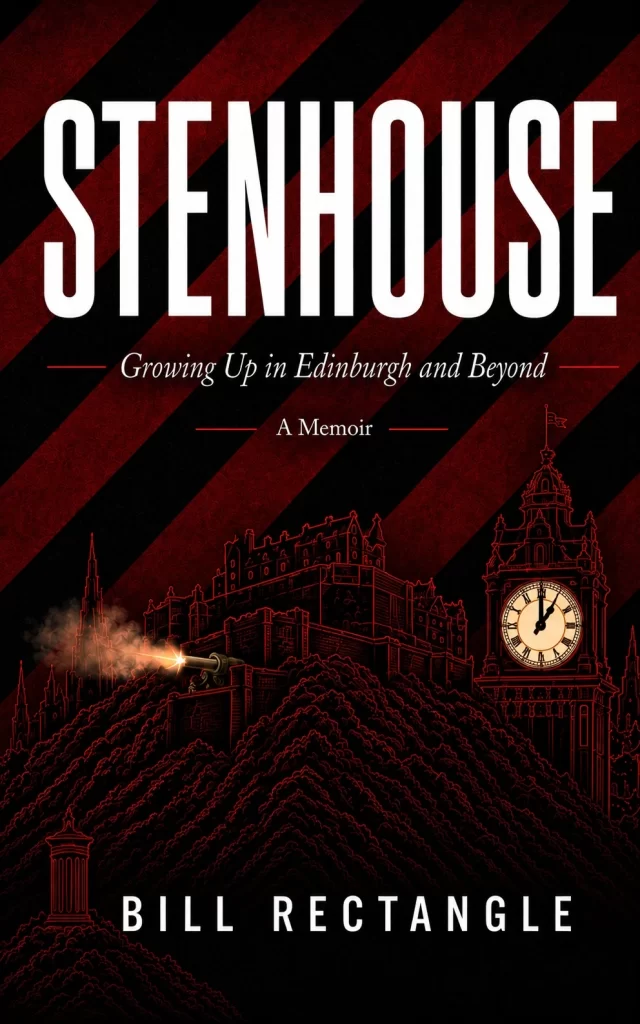
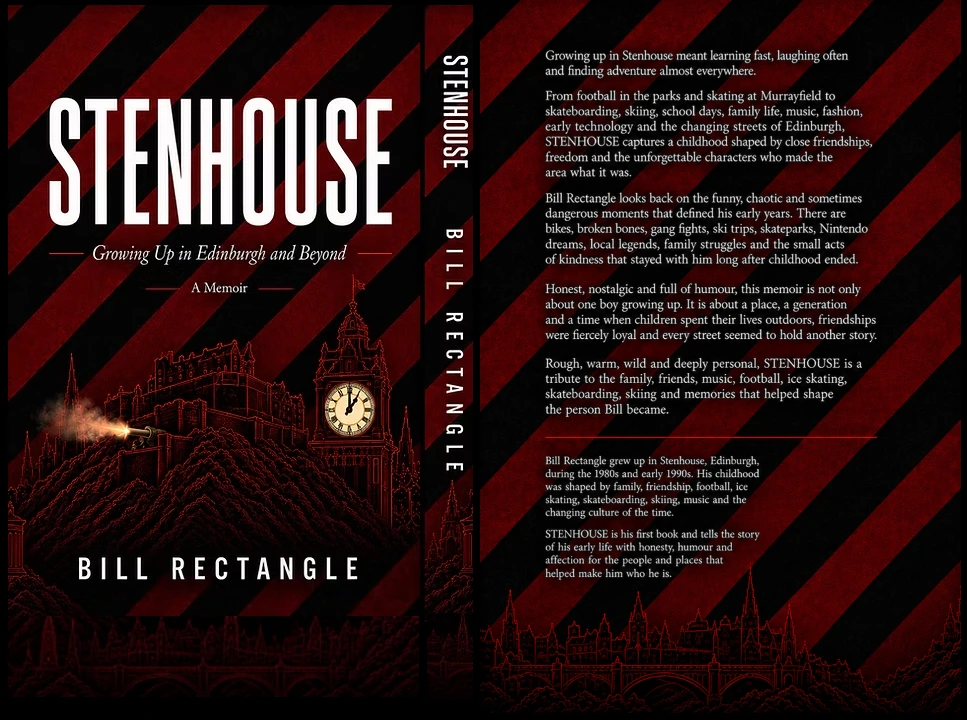
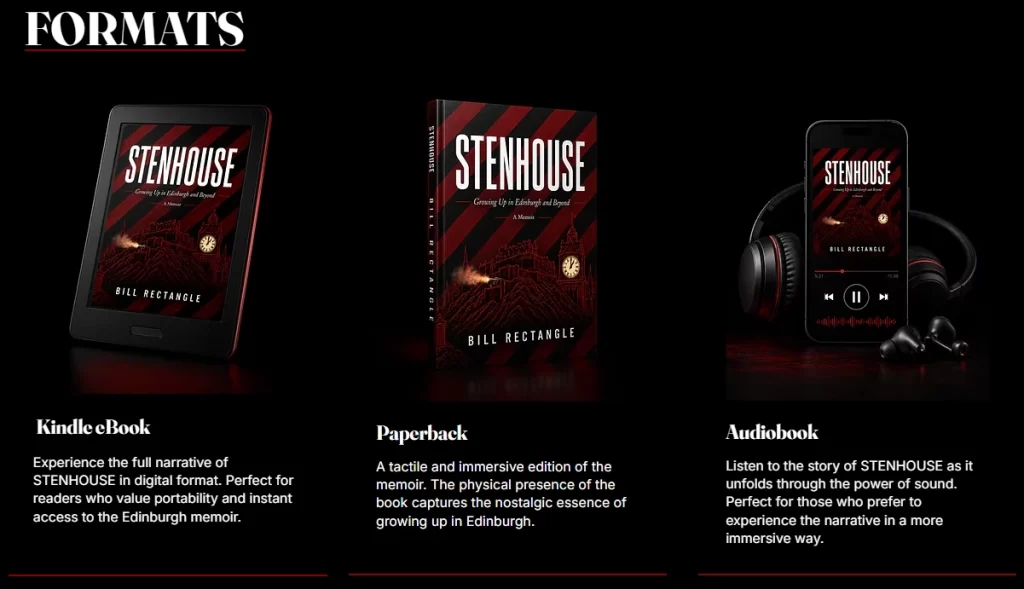
STENHOUSE: Growing Up in Edinburgh and Beyond is an independently written and published memoir by Michael Judge, writing under the wonderfully difficult-to-forget pen name Bill Rectangle. It looks back at growing up in Stenhouse and wider Edinburgh through the 1980s and early 1990s, covering family, friendships and community alongside football, skating, skateboarding, skiing, music, fashion and the arrival of technology that now feels positively prehistoric.
But STENHOUSE is also becoming something broader than a book.
Judge narrated the audiobook himself, White Hat Media talks openly about combining traditional storytelling with modern multimedia and technology, and there is now an early concept for something called My Bit: a potential future game-inspired adaptation of the world and memories behind STENHOUSE. To be clear, it is a concept rather than a game currently in production, but the idea raises some genuinely interesting questions about what happens when autobiography moves from something you read into something you might one day explore.
So, rather than simply asking Bill to reminisce about the 90s again, we wanted to dig a little deeper. How reliable is memory? When does nostalgia become romanticisation? What should remain human when AI enters an autobiographical creative process? And if somebody turns their childhood into a game, what exactly should the player be allowed to change?
We’ve left links for you to find copies of STENHOUSE at the very end, but just in case you want to nab it early before reading on, we’ll leave them here too:
Let’s start with the person behind Bill Rectangle. You spent more than three decades around IT and technology before independently publishing your first memoir. How did someone with that background eventually arrive at STENHOUSE, and has the way you think as a technologist influenced the way you approach creative work?
STENHOUSE began with my own vivid memories of growing up in Stenhouse and wider Edinburgh. I wanted to preserve the ordinary details of family, friendship, school, music, sport and local life that can easily disappear from the record. Writing and independent publishing are a new personal project for me after decades working with technology.
My IT background helped me organise the work into a complete process: gathering and checking material, controlling versions, protecting privacy, producing the different formats and maintaining the records behind them. The memories remained the starting point. Technology helped me manage the work; it did not supply the life I was writing about. Everything was developed in my personal time outside my Monday–Friday 9–5 professional IT role, with professional responsibilities and family commitments taking priority.

You have spoken elsewhere about wanting to preserve a world that you realised was disappearing. What can a memoir capture about childhood, community and place that photographs, old videos or simply telling family stories cannot?
Photographs and videos preserve valuable evidence, but a memoir can connect that evidence to how an ordinary life felt. It can explain what a street or park meant to a child, how friendships worked, what people said and how the significance of an experience changes as you grow older.
I used photographs and conversations with family and friends to support and question my recollections. The book brings those separate traces into a personal narrative. It is my testimony, rather than a claim to be a complete history of the community.
Memory is obviously central to STENHOUSE, but memory is also messy. Details blur, people remember the same event differently, and nostalgia can quietly fill in the gaps. How did you decide what you trusted, what needed checking, and what had to be presented simply as your memory of events rather than objective fact?
My own lived memory was the primary source and single source of truth for personal experience. That did not mean treating every remembered date or period detail as infallible. Where a detail could be checked independently—such as a location, a building change, technology or a cultural event—I used public information and supporting sources to check it.
Photographs and conversations with relatives and old friends added context and sometimes challenged assumptions. If stronger evidence contradicted a factual detail, I corrected the context. Childhood dialogue was reconstructed from remembered meaning, not presented as a recording or verbatim transcript. Around six trusted family members and friends also reviewed the manuscript, and my partner and I listened through the complete audiobook chapter by chapter as part of our review.
There can also be a temptation when revisiting childhood to make the past feel warmer, freer or somehow better than the present. How conscious were you of avoiding that trap and preserving the difficult, embarrassing or uncomfortable parts alongside the fond memories?
The purpose was to preserve an ordinary childhood, not argue that my generation had everything right. Fond memories sit alongside difficult events, family realities, mistakes and uncomfortable moments. Leaving those out would have made the account less honest.
I wanted the remembered atmosphere to remain vivid without turning it into evidence that the past was better than the present. Nostalgia is part of the book’s appeal, but it is not the whole story.
Stenhouse itself is obviously very specific to Edinburgh, yet many of the experiences you describe, hanging around with friends, football, music, changing fashions and gradually encountering new technology, will be familiar far beyond Scotland. How important was that balance between making the book unmistakably Edinburgh and still letting somebody from somewhere completely different recognise their own childhood in it?
The place had to remain recognisably Edinburgh because that is where these experiences happened. I retained public place names where appropriate while changing names and identifying details where necessary to protect private individuals.
The wider connection comes through ordinary experiences—family, friendship, music, school and discovering a world beyond your immediate streets. Readers do not need to have lived in Stenhouse to recognise some of those feelings. At the same time, recognising a feeling is different from assuming that everybody had the same childhood.
Community is another thing that tends to look different when viewed decades later. When you look at Stenhouse then and now, what do you think has genuinely been lost, and what parts of the past do you think people sometimes remember rather more generously than they deserve?
One thing I feel has been lost is part of the familiar physical landscape of Stenhouse. The old St Aidan’s church has gone, and the Baptist church premises opposite have changed. For me, those places were connected to a sense of community that revolved around the churches.
The Stevenson College annexe was another part of that local world, alongside what we simply called the community centre. Older generations would remember Carrickvale Secondary School. These places mattered because of the people and community life associated with them. That is the connection I feel when I look back at what has changed.
As for what nostalgia might remember a little too generously, probably how much better value sweets and crisps seemed! That is certainly how I remember them.
Early technology runs through the memoir, which feels especially relevant given your eventual career in IT. When you were encountering home computers and other technology as a child, did they feel transformative at the time, or is their significance something you can only really see looking backwards?
My Commodore 16 stands out. Being the baby of the family, I was probably a little spoiled when I was younger! It was a great present from my parents, and I enjoyed it both as a toy and as something to experiment with.
Initially, I used it with a black-and-white portable television, so I wasn’t seeing its full colour capabilities. When I managed to tune it into a colour TV, I discovered how much wider its colour palette was than the earlier Commodore 64s my older friends had.
That discovery was part of the excitement at the time. It wasn’t something I only appreciated looking backwards—I was already enjoying playing with the technology and finding out what it could do.
You chose to publish STENHOUSE independently through White Hat Media rather than pursuing a conventional publisher. Was independence mainly about retaining control, or did you also want to prove how much one person can now build and distribute without going through the traditional gatekeepers?
Independent publishing allowed me to develop the book and its wider supporting work through White Hat Media while retaining authorship, verification and final decisions. STENHOUSE also became the test concept for my practical case study of what publicly available frontier AI and agentic technology could help one person achieve across a complete creative and publishing project.
That included more than writing: paperback and eBook production, personally narrating the audiobook, the website, multimedia, outreach and a durable archive. I describe it as a practical case study, with limitations and failures recorded, rather than a controlled scientific experiment. It does not mean that every author should work this way or that conventional publishing has no value.
You also narrated the complete audiobook yourself. With a memoir this personal and this rooted in Edinburgh, was using your own voice and accent almost essential? What would have been lost by handing those memories to a professional narrator?
Narrating it myself preserved my own voice, Edinburgh accent and pronunciation alongside the written memories. In a personal memoir, that adds another layer of testimony: readers can hear the person whose experiences are being described.
A professional narrator could bring excellent performance skills, but it would be a different interpretation and a different voice. My version is the author telling his own story. Listening to it also helped my partner and me review the work, noticing continuity issues and phrasing that needed attention.
White Hat Media openly talks about combining AI, modern technology and human creativity. Given that STENHOUSE is an autobiographical work where authenticity matters enormously, can you explain specifically where AI has been used in creating, editing, publishing or promoting the project?
AI-assisted tools helped with organisation, structured follow-up questions, research, spelling and grammar, continuity checks, editing, production, publishing administration and outreach workflows. The wider project also included the website, multimedia, records and archiving.
They were assistive technology, not a historical source and not the authority for my memories. If a suggestion was unsupported, invented or contradicted what I remembered, I rejected it, corrected it or checked it independently. My own lived experience supplied the substance; authorship, verification, creative control and final decisions remained mine.
AI-generated creative work remains contentious, particularly around authorship, training data and whether it replaces work that would previously have gone to writers, artists or other creatives. Where do you personally draw the line between using AI as a tool and allowing it to become the creator?
For this project, the boundary is that the human supplies the lived experience, judges the material and remains accountable for the result. AI must not invent an experience and then have it presented as something that happened to me.
Responsible use also means considering accuracy, privacy, security, fairness, creative ownership, consent and proper recognition. I am optimistic about the possibilities, but that optimism has to sit alongside practical policies and human responsibility. I would not claim that the wider questions about training data or the effect on creative work are settled simply because a tool has been useful to me.
You have described your writing approach as a kind of cinematic layering, using atmosphere, sound and sensory detail to reconstruct memories. Does technology help you recover and communicate those sensations, or is there a danger that too many modern tools can actually make a genuine memory feel less authentic?
My cinematic layering approach starts with remembered experience: the atmosphere of a place, sounds, sensory detail and the feeling of being there. The memory comes before the polished scene.
Technology can help me organise and communicate those layers, but it cannot prove that a suggested detail belonged to the original experience. A convincing sentence is not enough. If the tools introduce something I cannot support, it must be removed or checked. The test is whether the writing remains faithful to my remembered life, rather than whether it looks more cinematic.
Then we come to My Bit. You have been clear that this is only an early-stage concept rather than a game currently in production, but what first made you wonder whether the world of STENHOUSE could work interactively at all? What could a game communicate about those memories that the book and audiobook cannot?
My Bit is only at the idea and research stage at the moment. The title comes from the Scottish expression “ma bit”—your place or the area around your own house. We might be at ma bit, and a friend from farther up the road or hill would say, “Come on, let’s go up to ma bit.” There is also a technology connection: a bit is a single binary digit, and eight bits make a byte.
I’m researching what tools could help me put a game into production. The idea would follow the book from beginning to end, starting inside Bill’s house. As he grows up, the map would expand from his immediate surroundings into the wider landscape of Edinburgh.
Sport, retro gaming, fashion, culture and music would help build that world. The possibility is to let people explore the places behind the memories, rather than only reading or hearing about them.
An autobiographical game creates an unusual design problem because games normally give players agency. If My Bit ever becomes real, would you want somebody to follow events largely as they happened, or could they make decisions, explore freely and perhaps create experiences that never happened to you at all? At what point would that stop being an adaptation of your memories and become fiction?
To be honest, I’ve only thought of the title so far! 😂 Everything else is a collection of ideas I’m exploring, rather than a developed game design.
The title My Bit comes from the Scottish expression “ma bit”—your place or the area around your house, your own little part of the neighbourhood. We might be at ma bit, and a friend from farther up the road or hill would say, “Come on, let’s go up to ma bit.” There is a technology connection too: a bit is a single binary digit, and eight bits make a byte. The title links that familiar childhood expression with computing and retro gaming.
The game would be mainly based on the book, starting inside Bill’s house. As he grows up, the map would gradually expand from his home and immediate streets into the wider landscape of Edinburgh—the big and wee parks, the Water of Leith, the golf course, the shops and the places where we spent our time.
That world could include football and five-a-side, Crossy, “five and a kick-in,” wordy, pitch and toss, paper rounds, playing knifey on the Tarzan, and the game we called “hunt the cunt.” There would be roller skating, ice skating, skateboarding, street and ice hockey, skiing, cycling, mountain biking and BMX, including our self-built ramps and the ropes and nets we hung from trees beside the Water of Leith. Retro gaming and early computers would be part of it too.
As the characters get older, there could also be the small gang fights, early experiments with cigarettes and alcohol, early parties and girls. Music would run through that world—breakdancing, taping techno off the radio, tuning into pirate radio stations and discovering early raves, alongside the fashion and changing youth culture of the time.
Friendships and the daft things we did simply to pass the time and have fun would be central to the atmosphere. I would want to capture that feeling of discovering things together as your world gets bigger.
But you know what games are like—who knows what could happen once you start exploring the possibilities! These are things I could draw from the memoir, rather than a settled list of game features. I haven’t decided how closely every part would follow the book or how much freedom the player would have.
I’m researching what tools might make it possible, and I may wait until I have finished part two, and possibly part three, of the memoir before taking it any further towards production. That would give me more of the story and a wider world to draw on.
Finally, how big do you ultimately imagine STENHOUSE becoming? If the book remains at the centre but leads to audio, archives, interactive work and other creative projects, is the long-term goal really less about promoting one memoir and more about preserving a particular time, place and way of growing up before those memories disappear completely?
The book remains at the centre. The wider work—my own narration, visual material, interviews and the long-term archive—gives people different ways to encounter the same lived history and helps preserve the sources behind it.
There are flexible ideas for younger-reader adaptations, shorter autobiographical pieces and a later continuation, but they are possibilities rather than fixed delivery promises. My professional IT role, cyber-security study and family commitments remain the priority. Preserving an ordinary time and place matters more than turning every possible format into an immediate commitment.
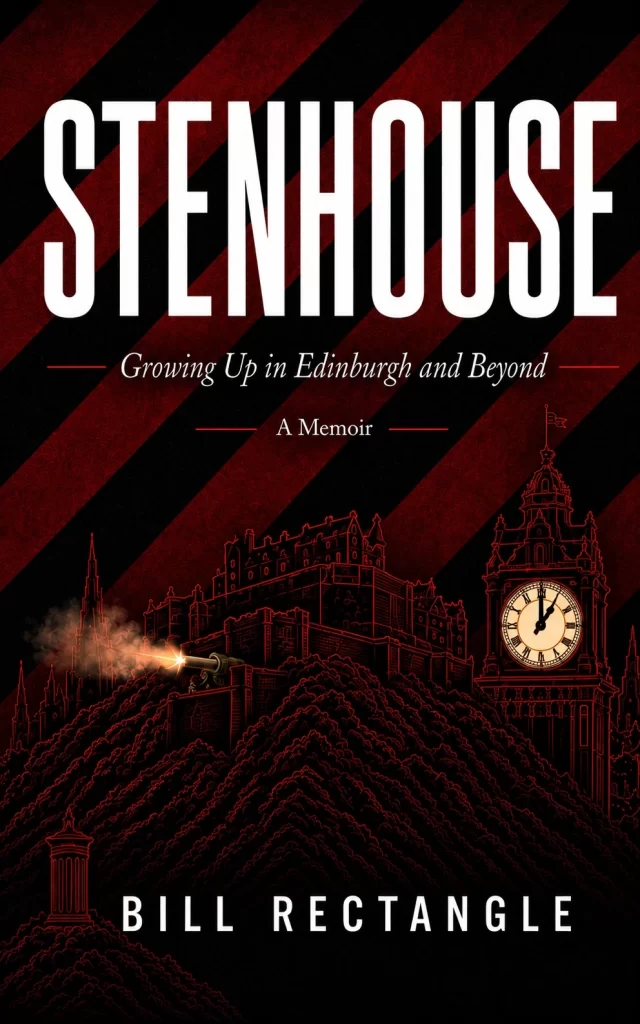
A big thank you to Michael Judge, better known on the cover as Bill Rectangle, for taking the time to speak with us about STENHOUSE.
There is something inherently independent about taking your own memories, writing them down, publishing them yourself, narrating them in your own voice and then asking what other forms that story might eventually take.
The potential My Bit concept is perhaps the most unusual part of that journey. It remains exactly that, a concept, but the question behind it is an interesting one. Games have become increasingly comfortable with fictional memories, historical settings and deeply personal stories, so why could somebody not turn the streets, technology, music and everyday nonsense of their own childhood into a space other people can explore?
Doing it well would bring plenty of challenges. Memory is subjective. Nostalgia lies to us occasionally. Real people are not NPCs, and lived experiences do not naturally come with objectives and achievement lists.
But perhaps that is exactly why it is worth thinking about.
STENHOUSE began as an attempt to stop one little part of Edinburgh from disappearing completely into memory.
Where those memories go next could be considerably stranger.
Find a copy of STENHOUSE in a format that suits you using the links below:
- STENHOUSE Author-narrated Audiobook
- STENHOUSE eBook/Kindle Edition
- STENHOUSE Paperback Physical Copy
This interview is a little different to some of our others, with a breakaway from our usual focus on gaming. Want to check out some of our other non-gaming content? Click right here.
This post contains an affiliate link. This means that if you click on it and make a purchase, we may earn a small commission from the sale. It doesn’t alter the price for you; it just shares the revenue generated with us. You by no means have to use it, but doing so allows us to raise essential funds to keep our site going.