Most of us probably know far more about brands than we realise.
You recognise the logo. You know roughly what they sell. You might even know where the company comes from. But ask when it was founded, how many people it employs or whether it is actually independent rather than owned by somebody considerably bigger, and things start getting a little trickier.
That is where Shople comes in.
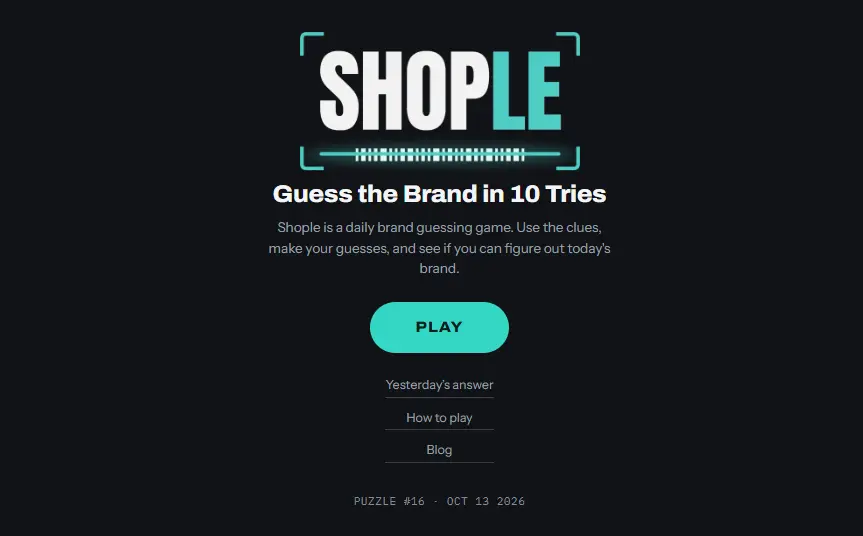
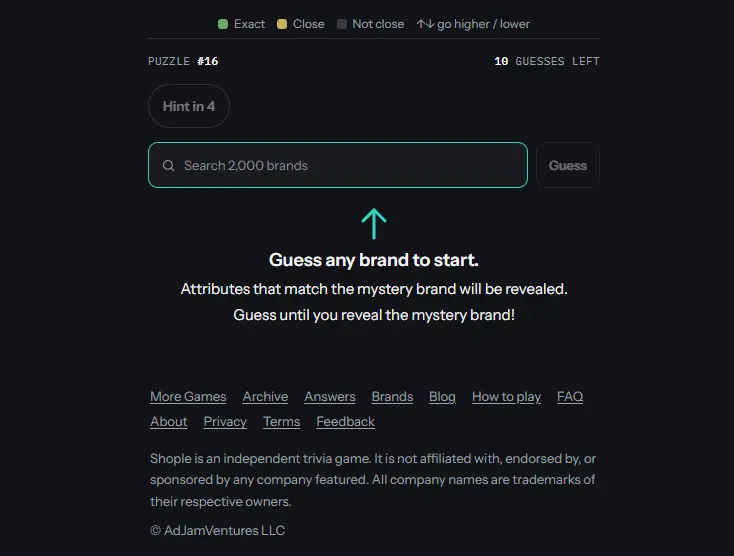
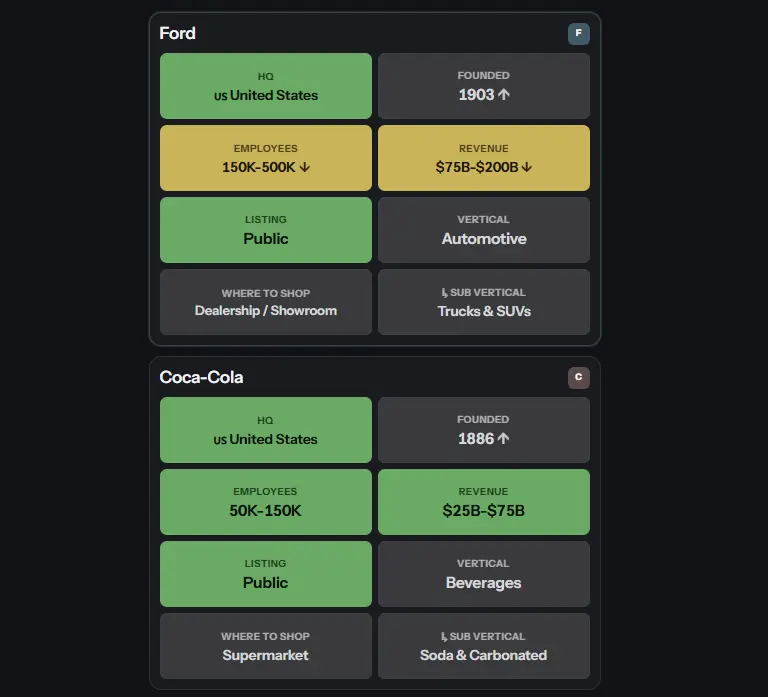
Founder Andrew Bellach created Shople as a one-person indie project, and it gives players ten attempts to identify a mystery brand each day. Every guess reveals how close you are across characteristics including headquarters, founding year, industry, employee count, estimated revenue and where you would normally buy its products. Additional hints arrive along the way if things are going particularly badly.
There is no app to install and no account to create. Just one brand every day and a surprisingly effective way of finding out how little you actually know about companies you see constantly.
We caught up with Andrew to find out where the idea for this daily game came from, how you turn corporate data into a satisfying guessing game, and what it takes to maintain thousands of brands when the companies themselves refuse to sit still.
To start us off, could you introduce yourself and tell us a little about your background? What made you decide that brands, of all things, would make a good subject for a daily guessing game?
I’m Andrew, and I’ve spent over a decade in digital advertising.
Playing Spotle, I realised brands are one of the few subjects everyone has an opinion on. You might not follow music or sports, but you know where you buy sneakers and which airline you avoid. That’s a much bigger shared knowledge base than most trivia.
You mention Spotle as an inspiration, but swapping people or places for companies changes the kind of knowledge being tested quite dramatically. What was it about brands that made you think the format would work?
The format needs attributes you can compare: older or newer, bigger or smaller, same country or not. Companies have that built in, so every wrong guess still teaches you something. The bigger shift is the knowledge tested. Spotle rewards fandom; Shople rewards everyday familiarity, the stuff you absorb from shopping, ads and the news. Our inclusion rule: could a regular consumer hand this brand money?
Shople currently uses eight different clues, from headquarters and founding year to revenue, employee count and product category. How did you decide which pieces of information were genuinely useful for narrowing down an answer without making it too easy?
Mostly by getting it wrong first. The early version of Shople had seven corporate attributes, and friends and family said it was too factual, like a finance exam. We added Sub Vertical so “Food & Beverage” could narrow to snacks versus fast food, and Where to Shop, now one of the most useful clues because it matches how people think about brands. Ownership folded into Listing. The test for each clue: does a wrong guess move you meaningfully closer? Fun but non-comparable details, like a signature product, became hints.
Revenue and employee numbers can be surprisingly messy, especially with private companies, subsidiaries and figures that change constantly. How do you source and verify the data behind Shople, and how much maintenance does keeping thousands of brands accurate actually require?
It’s layered. Public company revenue and headcount come from annual filings. Founding years and headquarters come in bulk from open sources like Wikidata, then get checked. Private companies and subsidiaries are messier, so those revenue figures are labelled estimates. Bands keep maintenance manageable: an 8% revenue swing doesn’t change a band.
As you mentioned, you use bands rather than exact figures during guesses, which feels like a sensible compromise when company data is not always perfectly comparable. Was fairness the main reason for that decision, or did exact numbers simply make the puzzles too easy to brute-force?
Fairness first, but both. Exact figures imply precision the data doesn’t have, and it’s unfair to mark someone wrong over $41B versus $43B. “Close” means roughly half to double the answer’s value, which works at any scale. Exact numbers would also let players narrow things down mechanically, taking the guessing out of a guessing game.
The hint system deliberately makes players choose what kind of extra help they want rather than simply revealing everything. How much experimentation went into deciding when hints should appear and how generous they should be?
More than expected. The first version of Shople had one midpoint hint, which felt like the game handing you something. Borrowing from other games, you can pick one of three hints after guess four, then pick again after guess eight, when the signature product hint unlocks. One hint always stays hidden, which adds strategy. We also learned hints don’t help if people don’t get the basics, so we added a short play-along demo after early players said the colours and arrows weren’t clicking.
There is an interesting difficulty problem here because some brands are globally recognisable while others may be huge in one country and almost unknown elsewhere. How do you choose mystery brands that feel fair to an international audience?
Honestly, Shople leans American, and I’d rather say so upfront. Roughly 80% of brands are US-based or huge in the US. The test is recognition, not size: an industrial giant nobody’s heard of is out; a smaller brand everyone’s seen in ads is in. The international picks are household names like car makers, luxury houses and global retailers.
Like several of the daily games we have covered recently, Shople requires no sign-up and keeps stats locally in the browser. Was avoiding accounts and collecting unnecessary user data an intentional part of the project from the beginning?
Yes, from day one. A daily puzzle should take two minutes, and requiring an account before someone plays kills that. Stats and streaks live in your browser: no sign-up, no emails, no personal data. We use anonymous analytics to see how many people play and where they get stuck, which is how we caught our onboarding issues. If we add cross-device syncing, it’ll be optional.
Shople is also apparently the first in a wider line-up of daily guessing games. What have you learned from building this one that you want to carry into whatever comes next, and do you see the games eventually connecting in some way?
The biggest lesson: the dataset is the product. Code is the easy part. Deciding what belongs, which clues are fun and how hard answers should be is the real work. Second lesson: playtest with other people early, because “too factual” was feedback I’d never have found myself. As for connecting them, keep an eye on the More Games menu. That’s all I’ll say for now. 🙂
Finally, where would you like Shople to be a year from now? Is success simply having a loyal group turn up every midnight for the new puzzle, or do you see this growing into a much larger daily-game project?
The near-term goal is what you described: a loyal group showing up every midnight Eastern, arguing in share threads about whether a brand counts as retail or food. That habit matters more than a launch spike. Once Shople has a steady base, it anchors whatever comes next. A year from now, I’d love a small family of daily games feeding players into each other.
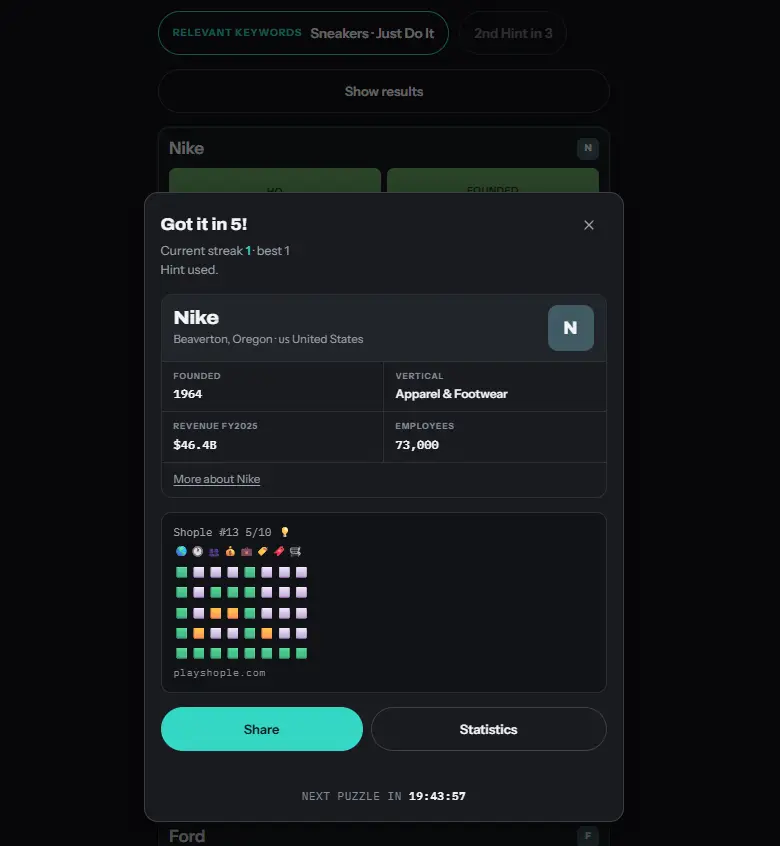
A big thank you to Andrew Bellach for taking the time to speak with us about Shople.
Daily games tend to work best when the idea can be understood almost immediately, and Shople has that going for it. Guess a brand, learn something from the result, narrow things down and try again.
The clever part is that the information sitting underneath those simple guesses is considerably messier than it first appears. Companies change ownership, revenues move, staff numbers grow and shrink, and apparently even identifying where you actually buy something can become part of the puzzle.
It also turns out there is a sizeable difference between recognising a company and genuinely knowing anything about it.
Which is useful to remember the next time you confidently type in a brand on guess one and discover that almost every single clue is grey.
Check out more chats like this one by heading to our Interviews section.