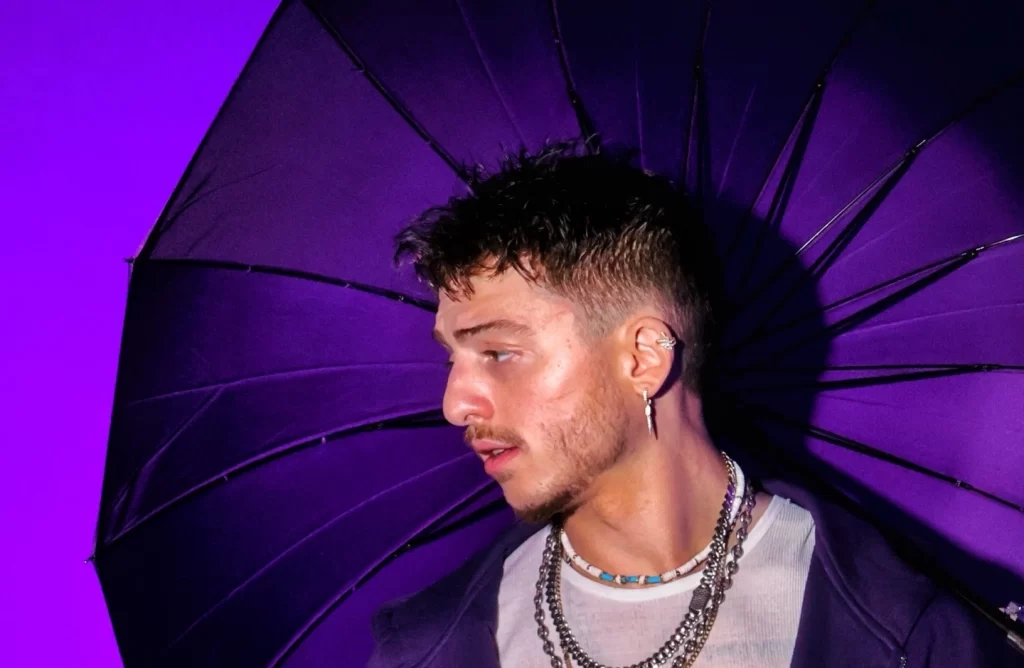
Independent music is about considerably more than uploading a track and hoping an algorithm decides to be generous.
For North Jersey artist Lance Prince, the music sits at the centre of something he is trying to build for himself: recording, engineering, visual content, live performances and, increasingly, spaces where other creatives can get in the room together.
His latest record, “Obsession“, takes a more intimate route. Built around the pull between attraction and instability, it sits somewhere across melodic hip-hop, alternative music and pop without appearing particularly interested in staying neatly inside one box.
Then there is Live & Uncensored, Lance Prince’s emerging New Jersey event concept aimed at creating physical space for artists and creatives at a time when so much independent music discovery takes place through screens, streams and short-form clips.
We caught up with Lance to talk about where “Obsession” came from, whether genre labels still matter, the difference between listeners and an actual audience, and why building your own stage might sometimes be just as important as trying to get booked on somebody else’s.
If you want to check out the track before you read on, here you go:
For anybody discovering you through “Obsession”, who is Lance Prince? Where did music first enter your life, and when did it change from something you loved into something you seriously wanted to create yourself?
Music entered my life before I ever thought about being a rapper. My mom started teaching me piano when I was three, and I played saxophone from fourth grade onward. In high school, I wasn’t as focused on playing instruments, but that was when I really discovered hip-hop.
The funny thing is, I originally pictured a different future: physical therapy, bodybuilding, maybe having gyms of my own. Then COVID happened. I had time to listen to entire albums, especially J. Cole, and I realised I could put my own feelings onto a beat. Seeing businesses shut down made me think differently about creating things that could last. Six years later, here I am. I think of myself as a Renaissance man. I make music, teach martial arts, create videos, and build events. If I can envision something, I want to make it real. But beyond all the ambition, I’m somebody looking for love and connection.
Music brought real friends, a team, and a sense of family into my life, and I want the things I create to bring people together.
“Obsession” is built around attraction and instability, which immediately suggests something more complicated than a straightforward love song. What was happening creatively or personally when that idea started taking shape?
It came from a situation that lasted barely a week, which is partly why it affected me so much. I met a girl across the country, and we spent hours talking, FaceTiming, getting to know each other. I hadn’t expected to feel such a strong connection so quickly. Then one day she cut off communication, and I was sitting there wondering why something so brief could hurt me like relationships that had lasted much longer.
During those same days, I’d been searching for beats and telling her I was trying to make my next big record. After it ended, a sample I’d been listening to suddenly meant something completely different. It clicked that the song wasn’t only about her. It was about the way I attach myself to love, to people, and to the futures I imagine. I wrote from that feeling and ended up with what I believe is the best song I’ve made. That’s one of the most beautiful parts of creating: taking something you can’t explain in conversation and somehow finding the exact words for it in music.
Obsession is an interesting word because it can sound romantic from one angle and deeply unhealthy from another. Were you deliberately trying to sit in that uncomfortable space where desire starts becoming something less stable?
Absolutely. That’s why I chose that name. You can be obsessed with another person, a dream, success, a memory, or a future that doesn’t even exist yet. Sometimes it drives you toward something incredible; sometimes it hurts you. I’m obsessive, yes, but I take a chance. I don’t pretend every part of that is healthy. The record is about recognising it. Contrast is everything in my music. I want beautiful melodies with darker feelings, a confident delivery with vulnerable words.
In “Obsession”, there’s longing for somebody else, but underneath that there’s a guy who starts to understand he has to put some of that same energy back into himself. I love when the surface of a song is catchy, and the meaning changes as you listen closer. That’s what I wanted: romantic, uncomfortable, self-aware, and hopeful all at once.
Your music moves between hip-hop, melody and alternative influences, while platforms do not always seem sure where to categorise you either. Do genre labels still matter to you, or can they actually become restrictive when you are trying to build a sound that moves between different spaces?
I hate being put in a box, in music or anywhere else. Somebody says, “You’re just a rapper,” and I’m like, no, I’m an artist. I’m a musician, a martial artist, an editor, a director, and somebody who creates events. All of those things involve art. Why would I accept limits in one of them? Genre labels can help people discover music, but they shouldn’t dictate what an artist can do.
Our more specific description for the sound I’m building is nocturnal melodic trap, with dark psychedelic and alternative-trap production. I call it “heartbreak music for the club”: atmospheric music with hypnotic melodies, late-night energy, and honest relationship writing. But that’s a description, not a rulebook.
Post Malone, Travis Scott, Mac Miller, J. Cole, Juice WRLD, Smino, Westside Boogie, Tupac, Biggie, and Wu-Tang have influenced me in different ways. Wu-Tang is even tattooed on my back; their mentality means a lot to me. If a box doesn’t fit my vision, I’m drawing new lines.
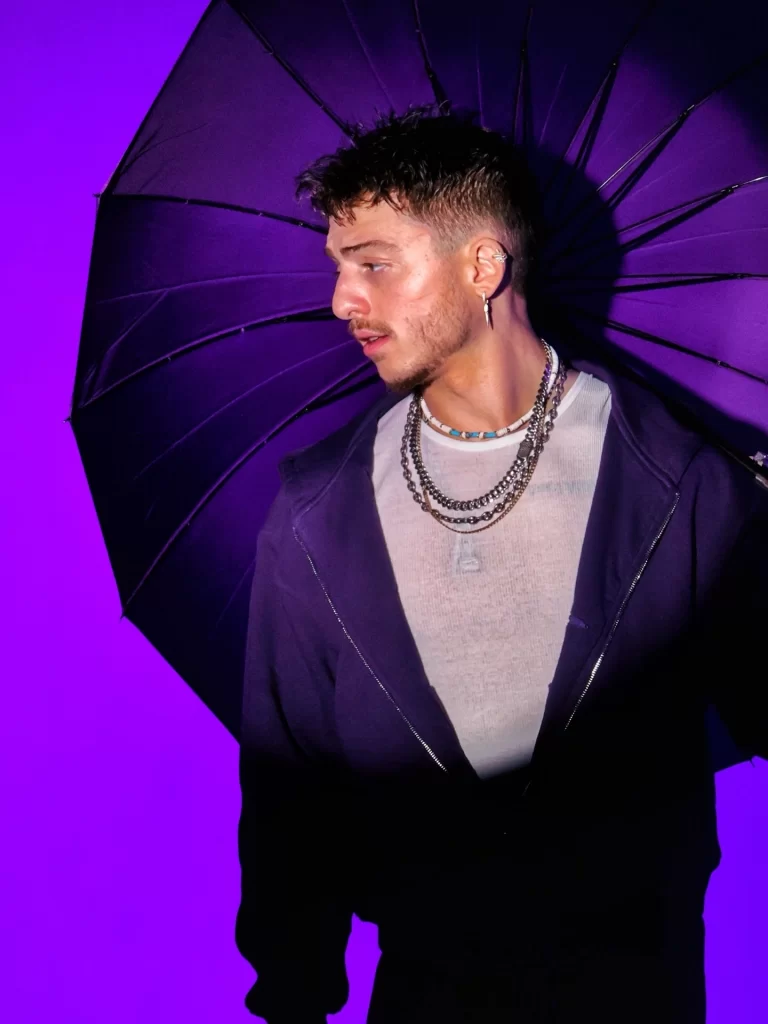
You are quite hands-on with your records, including recording and engineering much of your own work. Is that primarily about maintaining creative control, or has independence simply taught you that sometimes the quickest way to get something done is learning to do it yourself?
Both, but it’s deeper than wanting control. I want to understand the craft before I tell someone else how to do it. I’ve worked in studios and with producers, and I’ve also recorded and engineered music on my own MacBook using GarageBand.
At times I’d spend money at a studio and leave feeling the sound wasn’t quite what I had imagined. It pushed me to learn, protect my budget, and get more specific about the results I wanted. The same goes for video editing, directing, planning shoots, and running events.
A wise man once told me that to be a great boss, you first have to be a great employee. I took that to mean you need to know how to work and understand the people you lead. But independence doesn’t mean refusing collaboration. I’m working with my new producer Blazt, and the records we’ve made together have me incredibly excited. I want people around me who elevate the work, and I want to bring enough knowledge and effort to elevate theirs.
Your previous work, including CRASH OUT SZN, has carried a lot of intensity, while “Obsession” feels like another opportunity to explore vulnerability and instability. Do you see this record as a progression from what came before, or does every release represent a separate version of where your head is at?
“CRASH OUT SZN” was me releasing a lot of pent-up emotion. Pride, mistrust, ego, ambition, heartbreak — there was so much going on internally. On records like “Lila” and “Vanity,” I’m working through those battles. Even when the feelings are intense, I don’t always scream them. Sometimes the most powerful way to say something is to make it melodic and carefully worded. That’s my obsession with contrast again.
“Obsession” is definitely a progression. It’s a more mature version of me learning that I don’t need a whole project to explain one chapter of my life. I can write one song that admits I cared, admits I got hurt, admits I took a chance, and eventually lets me move forward. I love that song more than anything else I’ve made.
Normally I finish a record, and my mind’s already on the next one. With “Obsession,” I keep coming back, and it still hits me. Every release documents where I was mentally, and I hope you can hear me growing up through the music.
Independent artists are constantly being told they need to become content creators as well as musicians. How do you stop the demand for clips, Reels and constant visibility from eventually becoming more important than the songs themselves?
I don’t look at content like some punishment the industry is forcing on me. I love creating it. I post across multiple Instagram, TikTok, and YouTube accounts, and every page has its own purpose: my music, events, podcasting, martial arts, the behind-the-scenes work, and my actual everyday life.
Yes, I understand that visibility matters, and I’m willing to do the work. I’m not going to pretend I don’t want to succeed. But I enjoy making the videos, too. One of my YouTube channels is basically my diary. I think about having kids one day and being able to show them exactly what their dad was doing at 24 instead of just telling them stories about it.
The music is still the centre of it all, but the content gives people a window into the world around it. I want every format to tell part of the story, not distract from it.
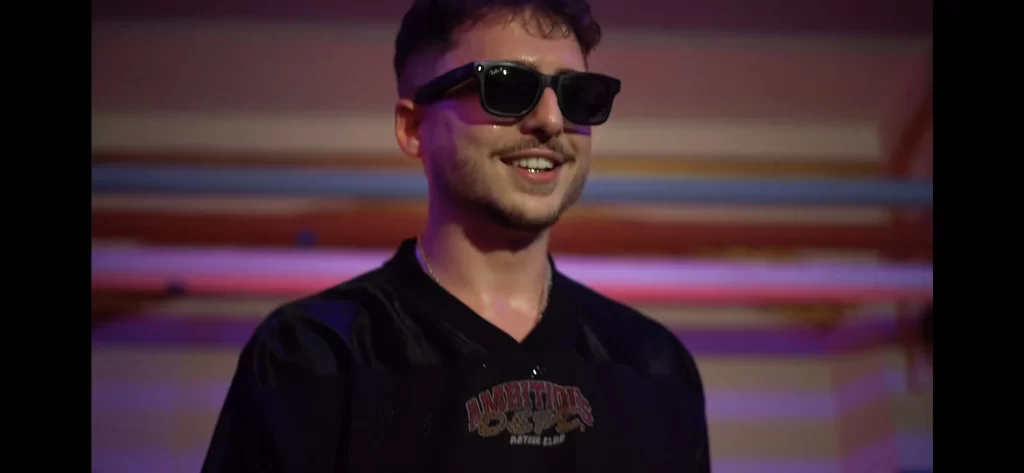
At the same time, reaching people clearly matters. There is a huge difference between accumulating streams and building listeners who genuinely care what you do next. How do you personally distinguish between having numbers and having an audience?
Numbers are a calculated result. An audience is people. I’ll be honest: I’m still learning how to look at a huge number on my phone and feel that those are real human beings. Sometimes it’s hard to wrap my head around. Then I walk into a show, somebody sings a lyric back to me, or I hear that two people became friends at an event we put together, and suddenly it makes sense.
I love being with people. I love seeing a room full of people making connections and having a good night. I want the streams and the reach, absolutely, but I don’t want the achievement to stop there. I want someone to care what I make next. I want them to come back. More than anything, I want the attention to turn into relationships and the relationships to become a community. You can’t measure all of that on a dashboard.
You have already spent time performing around New Jersey and producing your own shows. What did putting those events together teach you about the difference between being an artist on the bill and being responsible for getting people through the door in the first place?
It changed the way I look at every show I’m booked for. When you’re producing an event, you don’t just worry about your own performance. You’re thinking about the venue, tickets, promotion, sponsors, the lineup, production, and whether everybody who comes has an experience worth remembering.
We’ve put together sold-out rooms in New Jersey, and I’ve also had the opportunity to headline on other people’s stages. I realised that if someone is giving me a spot, I should help build that room too. I should promote the show, bring my people out, and support the other artists and the team.
Not every performer knows how much happens behind the scenes, and running my own shows gave me a lot more appreciation for the responsibility. The best local scene is one where artists and organisers are all working toward the same thing, not expecting the other person to do all the work.
That leads us to Live & Uncensored. What exactly do you want these events to become, and what do you think is currently missing from the local creative scene that made you feel another platform needed to exist?
My vision is huge. Johnny Walker and I want Live & Uncensored to grow into a platform that can one day stand in the conversation with the biggest live events. But we’re not trying to pretend we’re already there and go into insane debt booking enormous artists tomorrow.
We want to build organically, with independent creatives, local businesses, sponsors, and the community. The smaller La Dolce Vita experiences fit into that bigger vision. They’re intimate spaces where music, fashion, modelling, networking, and podcasts can happen together. Then the larger Live & Uncensored events can keep growing the underground community into bigger rooms and bigger opportunities.
North Jersey isn’t lacking talent. I think we’re lacking enough spaces where all these talented people can come together, connect across different industries, and build something together. I can’t give away every idea we have planned, but it’s not just a concert business to me. We’re trying to create a whole world.
Is Live & Uncensored ultimately about giving emerging artists another place to perform, or do you imagine something broader where musicians, visual artists and other independent creatives can actually meet, collaborate and build a community around one another?
It’s absolutely bigger than giving somebody ten minutes on a stage. Music might be why someone comes through the door, but I want them leaving with more than memories of a performance. Maybe a clothing designer meets a model. Maybe a musician finds a director for their next video. Maybe somebody walks in alone and leaves with a new friend or business partner.
That’s why I’m so excited about La Dolce Vita as a more intimate creative hub. We can have music, fashion, networking, modelling opportunities, content, and meaningful conversations all happening in the same environment. Then Live & Uncensored takes that community and gives it a larger stage.
Everyone is always trying to stay in their little box. I’d rather knock down the walls and make a space where everybody is welcome, and their ideas can connect.
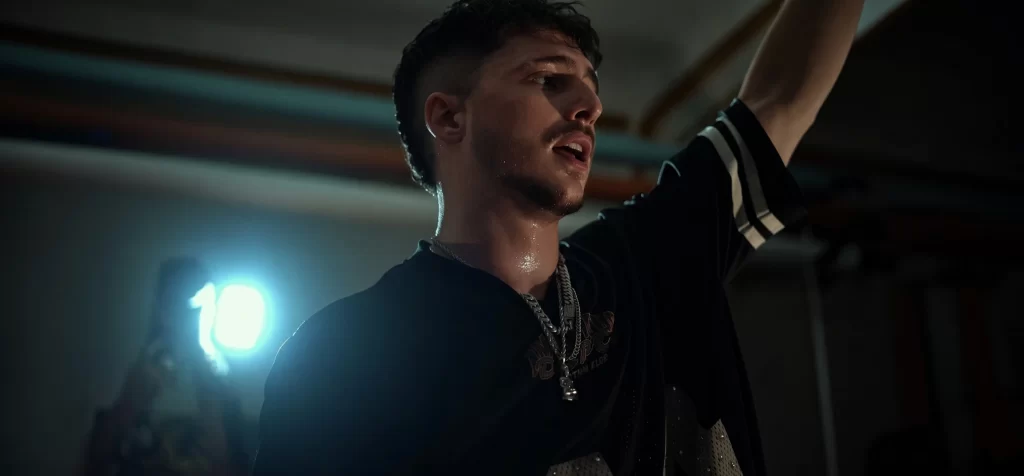
There is always a danger when an artist starts building events, businesses and infrastructure around themselves that the organisational side begins swallowing the creative one. How do you protect enough time and headspace for Lance Prince the musician while Lance Prince the organiser is worrying about venues, promotion and whether anybody is actually going to turn up?
I don’t see the business as something separate from the art. Planning a show is creative. Choosing the room, designing how the night feels, building the lineup, bringing brands and people together — all of that is part of making the vision real. If you want a sustainable career, you can’t pretend the business side doesn’t exist. That doesn’t mean it isn’t stressful. There are days when I’m overwhelmed, absolutely.
That’s where delegation comes in. I have a team I trust. I’m not supposed to be every moving part forever. And I wouldn’t keep doing this if I didn’t love it. I’ve heard artists say they performed for the first time at one of our events, and I’ve heard about people making friendships that lasted long after the show.
Those things mean more to me than just making money on a single night. When something gets too big for one person, you learn how to share responsibility. That’s how you protect the music and keep building the rest.
North Jersey is not exactly lacking musical history or competition. How much does being from that area shape your identity, and do you feel any pressure to represent a particular New Jersey sound when your own music pulls from several different places?
Being raised in North Jersey is a huge part of me. You’re surrounded by different towns, cultures, creative scenes, and all sorts of people, with New York practically in the backyard. I’ve grown up moving between martial arts gyms, studios, local businesses, and shows. It’s made me comfortable connecting with very different people and made me proud of how much talent exists here.
I definitely want to represent Jersey and help build more opportunities in our own communities. But I don’t feel pressure to sound like one specific version of New Jersey.
To me, the thing I’m carrying from home is the mentality: discipline, ambition, creativity, and putting the work in with the people around you. I can make music that crosses genres and still be a Jersey artist because the place and the people who raised me are part of everything I do.
Finally, when somebody hears “Obsession” for the first time, what do you hope stays with them once the song ends? And looking beyond this one release, what are you trying to build around the name Lance Prince that a streaming number alone could never represent?
First, I want someone to hear it and say, “Holy shit, who is this guy? I’m adding this to my playlist”. Then I want them to listen again and discover the deeper lyrics behind the melody. I want the sound to stay with them, but I want the feeling to stay even longer.
Beyond this record, I’m building a name that stands for creating without limits and helping other people create too. I see Grammys, Madison Square Garden, the Super Bowl, huge crowds, and opportunities to give back. But I also see my parents with me on vacation, my future wife and kids, my friends, and my team enjoying what we built together.
There will be setbacks and sacrifice along the way, and I’m willing to take that chance. Streaming numbers can show you attention, but they can’t measure the relationships, community, or opportunities you’ve created for somebody else. That’s what I want the Lance Prince name to represent.
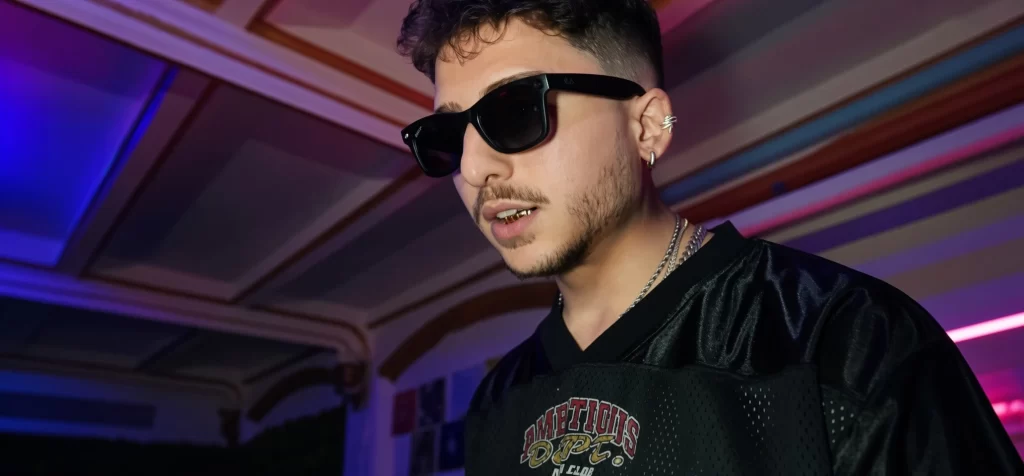
A big thank you to Lance Prince for taking the time to speak with us.
There is no shortage of independent artists trying to find attention online, which makes the harder question what happens once you actually get it.
For Lance, the answer seems to involve building outwards rather than simply uploading more music: developing the sound, taking ownership of the recording process, performing in front of real people and creating events capable of bringing other creatives into the same room.
“Obsession” may be the immediate reason for this conversation, but the wider story is about what independence actually asks of an artist now.
Write the song. Record it. Promote it. Find the audience. Book the room. Build the stage if necessary.
That is an awful lot surrounding three minutes of music.
But if Live & Uncensored develops the way Lance hopes, perhaps doing all that work alone can eventually create somewhere other independent artists do not have to.
Fancy checking out more chats we’ve had with independents from all backgrounds? Then head over to our Interviews section.