If you’re making an indie game, getting people to notice it is half the battle. The other half is convincing them it’s worth sticking around once they do.
That’s where demos and Early Access come in. Two approaches that aim to solve the same problem, getting your game into players’ hands early, but go about it in very different ways.
A demo says, “Here’s a taste.”
Early Access says, “here’s the meal… It’s just not finished yet.”
One asks for your time. The other asks for your money. And that changes everything.
Demos are quietly making a comeback
For a while, demos just sort of… disappeared.
They used to be everywhere. Now they’re creeping back in, and Steam Next Fest has played a big part in that. Suddenly, demos are not just back, they’re expected. Players are actively hunting them down, wishlisting games off the back of them, and actually trying new things again.
For indie developers, that’s huge.
A good demo is low risk for everyone involved. Players get to try something without commitment, and developers get immediate feedback on whether the core idea actually lands. No money changing hands, no pressure to deliver a full experience, just “here’s what we’re building, what do you think?”
When it works, it’s one of the cleanest ways to build momentum.

Early Access is a much bigger commitment
Early Access is not a taster. It’s a buy-in.
Players are paying to jump in early, which means expectations shift immediately. It’s no longer curiosity. It’s accountability.
When it works, it can be brilliant.
You get funding. You get feedback. You get a community that actually cares about how the game evolves. Systems improve, rough edges get smoothed out, and the final product can end up far stronger than it would have been behind closed doors.
But when it doesn’t work, it sticks.
A rough Early Access launch can define a game for years. First impressions matter, and once players bounce off, getting them back later is not easy. Add in delays, shifting roadmaps, or poor communication, and things can unravel quickly.
Early Access is powerful, but it is not forgiving.
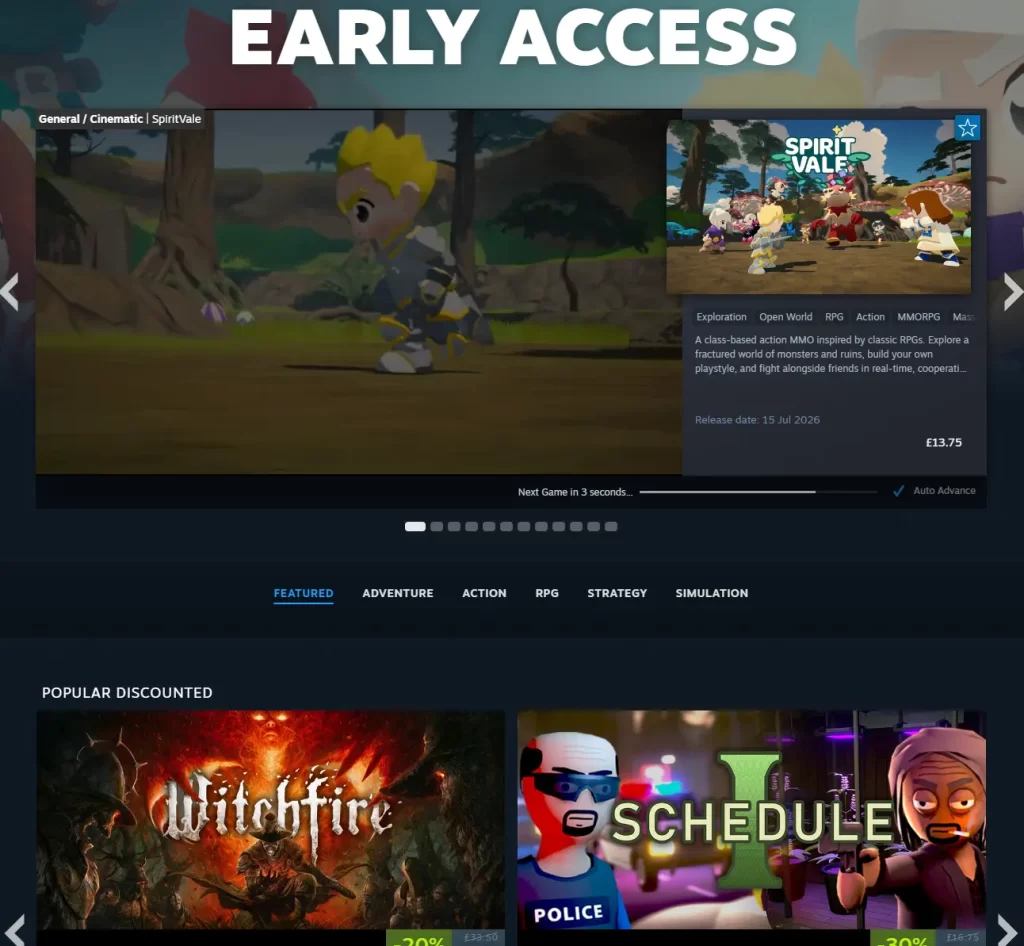
Can demos and Early Access actually work together?
They can, and honestly, they probably should more often.
A demo builds interest. It gives players a risk-free way in. If it lands, it creates a group of people already paying attention.
Early Access then gives those players somewhere to go next. A deeper version of the game, a chance to support development, and a reason to stick around.
One builds curiosity. The other builds commitment.
Used together, that’s a pretty strong combination.
The timing is everything
The biggest difference between demos and Early Access is not just what they are — it’s when they’re used.
A demo works best when your core idea is solid, but the game isn’t ready to be judged as a full experience.
Early Access works best when the game already has enough depth and stability to stand on its own, even if it’s not finished.
Get that wrong, and both can backfire.
A weak demo can kill interest before it starts. A rushed Early Access launch can bury a game under negative first impressions that are very hard to shake.
Neither is a shortcut to success.
The Early Access success… and the grey area
There are plenty of examples of Early Access done well.
Then there are the more complicated ones.
Take 7 Days to Die. It’s a game that spent years in Early Access, built up a dedicated player base, and delivered hundreds of hours of gameplay for people who stuck with it. It’s one of those titles where players have watched it evolve over time, tweaks, changes, improvements, the lot.

But it’s also a good example of where things get a bit murky.
The console version had its own issues, with rights changing hands and support stalling before eventually being picked back up. The full release has now happened, but even now, there’s still a roadmap in place because the game isn’t entirely “finished” in the traditional sense.
And that’s where the question comes in.
At what point does Early Access end and a full release begin?
There’s a difference between ongoing improvements and launching something that still feels incomplete. Quality of life updates are one thing. Core systems or features still being in flux is another.
That line has definitely blurred over the years.
Are demos actually better for launch?
In some ways, yes.
A strong demo builds hype without risk. Players try it, like it, wishlist it, and come back for the full release. There’s no pressure, no expectation beyond what’s shown, and no risk of being judged too early.
It’s clean.
But demos don’t bring in money, and they don’t build long-term engagement in the same way Early Access can.
So while they’re great for visibility, they’re not always enough on their own.
Early Access is riskier, but can go further
Early Access comes with more risk, but also more potential.
If it lands, it can fund development, grow a loyal player base, and keep a game relevant for months or even years before its full release.
But it also demands more.
More communication. More patience. More trust.
And if any of those break, it shows quickly.
So what actually works?
Annoyingly, there’s no clean answer.
Some games benefit massively from a demo. Others need Early Access. Some work best using both.
What matters is how they’re used.
Neither demos nor Early Access will fix a weak game. They just amplify what’s already there. If the core idea works, they can help it succeed. If it doesn’t, they’ll expose that faster than anything else.
Which, to be fair, might not be a bad thing.
Looking for more opinion pieces like this one? Click right here.
This post contains an affiliate link, which means if you click it and buy something, we may get a small commission. It does not cost you any extra, and it is not exactly life-changing money, but it does help keep Indie-cent Exposure up and running without us having to shake loose change out of the sofa every week. Still, there is no pressure at all. Use it if you want, ignore it if you do not.