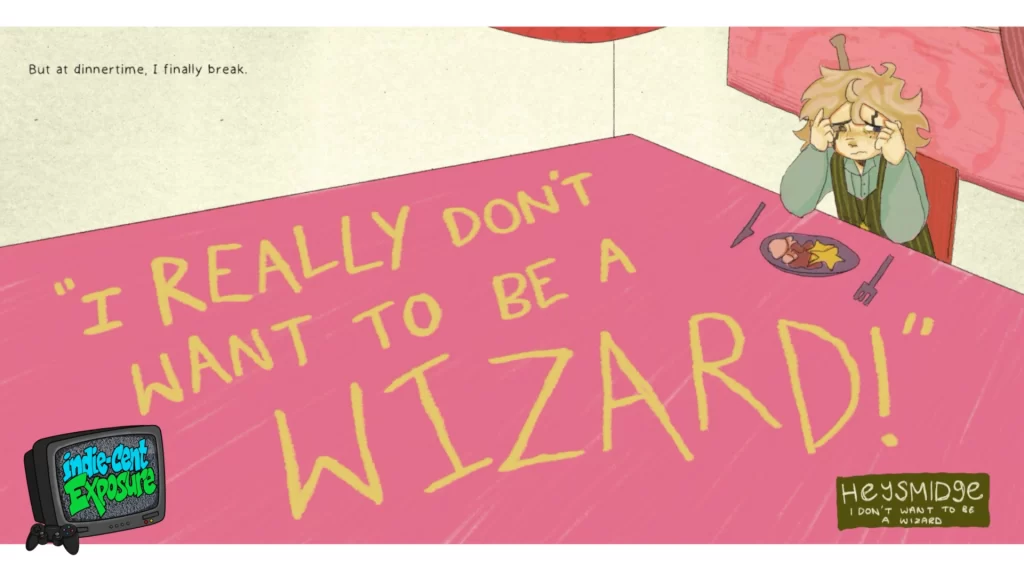
There haven’t been many chances where I’ve had the opportunity to ask questions of creators. Certainly in the past, but Indie-Cent Exposure is about shining a light on as many as possible. So, that’s meant taking a new approach to things, which is kinda why I really wanted to get a Q&A together for Moe Guard (heysmidge).
A young, independent illustrator and author. Someone who’s book “I don’t want to be a Wizard” has been added to my sons’ bedtime book rotation, and someone that seemingly has developed their own voice and style quite early in their career.
Her output is amazing, and she’s seemingly got a whole host of stuff in the works, thanks to university. It’s going to be great to see how Moe’s work grows and changes over time, for sure.
Here’s our Q&A with Moe Guard (heysmidge), enjoy!
1. What was the initial idea or moment that made you say, “I need to turn this into a story”?
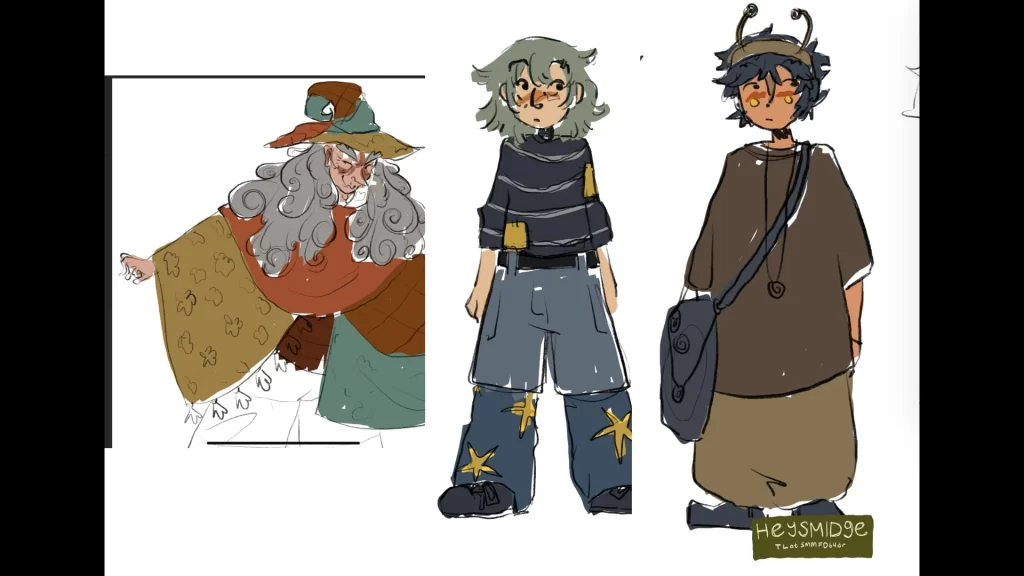
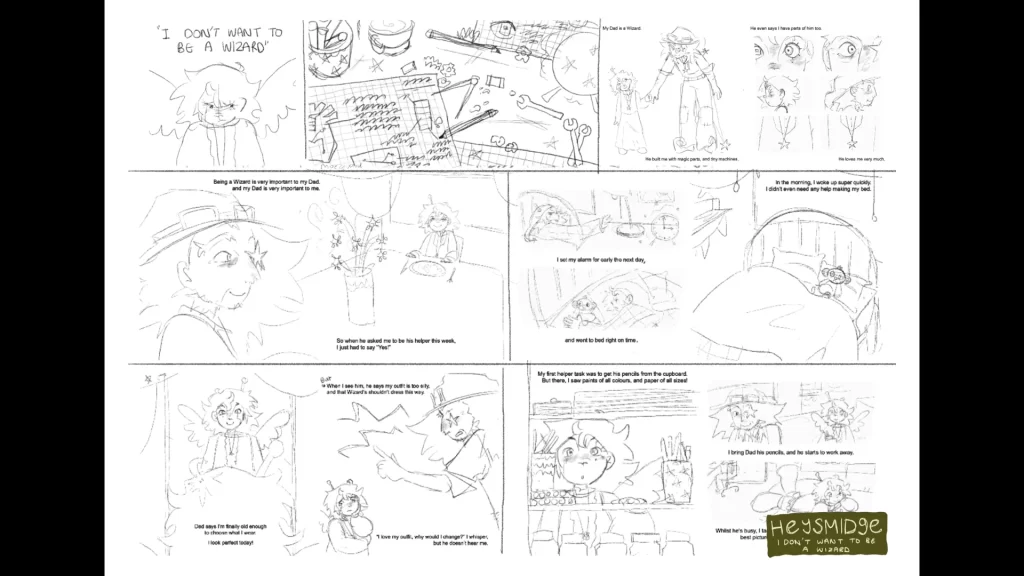
“I don’t want to be a Wizard” originated from a rough sketch I made of a wizard character holding a smaller clone of himself in his hands.
I got really into the idea of a wizard trying to clone himself and project his wizardness onto a less eager version of himself, but for the project I was making the book for, I needed to have at least 2 different character designs, so I came up with his child.
It grew from there into the final book concept!
2. You’ve tackled both a children’s book and a comic. Did one feel more natural to start with, or did they both happen at once?
Both started as uni projects, so I didn’t have any choice on when to start them.
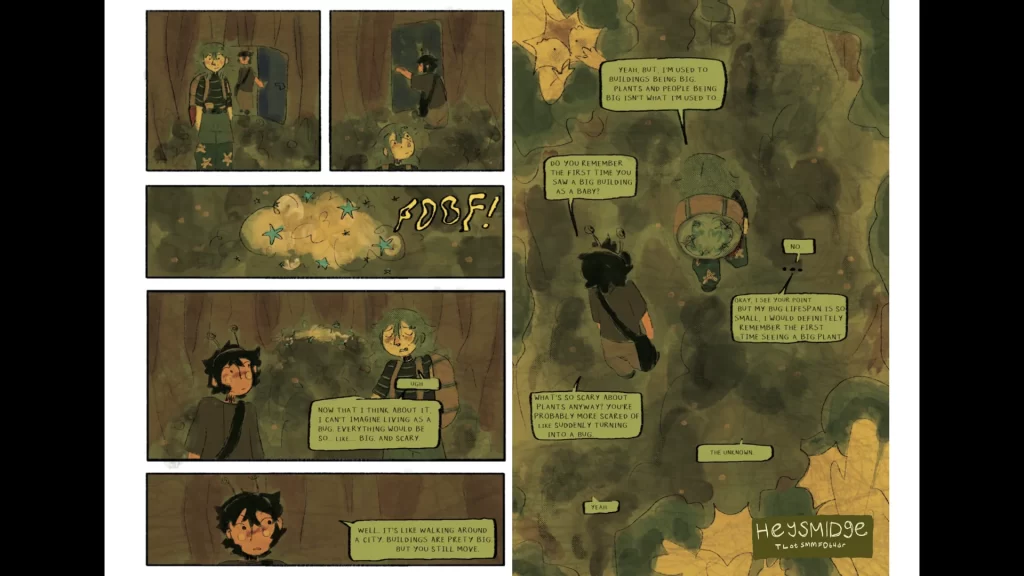
My comic project was assigned at the start of November last year, and then due at the start of January.
My children’s book was then assigned at the end of March and then due mid May, but I continued working on it into the summer outside of uni. I do wonder about what the outcomes would’ve looked like if I did make them the other way round, but I think creating my comic first and then my children’s book actually worked out quite well.
3. Who or what were your biggest influences when you were first developing your visual style?
I remember when I was younger I would try to copy drawings/screenshots from The Amazing World of Gumball, and random Youtubers which would come up on my feed.
I got really into Zelda as a franchise when I got a Switch ages ago, which came with Breath of the Wild. I have basically every art book from every Zelda game now, which I look back at a lot, especially the Twilight Princess concept art.
I also really like looking at the visdev work from other games and movies too; Hoppers, Wildwood, and Elden Ring in particular.
My biggest influence, however, is just fantasy as a whole, and I try to include it in everything I do.
4. How did you know when an idea was strong enough to commit to a full book project?
Having a strict uni deadline kind of forces you to commit to an idea somewhat quickly, but we do a lot of smaller, quicker tasks before our main project that we can look back on for inspiration or idea generation.
If I get attached to an idea, even if it has nothing to do with what we have to make, I will adapt it so it works in the context. This takes a lot of idea generation, iteration, sketching, reflecting, reworking and feedback from people around me.
5. When you work, do the images come to you first, or do you write the words and then illustrate around them?
I usually work in a constant cycle of research – write – draw + experiment – reflect – repeat.
For books, I’ll write a more refined first draft, and then lay the text out on the pages, before sketching around them.
Then I can change words to fit the story better, edit the layout so it fits nicer with the illustrations, and clear up the drawings with this new text and layout.
6. Illustrating a picture book requires a very different rhythm than layout design for a comic panel. How did you adapt your artwork for each format?
A lot of experimenting and looking at other artists that have a visual style that I enjoy. I’ll “steal” certain elements from different artists and try to incorporate and adapt them into my style, like one person’s way of drawing panels, another person’s typography style, another person’s use of colour etc.
I’m not directly copying from other artists, but I’m looking for very specific elements of their work I like, and then experimenting with and exploring ways of using those elements in my own style.
7. Is there a character design in either project that took a lot of drafts to get right, and what finally made it click?
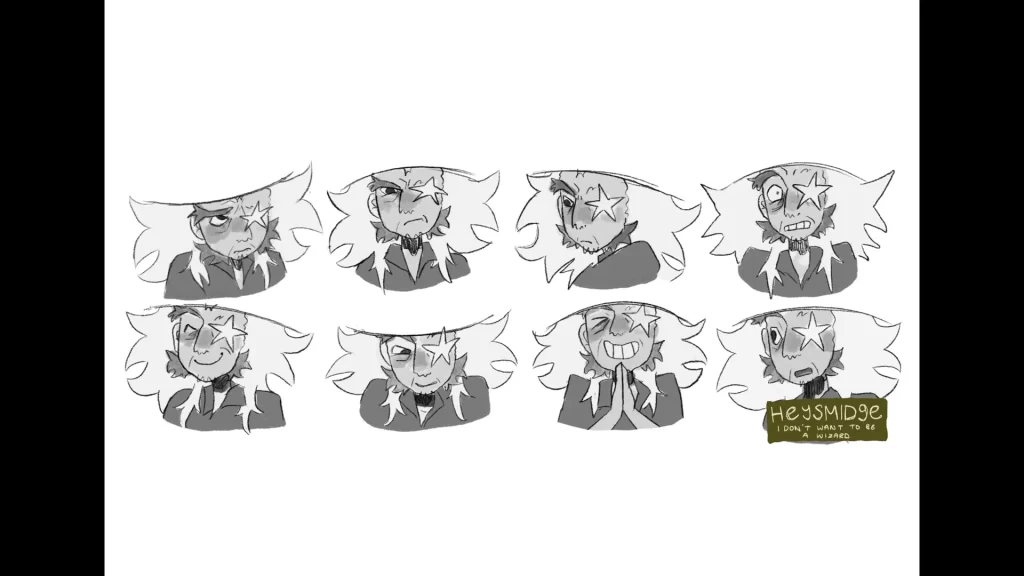
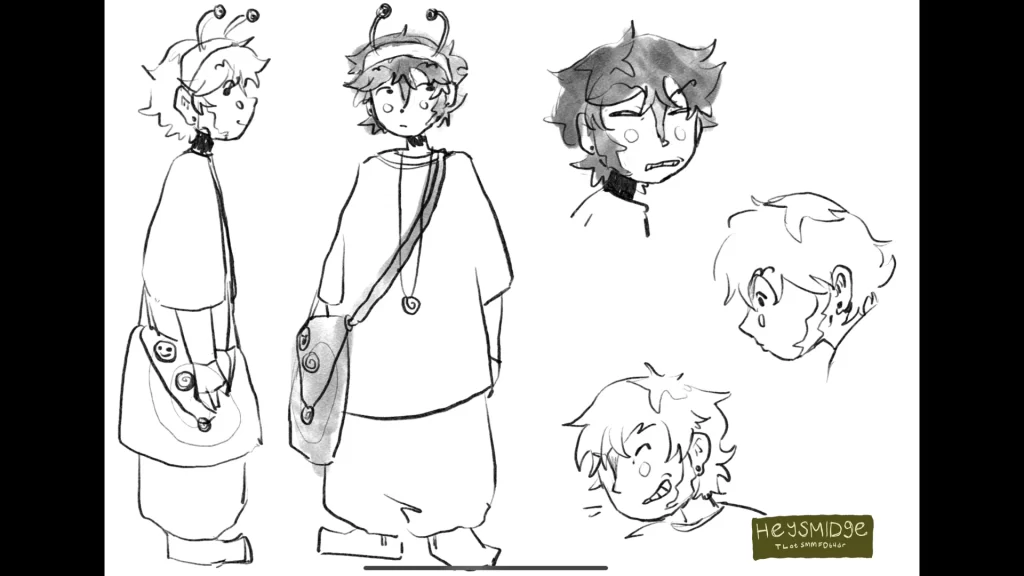
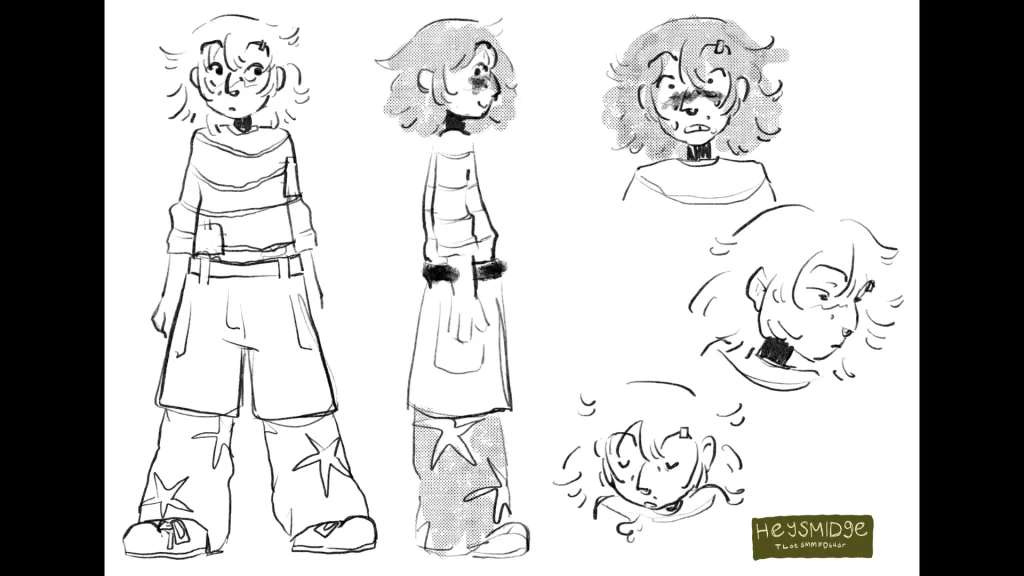
I really struggled with both wizards from both projects, purely because of beards/facial hair.
It’s hard to show expressions with a mouth when the mouth is basically always covered by a moustache, and it’s hard to make the face shape look right when you can’t see half of it. But I’d also say that beards and facial hair are an integral part of a stereotypical wizard, so I really really tried to add it for both designs.
I completely gave up with it for “TLotSMMFD64dr”, and for “I don’t want to be a wizard” I managed to add some tufts on his jaw. This is something I am still trying to get better at, but I can draw moustaches now!!!
8. What is your favourite medium or digital tool to work with when rendering your final artwork?
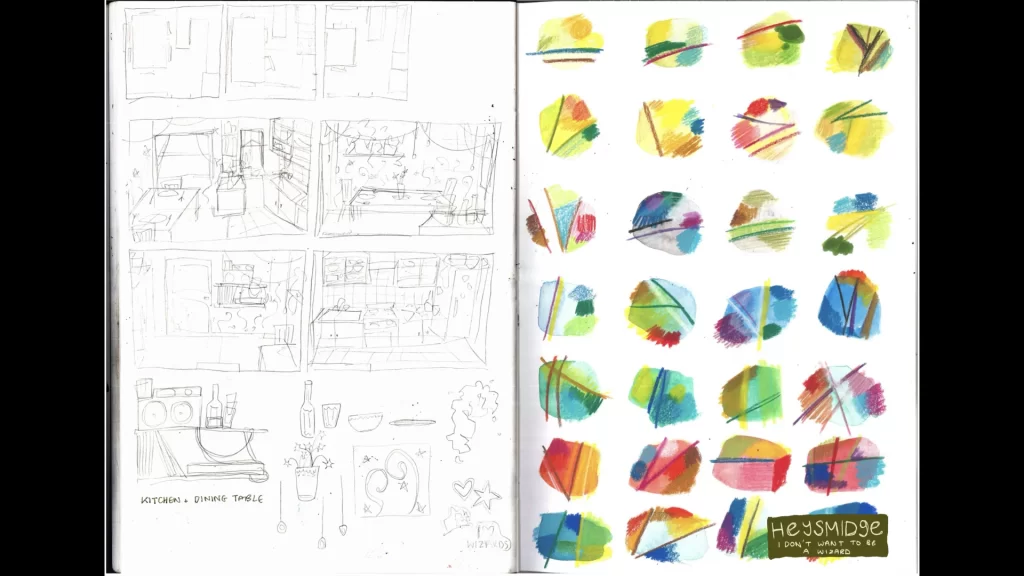
I always start out traditionally using watercolour and some surprisingly expensive wax crayons. I usually focus on texture and colour initially, rather than small details and characters.
I then scan these pages and take them to Procreate on my iPad, where I do most of the illustrating.
All of the digital brushes I use I made myself, using textures I did traditionally, so my work is still very centered around physical, textured lines rather than digital, smooth outcomes.
I also use Photoshop and inDesign for layouts + adding text.
9. Children’s books often carry an underlying core message or feeling. What did you want young readers to take away from “I don’t want to be a wizard”?
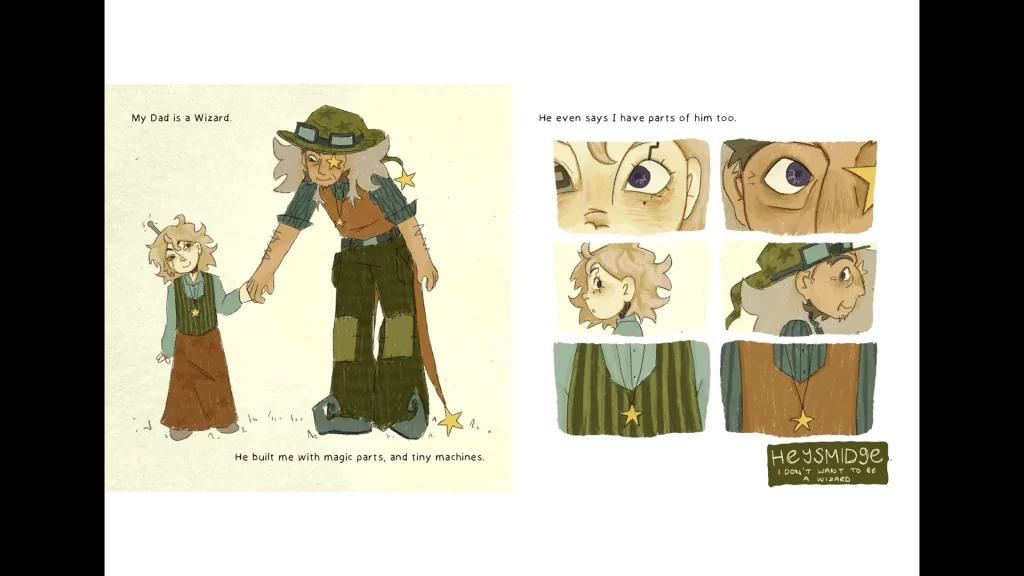
The book’s main focus is around letting children be themselves, and how it’s okay to like different things, and do things in different ways.
It’s also about the sacrifices a parent makes for their child.
In the book it’s more literal; the wizard made his child out of magic, bits and bobs, and parts of himself too.
I also wanted to show that having different hobbies does not always mean doing things separately, so having the child and the wizard share a working space/desk at the end of the book was very important to me.
10. Comics rely heavily on visual pacing and panel arrangement. How did you decide when to give a beat its own full page versus a quick sequence of small panels?
A lot of sketching and thumbnailing. If the page was more dramatic and loud, I’d let the panels take up more space. If the page was quieter and softer, I’d shrink it down and have some quiet panels too.
The sizing of the panels, and the spacing of the text, helps emphasize the mood of the page a lot.
11. Was there a scene or panel that proved particularly tricky to render or write, and how did you solve it?
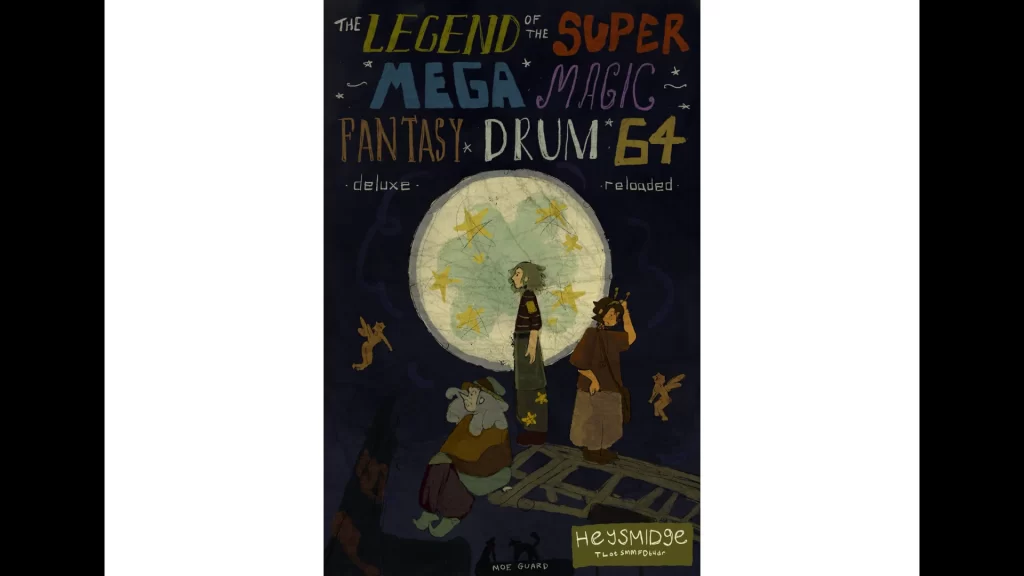
The first page of “TLotSMMFD64dr” was so tricky! I ended up changing it hundreds of times. I knew it had to be an invitation from the wizard to go to the tower and therefore introduce the whole story, but I had no idea how to do this.
I ended up rewriting Peach’s letter from SM64 as a joke, which actually worked out quite well with the overarching video game inspiration and references, so I kept it.
12. How do you handle world-building when you have to convey so much information through visual details rather than long text descriptions?
I find it really hard to not get super into worldbuilding and cram all of it in a small amount of space. I get around this by trying not to think about it at all.
Obviously I need to somewhat think about it so the story makes sense, but I focus more on the characters and the overall story first, and then fill in any worldbuilding gaps that I need to have for the story. I really like including clutter in my backgrounds, so I will let myself think about and experiment with the objects featured, but not too much that it overshadows the composition.
I really love worldbuilding though, so I have my own personal group of characters and a world that I let myself do whatever I want with.
13. Finishing a complete comic and an illustrated book takes real dedication. What was your routine for staying focused during the longer stretches of work?
At the start of every project I draw out a very rough schedule, with key moments labelled, such as finalising the idea, finishing the rough for the book, and then when I want it completed.
Then I make a template that I fill out every week, where I write about what I did that week, what I want/need to do next week, and then I reflect on the week as a whole. This helps me keep track of what I have done already, as well as see if I’m spending way too long on something.
14. What was the most surprising thing you learned about your own creative process while finishing these projects?
I can work surprisingly quickly, but I’m also very stubborn. If I have two months and I really want to make a 50 page comic then I know I can physically do it, but also I WILL do it and nobody can change my mind or convince me to make it shorter.
I’m trying to get better at giving myself more time for illustrations, quality over quantity, but also I really love getting to convey a story in its entirety, so I’ve been doing pressure tests to get even quicker at working, whilst keeping a high quality too.
15. Every creator hits a point where an illustration or story beat isn’t working as intended. How do you work through those moments of creative frustration?
I leave it for the day and I go do something else entirely. I’ve learnt that if I continue trying to push out work when it obviously isn’t working, I’m just going to burn out, have an outcome I’m not happy with, and not have the energy to rework it the day after.
It’s hard to do this sometimes, especially if I have a short turnaround time, because I can feel lazy or like I’m running behind, but it always works out way better than forcing myself to work.
16. Did you share early drafts with friends or family for feedback, and how did their reactions shape the final result?
Yes! I always try to share drafts, sketches, ideas with my friends and family, as well as my lecturers/clients.
I find it especially helpful to share my work with my friends, as they are all creatives in different areas of the art world, and always have a good comment, change, or idea that I can take on to my project.
They are all also very lovely people who inspire me and push me forward if I’m struggling.
17. Holding the finished physical print of your work for the first time is a huge milestone. How did that moment feel?
It was cool, but I was more focused on checking the books to make sure there were no misprints, rather than actually having the book itself.
It felt very exciting to see people enjoying and being interested in my book though!
18. If you could give one piece of advice to another young artist or writer who wants to publish their first comic, what would it be?
Go for it! Even if you print it at home, get it printed somewhere else, or even if it’s a comic you are publishing digitally, don’t be afraid to just start.
I was too nervous to share my work anywhere until a year ago, and I wouldn’t have self-published my books or even been featured on this Q&A if I hadn’t started posting online and applying to events.
Create and share things even if you think they are rubbish. Also quintuple check your files before sending them to print.
19. Are there any genres, art styles, or narrative formats you haven’t tried yet that you are eager to experiment with next?
My style has developed and improved a lot since I made my comic last year. I’m excited to revisit comic making, and seeing how much I have improved with storytelling, layouts and my visual style!
20. Can you share anything about the characters, worlds, or projects you are currently developing?
I am currently working on a new comic and a new kids book for my current units at uni, both of which will be completed in January next year!
I’m working with a local charity to create a children’s book, focused on hedgehogs in the wild and in your garden.
My comic is very inspired by manx folktales and creatures centered around the water, and a wizard (who would’ve guessed.)
Both of these are in very early stages because I started them a week ago lol, but you can keep up with both projects as well as other work on my Instagram! 🙂
heysmidge
Thanks so much to Moe for taking the time to answer our questions. I’d highly recommend people check out her work and updates over on Instagram.
We’ll be keeping our eyes peeled for new releases and watching the updates as they come.