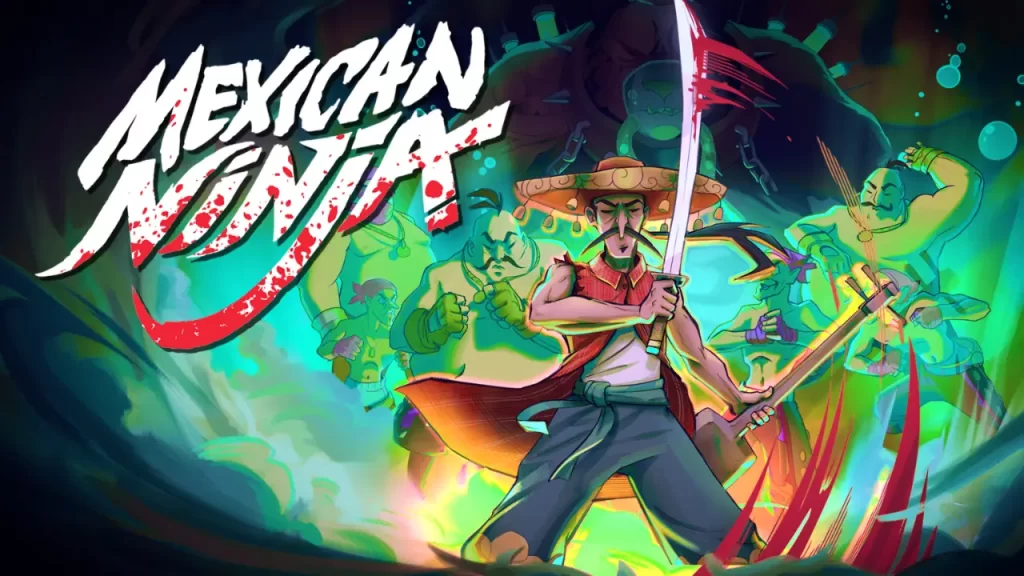
Back when we were at the ENDIX Expo a few months ago. My stand-out game of the show, was Mexican Ninja. From the get-go it had my eye. I did a preview, and even listed it in my Top 3 games from the show.
To quote myself:
Every now and then, a game concept comes along that makes you pause, blink, and then immediately grin. Developed by Madbricks and published by Amber Studio, Mexican Ninja is exactly that kind of game.
It’s a loud, proud, and beautifully unhinged 2.5D roguelike beat-’em-up that smashes two distinct cultures together like a pair of speeding lowriders, and we are entirely here for the chaos.
Based on the preview, the footage and all the information I could find. Mexican Ninja was shaping-up to be pretty sweet. So, I managed to get a review code to see if the game lands as well as I’d hoped.
And you know what? It pretty much does.
Mexican Ninja
Every so often, a game arrives that completely ignores the established rules of genre, tone, and basic restraint. Mexican Ninja from developer Madbricks and publisher Amber Studio is precisely that kind of glorious collision.
It’s a 2.5D beat ’em up roguelike that feels as though it was pitched during a late-night brain-storming session where nobody was allowed to say the word “no”. The result is a frantic, genuinely entertaining brawler that swings wildly between smart mechanical design and sheer, unadulterated absurdity.
It’s just crazy, and if you bear that in mind throughout your time with it, you can forgive the heavy-handedness with which it sometimes delivers the tone and the cultural elements from both Japan and Mexico. It isn’t intended to be offensive, but it certainly walks a fine line on occasion.
Sakila, Narkuza, and Total Tonal Chaos
At its core, Mexican Ninja rests on a premise that borders on the plain silly. In an alternate historical timeline, Japan invaded Mexico, leading to an immediate and aggressive fusion of both cultures. Fast forward a few decades, and the local Cartels have merged with the Yakuza to form the “Narkuza”, a criminal Syndicate ruling the neon-lit city of Nuevo Tokyo.
Naturally, you play as the titular masked warrior on a solo mission of blood-soaked vengeance.
The game leans heavily into this cultural mashup for its flavour. Healing items come in the form of “Sakila” (a mix of sake and tequila), environments scatter chibi-style religious imagery amidst traditional Japanese architecture, and the soundtrack trades ninjutsu synth for full-throated Mexican brass and Spanish dialogue.
It is loud, frequently ridiculous, and border-line absurd, but the utter commitment to the bit makes it strangely charming.
Brawling Meets the Roguelike Loop
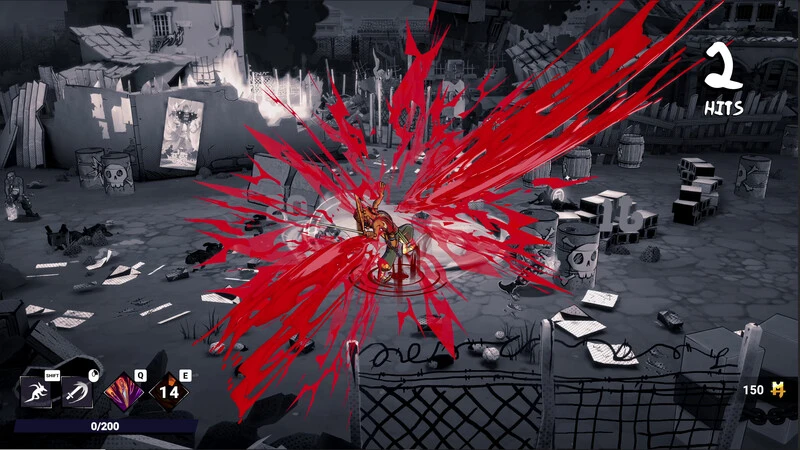
Strip-away the bizarre fiction, and you will find a remarkably capable brawler built on classic Double Dragon plane movement with modern action-RPG flourishes.
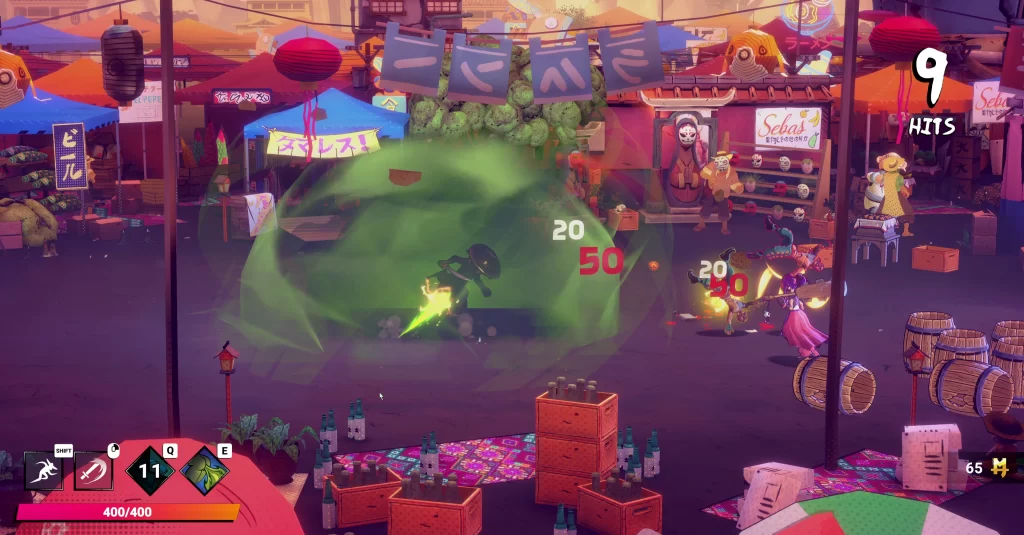
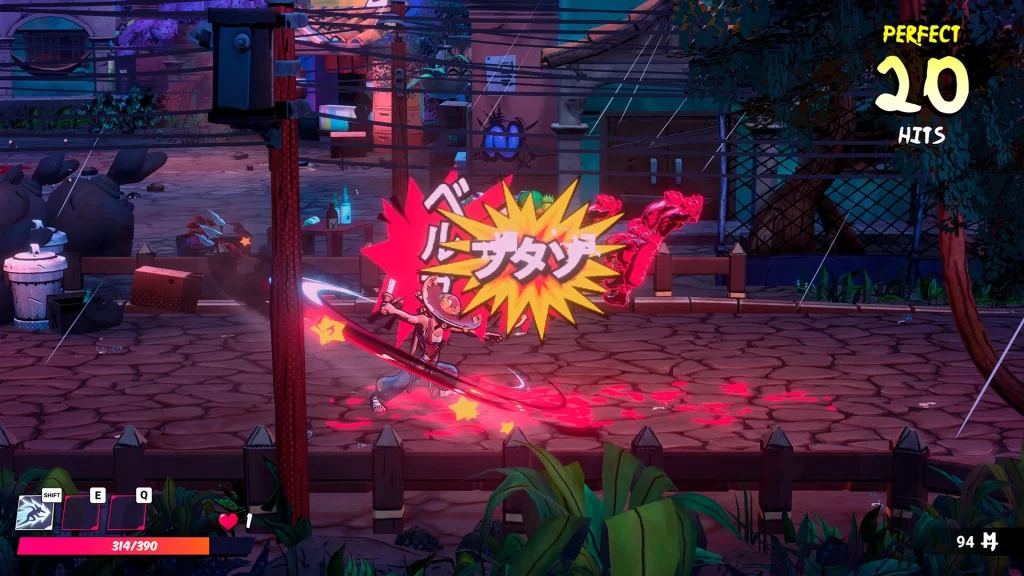
Instead of traditional jump-kicks, combat relies heavily on mid-air juggles reminiscent of classic action titles. You have quick attacks, heavy strikes, and single-button “Mexican Jutsus” tied to cooldown timers.
The roguelike structure works surprisingly well for a beat ’em up. Each run grants temporary perks and Jutsu modifiers, while coins collected along the way serve as persistent currency for permanent health, damage, and combo upgrades.
Side-quests scattered throughout runs even reward you with stat-altering suits and cosmetic colourways, like expanding your parry window or triggering explosions after basic light attacks.
A Few Loose Screws
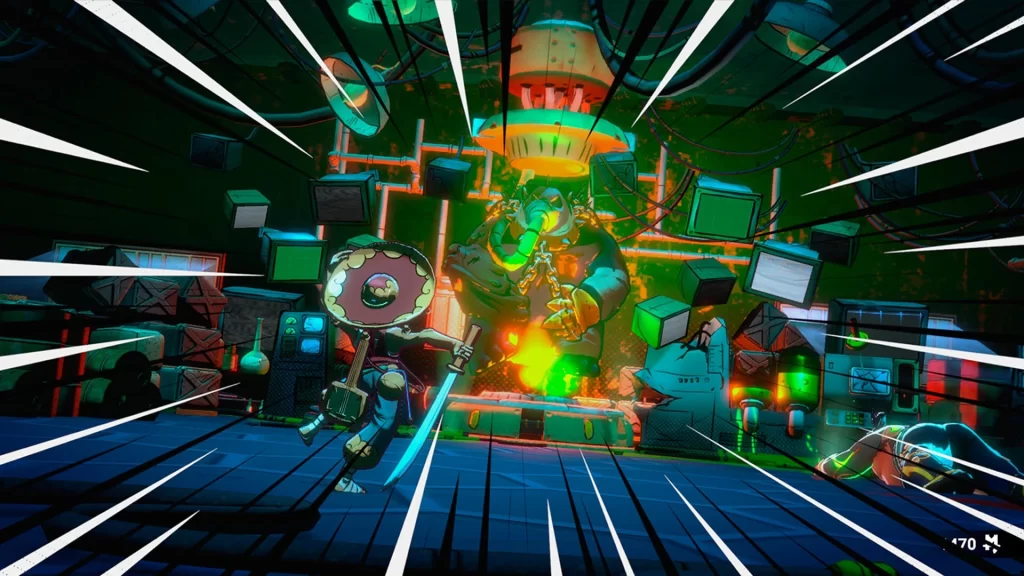
The core loop is fast and satisfying, but the chaos occasionally works against the player. Visual effects, hazards, and enemy spawns can clutter the screen. So, thoroughly that tracking your character becomes a bit of a guessing game. The camera also has a habit of hiding traps behind foreground scenery, leaving you to rely on faint character outlines to avoid taking damage.
Combat mechanics can feel slightly erratic as well. While the combo meter smartly persists between fights until you take a hit, environmental traps like explosive barrels behave bizarrely, often destroying fences while leaving nearby minions completely untouched.
Later runs can also introduce frustrating stun-lock loops where lingering hazard hit-boxes or boss patterns catch you the exact frame you recover. It’s never been a deal breaker, but it’s a frustration, for sure.
A Solitary but Entertaining Ride
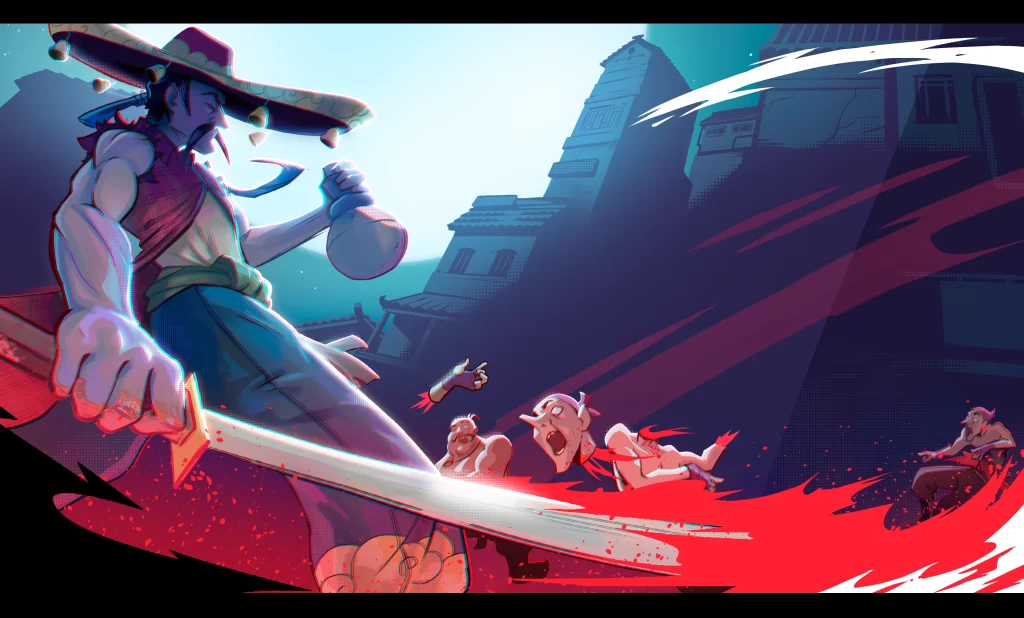
Unlike most traditional arcade brawlers that thrive on couch co-op, Mexican Ninja is strictly a single-player affair. While that might disappoint those hoping for a co-operative beat ’em up, the sheer variety in run builds, changing dialogue lines, and quest tracks give the solo experience plenty of momentum.
On the Steam Deck, it runs exceptionally well, and has been my preferred way of playing it, truth be told. Very little tweaking or adjustment, and it barely touches the battery life if you manage the TDP a little. It’s slick, it’s fluid and the colours pop on the screen, for sure. It’s great on PC, too, and has been a joy no matter where I play.
Overall
Mexican Ninja will not appeal to everyone, particularly those seeking a grounded narrative or deep mechanical purity. Its humour is over the top, its visual presentation is occasionally chaotic, and its core premise is delightfully daft.
Yet, as an energetic blend of classic arcade brawling and modern roguelike progression, it stands out as a thoroughly entertaining slice of gaming madness. It’s not super-long, but it’s challenging enough, and you have enough variety in outfits and build progression to keep going back for more. I think it deliveres exactly what it sets-out to do, and that’s all anyone can ask for.
Really great work. Mexican Ninja is highly recommended.