
Some games wear their influences lightly. Blood Reaver turns up with demon blood on its boots and makes no secret of what it loves. Created by Adelaide-based indie team Hell Byte Studios, the game is a dark-fantasy, round-based FPS built for solo play or up to four players in co-op, blending heavy weaponry, forbidden magic, and escalating survival action into something that feels proudly old-school in spirit while aiming to push the formula further. It is also the studio’s debut commercial release, which makes its arrival all the more interesting.
With Blood Reaver having launched into Steam Early Access on 15 April 2026, Hell Byte Studios is stepping into the spotlight with a game shaped by a clear love of wave shooters, dark fantasy, and co-op carnage. We caught up with the team to talk about building their first release, honouring a genre they grew up with, and giving players plenty more to chew on than simply surviving the next round.
But first, let’s check out the Blood Reaver Early Access release date trailer:
To start us off, could you introduce yourself and tell us a little about your role at Hell Byte Studios and how you fit into the making of Blood Reaver?
I’m Jackson Hole, the Director of Hell Byte Studios and Game Director of Blood Reaver. As director, I wear a lot of hats; however, I spend most of my time leading the design and creative vision of the project. This includes designing mechanics, concepting weapons, enemies, and levels, and working with the team to ensure everything going into the game aligns with that vision.
Hell Byte Studios has described itself as a team of lifelong wave shooter fans. At what point did that shared love of the genre turn into, “Right, let’s make the one we’ve always wanted to play”?
All of us started as students studying game development together. I posed the original concept for Blood Reaver to the team during the end-of-year production, which was our final course assessment. This was a very different, stripped-back version of the game compared to what we have now. It was basically a proof-of-concept, but it showed us what we were capable of and that the team had a shared love for this kind of game.
Since then, we’ve gained and lost team members, but everyone who has come on board has joined with that same passion, or has discovered it through working on the game. It’s been really amazing to see.
Blood Reaver clearly wears its passion for round-based survival shooters on its sleeve, but it is also trying to push that formula further. What were the key things you wanted to preserve from the genre, and where were you most determined to put your own stamp on it?
We wanted to preserve the core gameplay of Call of Duty Zombies, while simultaneously elevating it. Our goal was to bring back the original feelings those games evoked: starting from the bottom with just a pistol and building your way up into the ultimate power fantasy, where you’re slaying hordes of demons with magical weaponry.
One of the biggest areas we wanted to look at was buildcrafting. We wanted to give players more decisions when finding their approach, rather than just having the same ‘meta’ set of guns everyone is trying to get. To that end, we implemented abilities, which is one of the largest systems in the game. You choose two Utilities and one Lethal before the match, and can find an Ultimate while playing. We focused on making the effects feel very different – not necessarily more or less powerful. Depending on what you take with you, you’ll find completely different solutions to situations like getting surrounded or trying to clear out groups of enemies.
Buildcrafting and player agency is something we’ll continue to push in the future. We’re looking into adding new ability sets, a Re-Infusion system that will apply different bonuses to your guns, and some other mechanics that we’ll be implementing during Early Access.
As your first commercial release, did Blood Reaver come with a different kind of pressure? Was there ever a moment where the scale of what you were building really hit you?
We definitely started to see the true scale of the game pretty early. We came out of the gates with a lot of ideas and had to strip back, moving certain mechanics and content into post-EA additions. A game like this requires a lot of resources, and we needed to make some hard decisions about where the true identity of Blood Reaver lay and what the requirements were for the experience we wanted to create.
There has absolutely been a lot of pressure on this project. We’re a new team, trying to carve a path for ourselves in the industry with a game that is bigger than anything most of us have ever worked on. But the team is full of amazing people, and they’ve never let that pressure affect their work or their passion. I’m so happy to see this game release and everyone’s hard work finally starting to pay off. I hope Early Access will treat us well so that, when we roll around to the full release, players will get to see the full vision of the game we’re so excited to create.
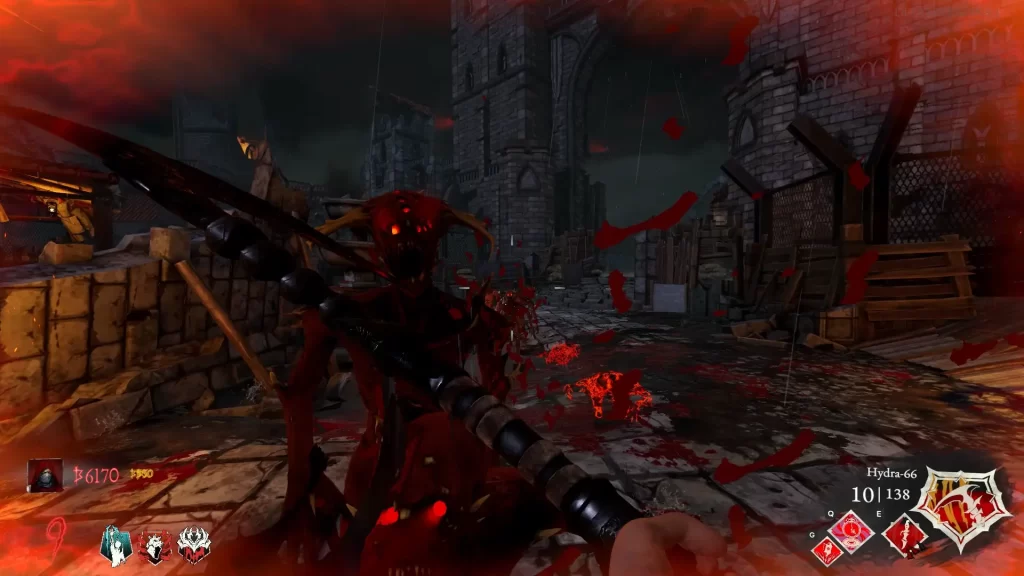
The dark-fantasy setting gives the game a very different flavour from the military or sci-fi angles people often associate with this kind of shooter. Why was that world the right fit for Blood Reaver?
Many games in this genre have dipped into the fantastical, but we wanted to wear it on our sleeves. With Blood Reaver, we’re aiming to create a world that will allow us to explore scenes and settings that players haven’t seen in this genre yet. A dark fantasy theme gives us room to get creative with our future map ideas, and the tools to push the world in interesting new directions with each addition.
One of the biggest hooks is the mix of heavy metal weaponry and blood-fuelled magic. How did you approach making those two sides of combat feel distinct, but still part of the same brutal toolbox?
We wanted combat in Blood Reaver to have this intense rhythm to it: you dive in, mowing down demons with your guns to build up blood charge, then sling out your spell combo just before you get overwhelmed. Your guns will be your main weapon – they’re consistent damage output, and your go-to way of dealing with demons. Your abilities grant brief power spikes that will help you deal with large groups of enemies or get out of a dangerous position. The balance is that abilities need to be charged up by dealing damage with your guns. Experienced players will be controlling the horde with gunfire, but always keeping an eye out for situations where a spell can turn the tide.
There seems to be a real emphasis on buildcrafting and player expression, rather than just holding out for as many rounds as possible. How important was it for you that players could shape runs in very different ways when playing Blood Reaver?
As I mentioned earlier, buildcrafting is at the heart of the player experience we’re trying to develop with Blood Reaver. We want to present players with a range of different tools they can use to fight demons and outlast the horde, and we’ve purposefully structured the ability system around combining effects. Early versions of the game had you only bringing one Utility, for example, but we found that having two opened up a lot more possibilities for chaining spells together.
This is something we’ve extended to multiplayer, as well. Certain abilities become more valuable if there are other players to take advantage of them, or if your teammates are using abilities that synergise with yours. It’s something we’ve already noticed in the office – most of us have a favourite kit we like to bring, but playing with others makes you want to mix things up to capitalise on some of these combos.
Blood Reaver can be played solo or with up to three friends. When designing the game, how did you balance that so it still feels intense and rewarding whether someone is tackling it alone or causing chaos with a full squad?
The biggest consideration is making sure there are enough demons. It sounds basic, and it is, but making sure everyone is always fighting the horde is integral to the experience. With the way points work, as well, you want to ensure each player is getting enough kills to buy the weapons and perks they want. To deal with this, we have many systems adjusting the spawn rate of enemies depending on players’ proximity to each other, the number of players, the number of kills that a player is getting, and so on.
Our ability system also has a lot of considerations when it comes to multiplayer, since we need each ability to be fun and relevant in both a solo and team environment. This is where that cross-player synergy comes into play: using the slow field to hold a chokepoint while another player drops their turret, a third throws a fire grenade, and the last pops a rapid-fire buff. These combinations keep a multiplayer session feeling fresh and chaotic, but we have to design carefully to make sure everything works together, and that these super-combos don’t break the balance completely.
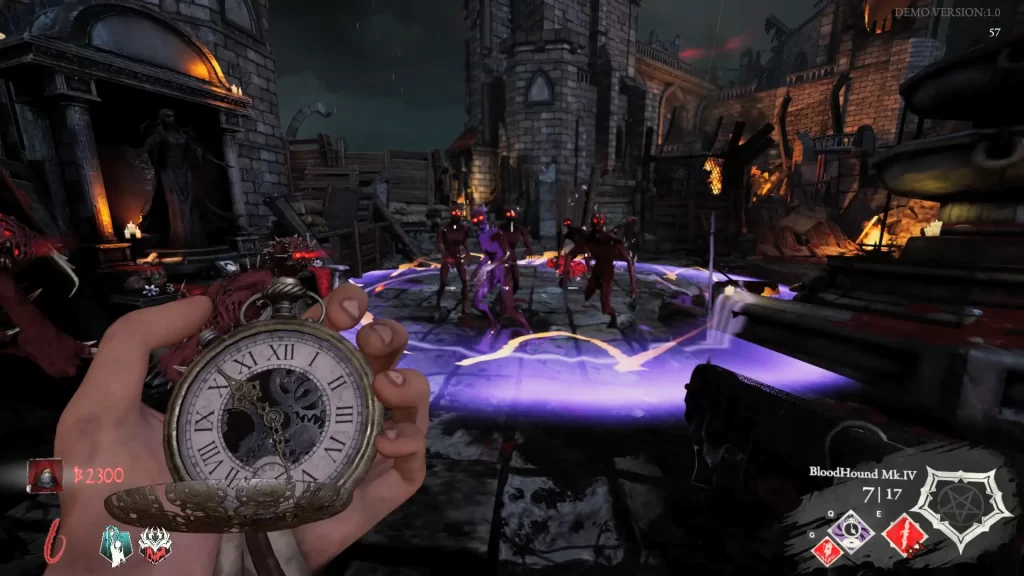
The world sounds like more than just a backdrop for demon slaying, with ruined empires, sunken towns, ancient orders, and secrets hidden around the maps. How much of Blood Reaver’s identity comes from its lore and sense of place?
The world is certainly more than a backdrop! We’re hoping players will decide to engage with the lore and world of Blood Reaver, since we’ve put a lot of thought and care into it. There’s already plenty of environmental storytelling going on in the first map. Nothing concrete so far, but that will gradually change as we move through Early Access and start working on more narrative content.
Obviously, with a title like this, the moment-to-moment combat is always going to be a priority. And it needs to stand on its own if a player only chooses to engage with that side of the game. But we feel like lore and stories and secrets are woven into Blood Reaver’s DNA, and we’re excited to start developing a lot more in those areas.
The enemies sound gloriously nasty, all claws, maws, fire, and explosive horror. What goes into creating demons that are not only grotesque to look at but memorable to fight?
We have some incredible artists on the team who are big fans of horror. They’ve worked tirelessly to come up with these designs, sculpt them into reality, and animate them to life. So all credit for glorious nastiness is theirs, absolutely.
In terms of the demon’s fighting styles, our biggest consideration was to create enemies that force players to switch up their tactics. You’ll be dealing with the base horde most of the time; the basic demon is fairly predictable in how it behaves, so you can be quite proactive in herding them around and taking them out. But every now and then, we want to throw in a challenge for you to react to.
An example of this is the Bloater, which is a fast demon that charges at you and detonates on death, making it very dangerous if you let it get too close. Once you hear or see it, you’re pushed to deal with it straight away, which can distract you from the horde and make it easier to make mistakes. The flip side is that the Bloater’s explosion will damage other demons, so you can actually use it to your advantage by blowing it up near a cluster of enemies. It’s one of my favourite interactions, and very satisfying to pull off.
Because this is a genre with a very passionate audience, I imagine expectations can be both exciting and slightly terrifying. How have players responded so far, and has any feedback changed the way you think about Blood Reaver going into Early Access?
We’ve been really happy with the response from players so far. After working on Blood Reaver for so long, it’s amazing to see people having a good experience with the pre-release versions. They’re who we made the game for, and it’s validating to see them enjoying themselves. We’ve had some amazing feedback through our community Discord, which has helped guide us towards our highest priorities in terms of features and updates going into Early Access. We’re all very excited to start working on new content – there’s stuff coming up that will make some community members very happy.
Indie development is never exactly the easy route, and making a co-op FPS as your debut project is hardly thinking small. What have been the biggest challenges for the studio in getting Blood Reaver to this stage?
The biggest challenge has definitely come from multiplayer. From a programming perspective, this changes a lot about how systems have to be designed, and makes the process of debugging several times more complicated than for a single-player game. We’ve easily sunk months of development time into hunting down and fixing problems that simply wouldn’t exist if we weren’t doing multiplayer.
On the design front, multiplayer introduces a lot of issues with balance and player experience. Making the game feel fun and fair for a solo player, for two, three, or four players – it all requires a slightly different approach. You have to think about interactions between players: what happens if I try to revive a player who’s already being revived by a different player? You have to think about all the different edge cases.
Even the art gets harder. We actually have two versions of the player model: one is the first-person view that you’ll see when you’re playing, and the other is the third-person model, which is what you’re seeing when you look at another player. When you perform a reload in first person, your friend sees you reload in third person – but those are two different animations, and we had to put in the time to make both.
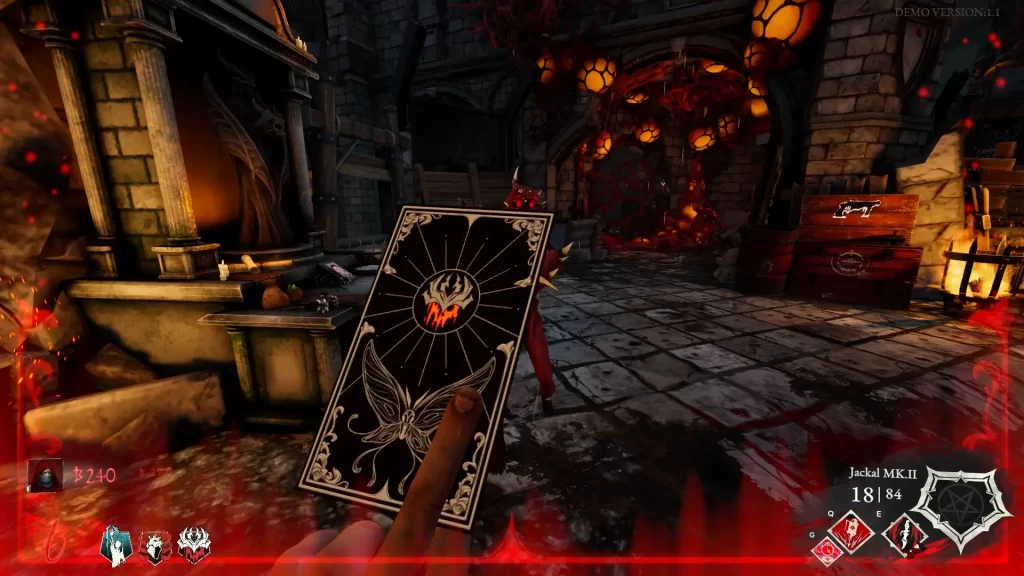
For people coming in because they love round-based shooters, what do you hope makes Blood Reaver stick with them once the novelty of demons, guns, and magic gives way to the deeper systems underneath?
I hope players will keep experimenting with their builds. I want them to find out that the Infused version of a gun works in a totally different way to the base version, and then realise that they can combo this with their abilities in some way they hadn’t considered before. I want them to try new kits in new runs just for the fun of it. I’d love to see players find a combination that we never thought of. Additionally, I hope that – after seeing the foundation we’ve put in place with Early Access – players are excited for the future of Blood Reaver, and what we’ve got in store for them as we build towards full release.
Finally, when players jump into Blood Reaver for the first time, what is the one feeling or reaction you most want them to walk away with?
Most definitely the itch to jump back in for more. We’ve built Blood Reaver to be a challenge, even if you’ve played wave shooters before, so we’re hoping that the first time you lose a run, you’ll immediately go ‘Ok, I could’ve lived there if I’d…’ and dive back in to try it. Switch up your loadout, take a different path through the map, and start hitting those high rounds.
A big thank you to Hell Byte Studios for taking the time to chat with us about Blood Reaver. It is always exciting to see a studio come out swinging with a debut project, especially when that project is so clearly built on years of love for a genre and a desire to do something fresh with it.
Blood Reaver looks set to bring plenty of blood, pressure, and demonic chaos to the round-based survival space, but what really stands out is the intent behind it. This is not just a throwback to the games that shaped the team, but a bid to carve out something nastier, stranger, and more distinctly their own.
Enjoyed our Blood Reaver Q&A and want to see which other indie devs we’ve been chatting with about their games? Head on over to our interviews section.