In modern gaming, where thousands of titles compete for a fleeting moment of player attention, hitting the “Add to Wishlist” button on Steam feels like little more than a digital bookmark. It’s a quiet bookmarking gesture that translates to: “This looks interesting, let me know when it’s on sale.”
For an independent developer, however, that single click carries far more weight than a casual reminder. It is an active vote in a hyper-competitive ecosystem, the foundational currency of organic discoverability, and frequently the decisive factor between a studio’s long-term sustainability and immediate post-launch closure.
Feeding the machine
Valve’s storefront relies heavily on automated algorithms rather than manual editorial curation to decide what sits on its digital front window. The primary metric driving those automated decisions prior to release? Wishlist velocity and volume.
Can you believe that such a seemingly insignificant thing to us, the consumer, is quite so powerful?
The “Popular Upcoming” threshold
Long before a game ever reaches its release date, accumulating wishlists pushes it into key visibility corridors across the platform:
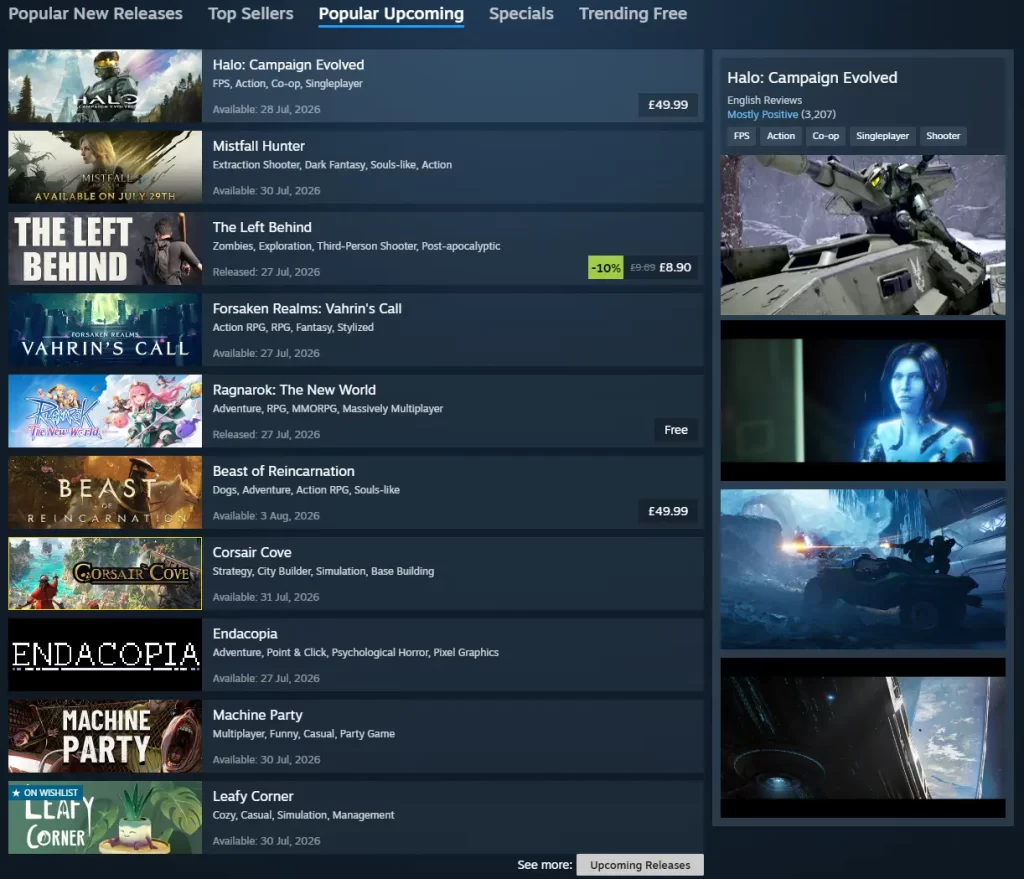
- The ~7,000–10,000 benchmark: Crossing this initial threshold frequently qualifies a title for inclusion in Steam’s coveted “Popular Upcoming” tab.
- The snowball effect: Landing on this list exposes an unreleased game to tens of thousands of daily store visitors, generating organic interest without requiring the developer to spend a penny on external ad campaigns.
Launch day velocity (“New & Trending”)
Once the release button is pressed, Steam immediately monitors how effectively those banked wishlists translate into day-one sales conversions. When a high percentage of wishlisters convert within the first 24 to 48 hours, the algorithm flags the title as a high performer, propelling it onto the main store carousel and into “New & Trending.”
Automated marketing in an era of social noise
For small teams without deep marketing budgets or dedicated PR agencies, reaching an audience is notoriously difficult. Social media algorithms shift constantly, organic reach is continually suppressed, and paid advertising eats into already razor-thin margins.
A Steam wishlist bypasses much of that noise by serving as an automated, direct line to interested players:
- Instant launch notifications: The moment a game goes live, Steam dispatches automated email alerts and push notifications directly to every user who wishlisted it.
- High-intent conversion: Unlike cold banner ads or social media posts, wishlist notifications reach people who have already explicitly signalled their interest. Conversion rates on launch-day wishlist emails routinely outstrip standard digital marketing benchmarks.
- Long-tail price promotion: Every time a game joins a seasonal Steam sale or applies a discount of 20% or more, wishlisters receive another automated ping, sustaining revenue months or years after the initial launch window.

What the data tells us
Data compiled across the independent sector, by platforms like GameDiscoverCo and veteran indie marketers, shows a direct, measurable relationship between pre-launch wishlist numbers and first-week commercial viability.
On average, studios can expect roughly 10% to 20% of their total pre-launch wishlists to convert into actual sales within the first week.
| Wishlist Total at Launch | Estimated Week 1 Sales | Industry Impact & Reality |
|---|---|---|
| Sub-1,000 | ~50 – 150 copies | The Invisible Tier: Zero organic storefront pushing; relies entirely on manual external outreach. |
| 5,000 – 15,000 | ~500 – 2,500 copies | Baseline Viability: Minimal threshold required to catch initial algorithmic momentum and recoup modest costs. |
| 15,000 – 50,000 | ~2,500 – 10,000 copies | Solid Commercial Release: Strong front-page placement, sustainable revenue, and a foundation for future projects. |
| 50,000+ | 10,000+ copies | Breakout Hit Territory: High likelihood of top-tier featuring, publisher interest, and long-term studio security. |
Leverage beyond the storefront
The influence of a healthy wishlist balance extends far beyond Steam’s internal code. It serves as a primary trust metric across the wider games industry:
- Securing publishing & funding: When pitching to publishers or investors, one of the first data points requested is the game’s wishlist count and daily growth trajectory.
- Showcase inclusions: Curation teams for major digital showcases, such as Steam Next Fest or specialised indie streams, regularly evaluate wishlist traction when deciding which titles receive prime broadcast slots.
- Press & creator coverage: Streams, coverage, and editorial reviews are increasingly influenced by store momentum. High wishlist totals signal to journalists and creators that an audience is already waiting to read about the game.

The most meaningful free gesture in gaming
Purchasing a game on day one remains the direct way to fund development, but wishlisting is the single most effective zero-cost action a player can take.
Clicking that button costs nothing, yet it signals to Valve’s platform that a project deserves space on the front page. In an industry increasingly crowded with derivative releases and massive marketing budgets, a few thousand wishlists can give an ambitious indie title the exact spotlight it needs to survive.
Next time you see that Indie title here as a news post and you think it might be promising. Maybe go and give it a wishlist. You don’t even need to commit to buy it, but increasing its visibility to others, at no cost to you, is one of the best things you can do in modern gaming.
For more opinion pieces like this one, click right here.