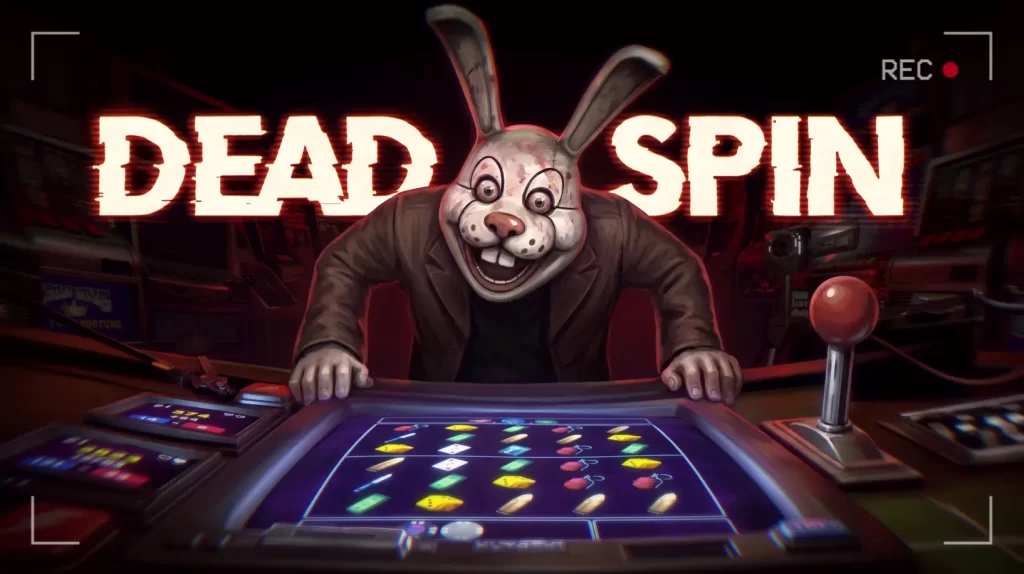
Some games grab you through mechanics first. Dead Spin gets its claws in through atmosphere before you have even properly worked out what it wants from you. The abandoned casino setting, the grubby late-90s and early-2000s horror energy, the grotesque little weirdos sitting across from you, it all makes a strong first impression. Thankfully, once that first impression settles in, there is also a properly interesting game underneath it.
Rather than simply borrowing the broad appeal of score-chasing deckbuilders and dressing it in horror wallpaper, Dead Spin feels like it is trying to twist that formula into something harsher, stranger, and more claustrophobic. Reels, symbols, chips, trinkets, cash economy, dirty boss tricks, it is a setup that seems designed to keep players improvising while the game stares them down and dares them to break it. We caught up with Strong Monkey Games after playing the game’s demo to talk about building tension through systems, embracing obvious comparisons without getting buried by them, and making a roguelite that feels nasty in all the right ways.
To kick things off, could you introduce yourself and tell us a bit about your role on Dead Spin and what part of the game you have been most closely shaping?
My name is Alex, and I’m the game director and producer of Dead Spin. I’ve been responsible for defining the overall vision of the game – how it should feel, how risky it should be, and how far we can push that “one more spin” tension.
Dead Spin makes a very strong first impression through atmosphere alone. Before players even get a handle on the systems, they already feel trapped somewhere grimy, hostile, and deeply wrong. How early did that abandoned-casino horror vibe become the identity of the project?
Pretty early. The aesthetic and vibe were the first things we locked in, and they never really changed during development. We drew inspiration from games like Manhunt, Condemned, Kingpin and The Punisher, trying to capture that dark, tense atmosphere. But even though those influences are very grim and violent, we didn’t want Dead Spin to feel too bleak, because that clashes with the casino setting. So we balanced it out with humour, memes and some funny or grotesque details.
There will obviously be people who look at Dead Spin and immediately reach for the Balatro comparison, but once you start playing, it becomes clear you are doing something a bit different with reels, symbol connections, and a more chaotic board state. What did you most want Dead Spin to do differently from the usual deckbuilder shorthand people might bring with them?
We wanted Dead Spin to lean hard into the deckbuilding side of things. That’s why the player has very little direct control during spins – that part of the game is mainly about watching the results of your own planning. You see how well you used items, how well you understood synergies and calculated probabilities… and, of course, how lucky you are. 🙂
At the same time, that chaos only works if the underlying system is clear and at least somewhat predictable. So we tried to make the rules and interactions readable enough that players can actually build around them instead of just hoping the reel saves them.
One of the interesting things about the reel-based scoring is that it feels less forgiving than simply picking the best hand from what appears. You are often trying to bend randomness into something useful rather than just selecting from it. Was that harsher, more unstable feeling a deliberate part of the design from the start?
Yes, absolutely. We wanted players to feel both lucky and clever. For us, that’s the core of mixing slot mechanics with deckbuilding: pure luck and a lack of direct control fused with limited management and planning. In many deckbuilders, a hand‑picking step lets you adjust your odds on the fly, which is great, but we deliberately removed that layer to put more weight on foresight and long‑term planning instead of moment‑to‑moment corrections.
Of course that leaves less margin for error, but that margin kind of becomes the stake you’re putting on the table. When you still manage to beat the Score under those conditions, the payoff feels much more intense and satisfying.
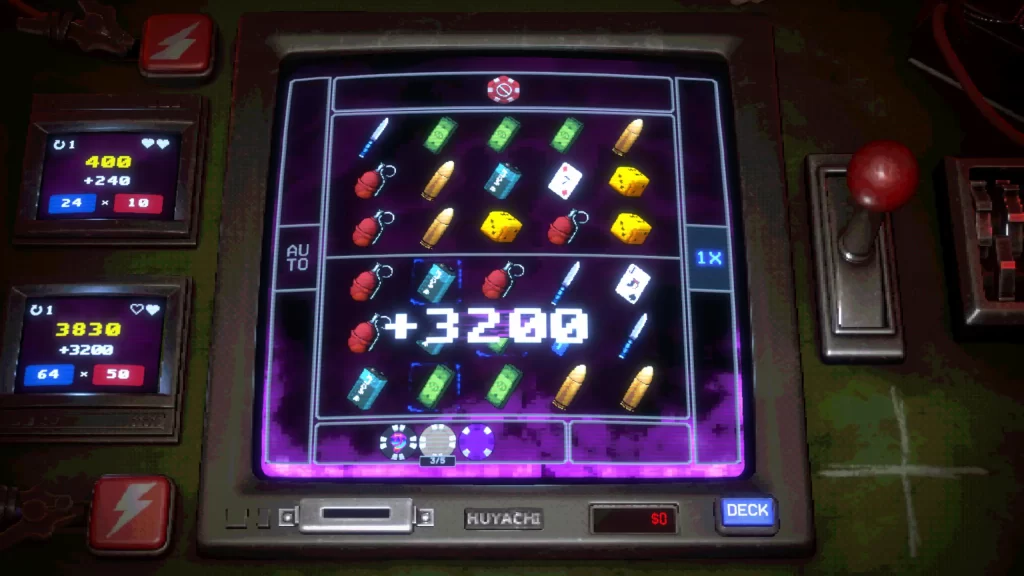
The cursed chips are one of the places where the game really starts to open up, especially because builds can feel less like simple upgrades and more like assembling an engine piece by piece. How did you approach making chips feel strategic and stackable rather than just becoming obvious “take the best one” picks?
It’s not just about Chips in isolation. They support Symbols on the Reel and are less limited, yes, but it’s the Symbols that actually use Chip effects. And that duality is a big part of the design. We tried to make Chip effects plug into every core mechanic in the game, and most of them are useful for several different lines of play rather than just one obvious build. Some Chips are more stable, some are swingy, some are very situational, some are better early or late in a run.
The idea is that you’re assembling an engine, not just picking a single “best” upgrade. There are definitely items that are stronger than others in specific situations, but those situations keep shifting because of Shop RNG, the huge variety of possible Deck states, and how quickly your build can change from Clash to Clash.
The same goes for trinkets, which do a lot to stop the game feeling cruel for cruelty’s sake. They seem to add a bit of breathing room and tactical flexibility between bosses. How important was it for you to build in that layer of recovery and adaptation?
That layer is important for two reasons. First, it gives the player some agency during a Clash, so it’s not just a phase you have to sit through and hope for the best. Second, Trinkets add another layer of short‑ and mid‑term decision-making: you can use them either to avoid or minimise damage at a critical moment, or to push your odds higher when you feel confident. That way the player stays engaged during a Clash, constantly re-evaluating their position instead of just riding out whatever the casino throws at them.
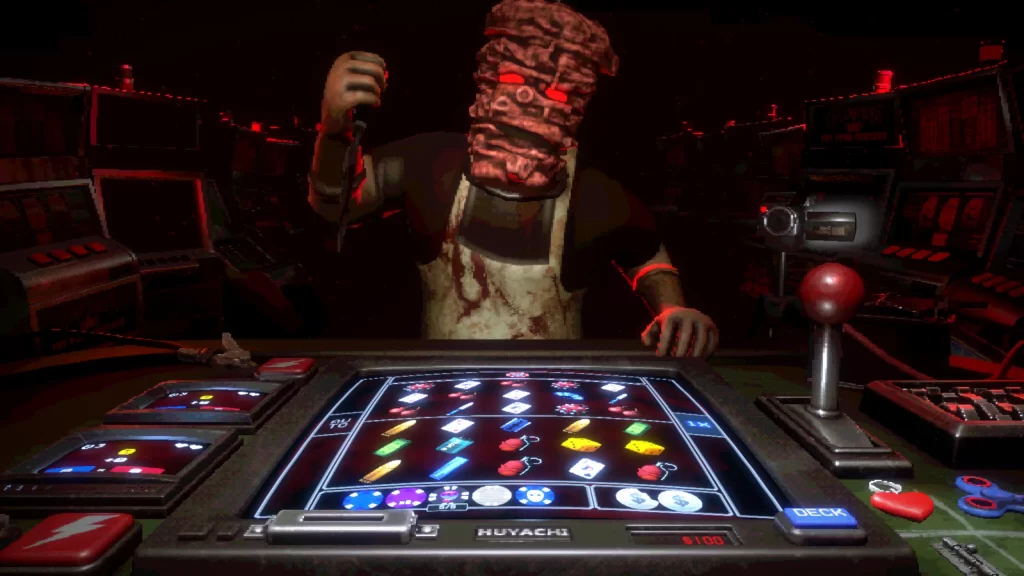
The bosses are a big part of why Dead Spin feels like a confrontation rather than just a high-score puzzle. Even in the playtest, they already had enough personality to feel memorable. When designing these opponents, what matters most to you: mechanical disruption, visual identity, or simply making players feel slightly uncomfortable sitting across from them?
Visual identity that fits the game’s vibe is our main requirement. We went through tons of references from games, movies, posters and photos to arrive at a look that matches Dead Spin’s dark, grotesque aesthetic. And because players don’t see the boss constantly, their brief appearances have to be striking and memorable. At the same time, we care a lot about making their skills interesting on their own, independent of visuals or narrative – each boss should feel like a distinct mechanical challenge, not just a cool face on the other side of the table.
One thing that stood out in the playtest was how much the boss abilities can change the emotional texture of a run. A fight can go from “I think I have this” to “this is complete nonsense” very quickly. How do you balance bosses so they feel threatening and dirty without tipping too far into the sort of unfairness that kills experimentation?
The bosses are the casino. And the house always wins – especially when you’re just a plaything in the hands of lunatics. Their abilities are deliberately designed to create a sense of unfairness. At the same time, we tried to give players enough options and tools to push back against that. Every boss skill has counterplay, usually more than one, and some of those are not immediately obvious.
Luck in Dead Spin is also unbiased: the enemy can have a terrible spin while you have a great one – and the other way around. That’s where we lean on statistics: we look at probability curves, outcome spreads, scaling potential and so on. And that’s probably the hardest part of the job.
Dead Spin also seems very interested in economy as part of strategy, not just scoring. Coins, shop decisions, cutting weaker symbols, steering a run rather than accepting it. How important was that sense of financial manipulation in giving the game its own identity?
It’s very important. Money in Dead Spin is a planning resource. Smart planning means better control over your odds, and players have to learn efficient economy if they want to survive against tricky opponents. Being able to earn currency during spins adds an extra economic layer of planning. If your deck powers up faster than your economy can keep up, it usually means you haven’t fully leveraged the strengths of your build yet – and that’s another skill to develop.
The hardest part is finding that point where the player has enough money to keep building and adapting, but not so much that the interesting, difficult decisions disappear.
There is a real nastiness to the presentation, but also a sense of dark humour running underneath it all. How do you find the line between horror, absurdity, and theatrical cruelty without pushing so hard in one direction that the whole thing loses its personality?
I think it helps that we defined the lines we didn’t want to cross very early on. To make sure everyone on the team shared the same understanding, we backed those lines up with concrete references. For example, we agreed that the kind of brutality you see in series like Saw or Outlast doesn’t fit Dead Spin, and neither does broad parody humour in the style of Scary Movie. That made it easier to focus on the middle of that gradient and look for references that match the dark, grotesque vibe and aesthetic we were aiming for.
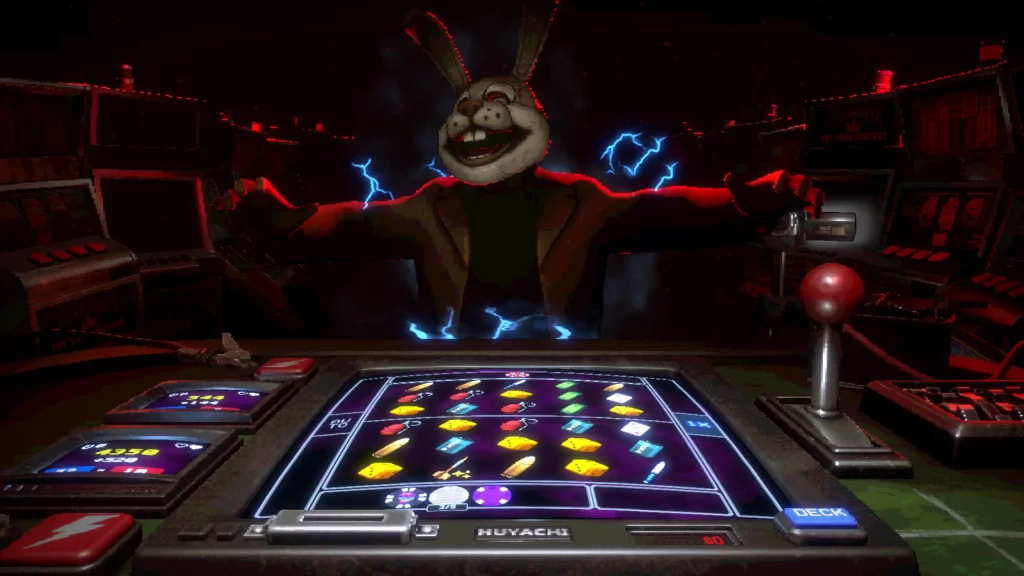
The electrocuted-loser flourish at the end of matches is exactly the sort of thing that could feel cheap in the wrong game, but here it really suits the tone. How much of Dead Spin’s worldbuilding comes from those smaller touches rather than explicit story?
There isn’t really a story in Dead Spin in the traditional sense – it’s mostly exposition and setting. Our approach to worldbuilding is probably closer to a sketch show: we keep introducing new images and ideas without directly linking them together, but we try to make sure they don’t break the “magic circle” of the game. The electric shock fits perfectly both for that balance between brutality and absurdity, and for the creepy casino setting itself.
At the moment, Dead Spin feels like a game with a very strong hook and a lot of room to deepen what sits around that hook. As development continues, are you thinking more about expanding the systems, sharpening the balance, or building out the wider world and narrative side of it all?
Mostly systems and balance. Our main focus is still on gameplay, with narrative there to support it rather than lead it. That said, we do have a few storytelling ideas we’d love to explore further down the line.

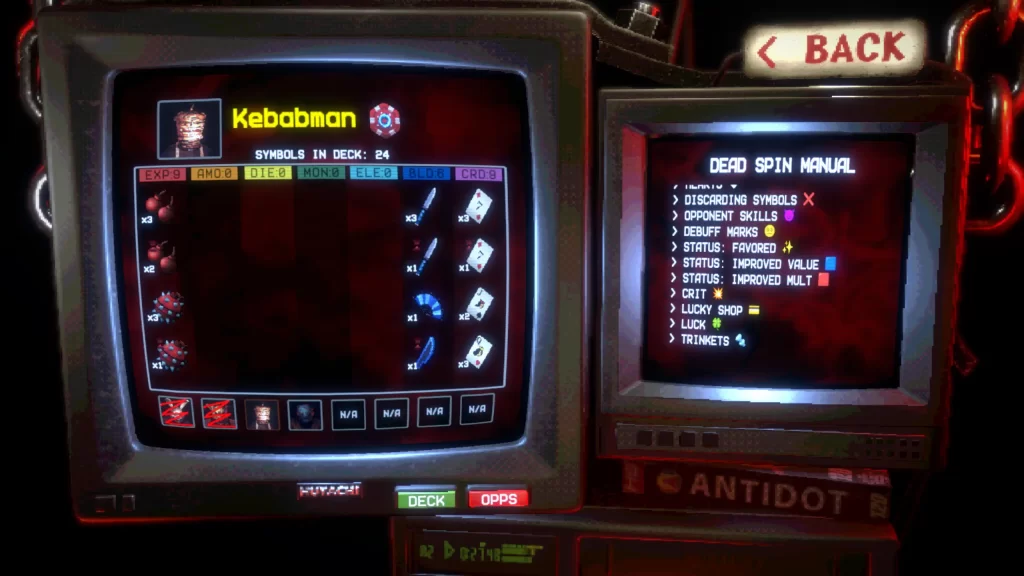
Playtesting is often where a game either reveals its bad habits or proves it has something worth chasing. What has the public response to Dead Spin taught you so far, and has any feedback genuinely surprised you?
We got a huge amount of feedback about how quickly the difficulty ramped up. Even though each defeat gave players rewards that could potentially make future runs easier, the sheer sequence of losses still had a negative effect. So we lowered boss difficulty to make wins more accessible. That worked: the rewards started to feel like a celebration of success rather than consolation prizes, and people were actually playing for longer.
Playtesting also made it very clear that things which seem obvious or unambiguous to us as developers can be understood very differently by players. That’s something you always have to keep in mind when introducing and explaining new mechanics, especially if your audience isn’t limited to genre veterans
With over a hundred symbols, dozens of chips, trinkets, distinct opponents, and endless mode in the broader plan, how do you make sure Dead Spin keeps growing wider without losing the tightness that makes the core loop work?
We always try to keep the core in focus: new mechanics should either make use of what is already there or fit into it naturally. Even if a feature changes the rules in some way, it shouldn’t create logical contradictions with the rest of the system. If it does, we either solve those contradictions or decide the feature doesn’t belong.
At the same time, we think conflicts between synergies are perfectly fine – not everything should work efficiently with everything else. That’s what keeps room for meaningful decisions.
Finally, when players walk away from Dead Spin, what do you most hope sticks with them: the systems, the atmosphere, the bosses, the feeling of barely surviving, or that sense that they have just spent time somewhere they absolutely should not have been?
I’d say the setting and that grotesque gambling-for-your-life feeling. We try to create gameplay and visual hooks for different kinds of players: some will remember the jackpots more vividly, others the bosses and their tricks, and others the references and overall vibe. The main thing is that Dead Spin should feel fun while you’re playing it – because if the moment-to-moment experience lands, people will remember it fondly and maybe even come back for another spin.
A big thank you to Strong Monkey Games for taking the time to speak with us about Dead Spin. It is always encouraging when a game that initially catches the eye through style turns out to have real thought behind the systems as well, and Dead Spin already feels like it has enough of both to make it worth keeping an eye on.
The comparisons will come, and some of them are unavoidable, but Dead Spin seems interesting precisely because it is not content to just wear its influences on its sleeve and stop there. It has its own nastiness, its own rhythm, and its own grim little world of broken synergies and ugly confrontations. That is a good place to be in this stage of development, and it makes us very curious to see how Strong Monkey Games pushes it further from here.
Want to check out some more of the chats we’ve had with other indie developers like the one we’ve done above for Dead Spin? Then head over to our interview section.