When we were approached by a member of the team at the dual studios working on Carnaval Marbles, I knew pretty quickly that the game was going to scratch a very particular itch. Roguelike games are a weakness, for sure. But more than that, the angles, power and precision of old-style snooker and pool games is something I just love.
There is a precise moment in modern indie development where a concept crosses the thin line between inspired eccentricity and sheer, unadulterated obsession. Carnaval Marbles sits comfortably on the far side of that line. Watching glass spheres clatter across a felt-lined board with unsettling intensity.
It presents itself as a whimsical physics-based puzzle roguelike, but beneath its velvet-draped, Italian-carnival aesthetic lies a ruthless exercise in momentum, geometry, and crippling self-doubt.
To get straight to the point, Carnaval Marbles has been my biggest gaming surprise of 2026, and a reassurance that proper quirky games, full of style and solid mechanics are in full flow, thanks to Indie Developers.
Spherical chaos
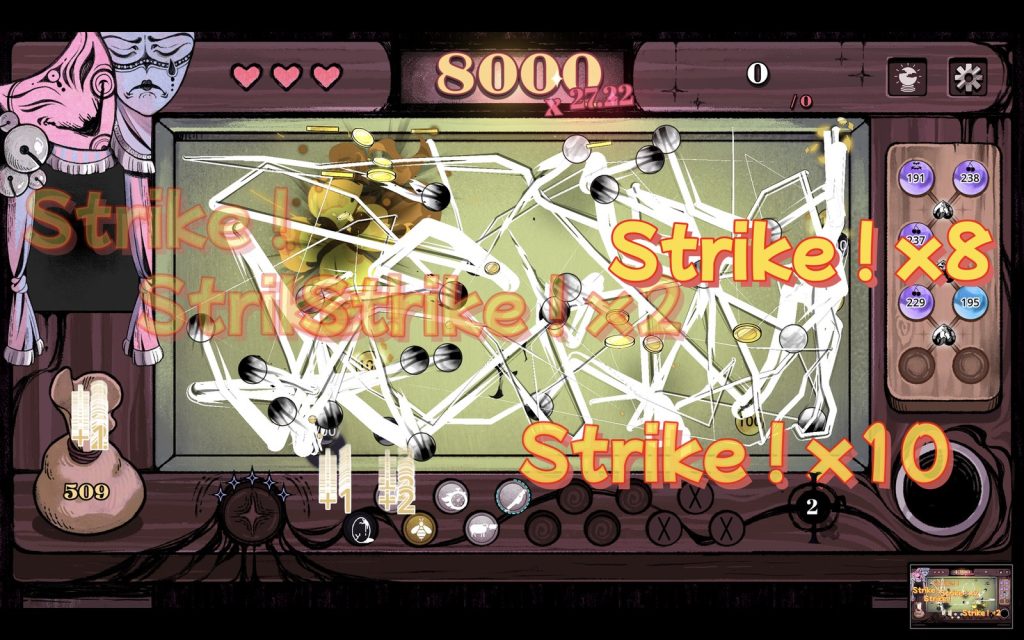
At its core, the loop is deceptive in its simplicity. You are tasked with firing a series of ornate marbles across increasingly chaotic stages, targeting high-value pegs, triggering multipliers, and avoiding the sort of hazardous board geometry that feels personally designed to ruin your afternoon.
The physics engine is remarkably crisp, delivering a tactile weight to every bounce, ricochet, and tragic plunge into the abyss. When a carefully angled shot cascades through a cluster of multipliers, the dopamine hit is instantaneous. When a rogue orb glances off a bumper at a ninety-degree angle and flies straight into oblivion, the silence in the room is deafening. Seeing the slow-mo happen in real-time as your cue ball approaches one of the other marbles to potentially get a strike, is like crack.
Where Carnaval Marbles elevates itself above mere arcade gimmicks is in its build variety and rogue-lite progression.
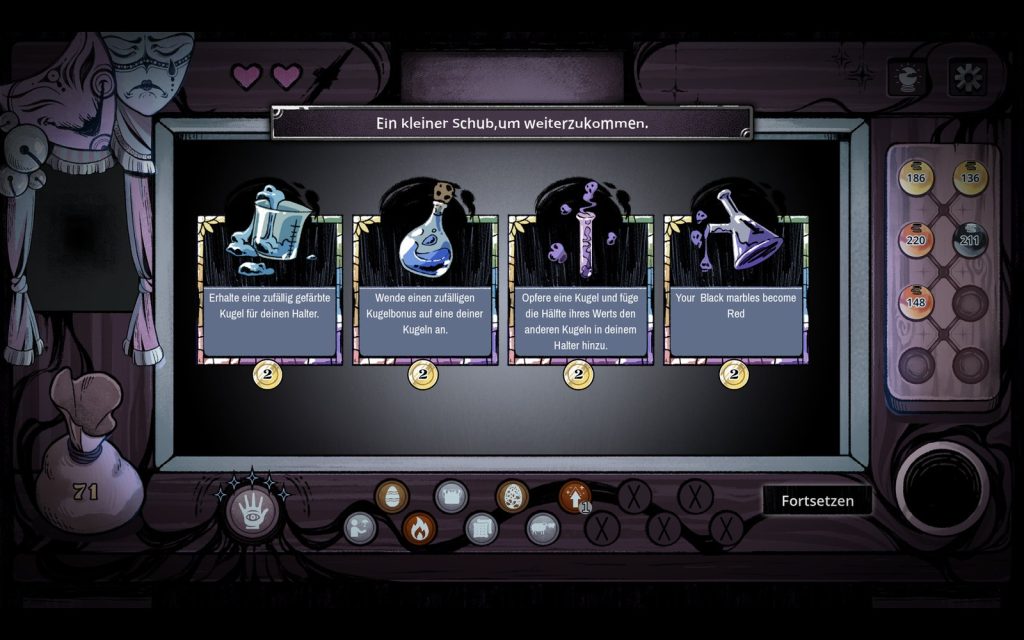
Between rounds, you are invited to draft new marbles into your pouch, each boasting distinct physical properties, runes, or score-altering abilities called talismans.
Using the upgrades from the shop, which is often generously available to you (not always!). Then try out your boosted marbles and table.
It creates a rhythm that is equal parts calculated planning and desperate adaptation when the board state inevitably dissolves into anarchy. Having spent my first few runs trying to just bounce marbles off cushions, it quickly became apparent that hitting as many marbles as possible is far more important.
Trigger those runes and talismans to watch the score fly. But expect for it to not always be enough. It can be tough. Especially some of the bosses. Though that makes Carnaval Marbles all the more satisfying when you get through a run.
That first time you’re hitting hundreds of thousands, and seeing the multiplier rack-up, is something very few games can match. It’s incredibly reminiscent of Balatro.
The cost of the ticket
The game is not without its slight blemishes. The difficulty curve occasionally resembles a brick wall rather than a gentle slope, particularly when late-game bosses introduce environmental hazards that border on the sadistic. Most specifically the one that puts up phantom versions of your balls and you lose score if you touch them……Carnaval Marbles knows how to create a challenge.
Whilst it feels hard on occasion, it never feels unfair. Certainly I could have been more sensible with my play and my upgrades. But I just like to smash the balls as hard as possible and watch them fly!
Certain marble synergies feel noticeably more viable than others, meaning a run can sometimes feel dictated by the whims of the draft pool rather than your own tactical brilliance. Such is the nature of a roguelike.
One issue I cam across, which is likely my own fault. Was the fact that my clear runs and unlocked-bosses on my Steam Deck didn’t sync properly with PC. Whilst a shame, it never took anything away from the game itself.
Aesthetic
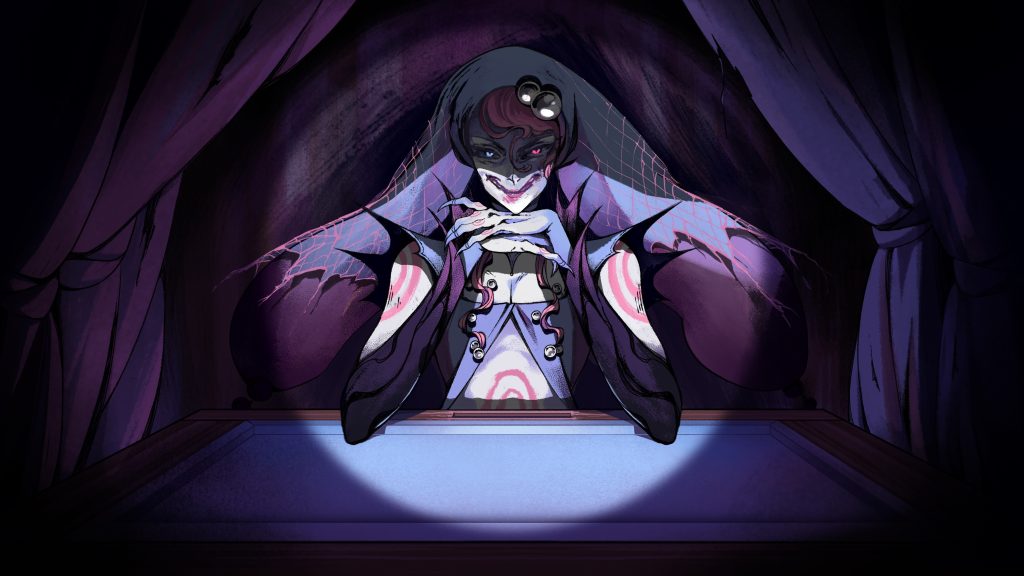
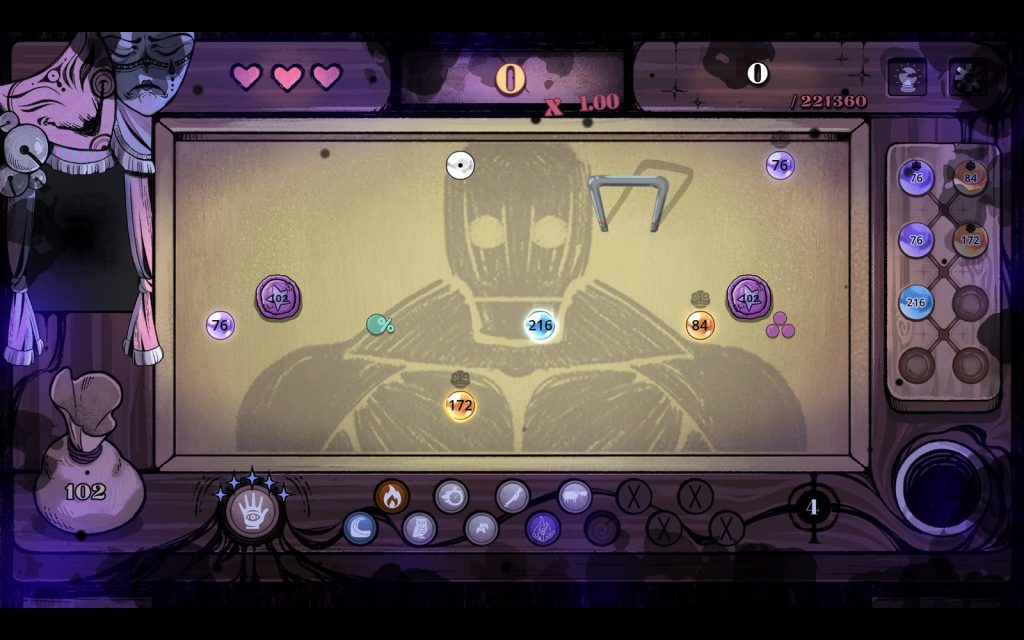
The Victorian-meets-Venetian art style is delightfully moody, and when the audio of those marbles and cushions comes in, it’s heavenly. Throw-in some versions of classical music, like Clair De Lune just helping you chill between matches, and you have a game that sets it’s own tone and vibe perfectly. More games could learn from Carnaval Marbles when it comes to establishing an actual identity.
The final verdict on Carnaval Marbles
Carnaval Marbles is a wonderfully eccentric creation that manages to take a simple, childhood pastime and turn it into a tense, deeply satisfying exercise in risk management.
It respects your intelligence, punishes your overconfidence, and provides just enough mechanical depth to keep you muttering “just one more run” well past a reasonable hour.
Having played Carnaval Marbles primarily on the Steam Deck, I have to say that it’s ripe for a mobile version. The touchscreen controls were sharp and straight forward. Although I’ll always have an affinity towards using a mouse to pull-back and aim.
If you have an appreciation for clever physics, dark carnival aesthetics, and the agonizing thrill of watching a tiny glass sphere decide your fate, this is a show well worth the price of admission.
Carnaval Marbles is out today, and you should definitely pick it up!
For even more game reviews, click right here.