There was a time when buying a video game at a game shop felt like an event.
You would walk into GAME, Gamestation, Grainger Games, or your local independent shop and spend far longer browsing than you probably needed to. Shelves packed with box art. Pre-owned bargains hidden between newer releases. Slightly battered PS2 cases with no manual. Walls covered in posters for games that had either just come out or had been delayed for the fourth time in a row.
And, if you were lucky, staff who actually cared about games rather than just asking whether you wanted to pre-order FIFA again.
That version of gaming retail has slowly faded over the years.
Gamestation disappeared. Grainger Games vanished. GAME has spent years looking increasingly uncertain about what it even wants to be, bouncing between shop closures, downsizing, concessions, and identity crises. Physical media itself has become less important to major publishers, too, with digital storefronts now dominating how most people buy their games.
Convenient? Absolutely.
A little soulless? Also yes.


The problem with modern gaming retail
That is not to say physical game shops completely died off.
CeX, for example, still fills a big gap in the market, especially if you are after retro games, second-hand consoles, or just somewhere you can physically trade things in. But the experience can vary wildly depending on where you go. Prices can sometimes feel completely detached from reality, and staff knowledge often depends entirely on whether you happen to catch someone genuinely passionate or someone who looked like they got dragged onto the shop floor five minutes ago.
And honestly, that is the thing many bigger retailers lost over time: personality.
Game shops used to feel like places run by people who loved games. Now, a lot of gaming retail feels transactional. Functional. Efficient. Which is fine, technically, but not especially memorable.
That has left a gap in the market, and increasingly, independent retailers are the ones trying to fill it.
Smaller retailers are adapting to survive
The problem is that running a physical game shop in 2026 is not exactly easy mode.
Rent is brutal. Business rates are brutal. Energy bills are brutal. Competing with Amazon, eBay, digital storefronts, and massive online retailers while still trying to make enough profit to survive? Also brutal.
That is why a lot of independent gaming retailers have adapted rather than disappeared.
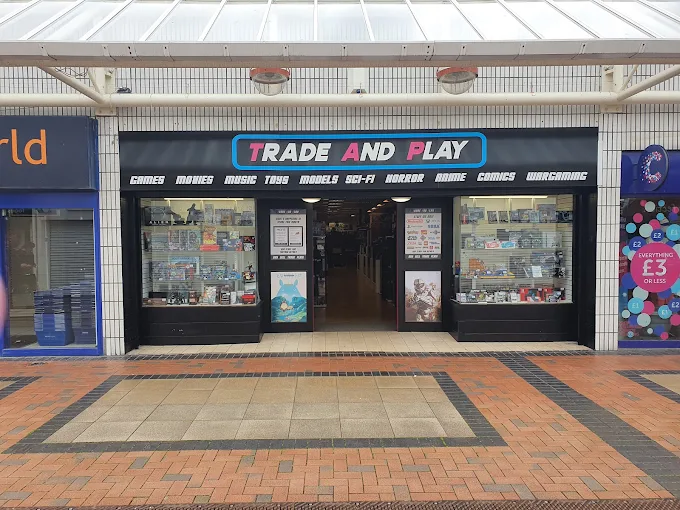
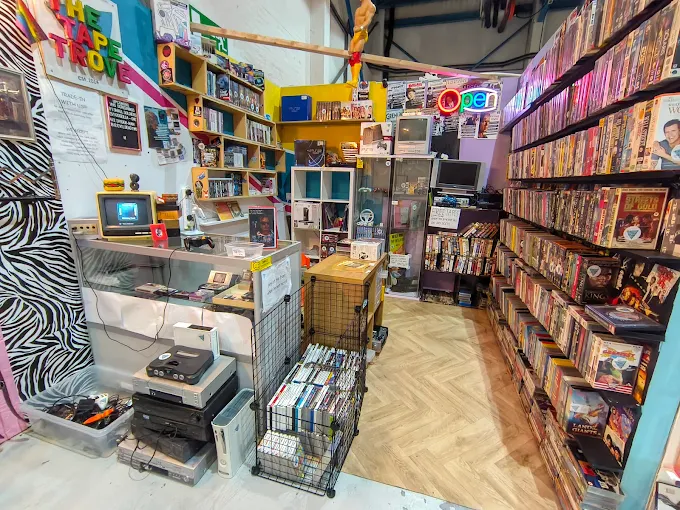
Some operate entirely online. Some split their time between websites, eBay stores, conventions, gaming expos, and pop-up events. Other game shops, like Trade & Play Wirral in Birkenhead, or The Tape Trove at Red Brick Market in Liverpool, keep smaller physical locations alive by focusing heavily on retro gaming, collectables, repairs, or niche products that larger chains either ignore or do badly.
In a weird way, the gaming retail space has become more indie itself.
Smaller operations. More personality. Less corporate polish. More community.
And honestly, there is something quite fitting about that.
Why independent game shops still matter
The thing independent game shops still offer better than almost anyone else is passion.
That sounds cheesy, but it is true.
A good independent game seller is usually someone who actually cares about what they are selling. Someone who knows why a boxed Dreamcast game matters to collectors. Someone who understands why people still hunt for old CRT TVs, memory cards, or weird niche peripherals from consoles that most companies stopped acknowledging years ago.
There is a human side to it that algorithms cannot really replicate.
That is part of why retro gaming communities still feel so closely tied to independent sellers and convention stalls. These spaces are not just game shops. They are conversations. Recommendations. Shared nostalgia. People showing off collections they genuinely love.
And when bigger retailers increasingly move towards digital-only futures, preserving physical gaming culture often falls to smaller businesses, keeping that side of gaming alive.
The rise of online-first retro retailers
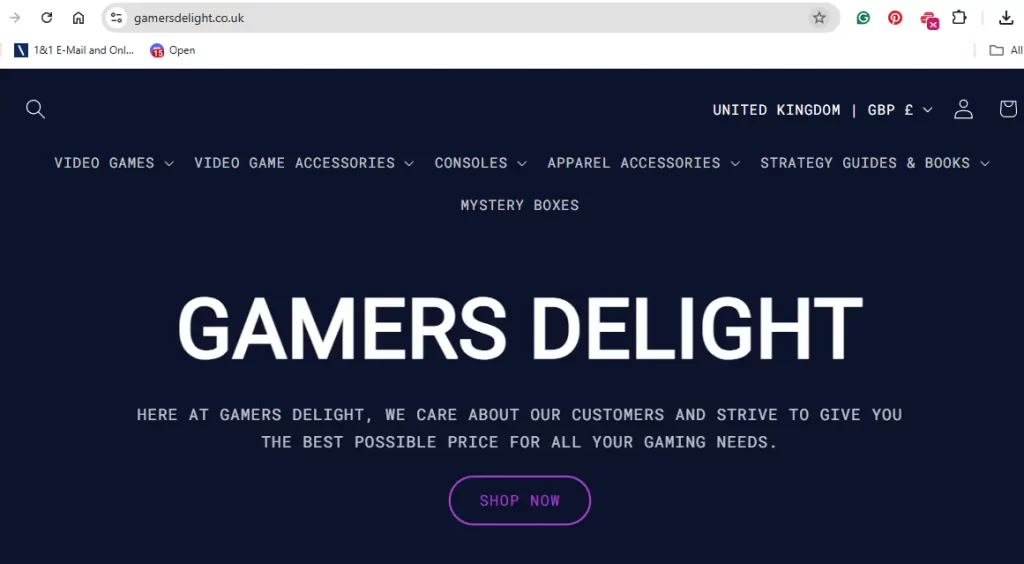
One example of that shift is GamersDelight.co.uk, an independent gaming retailer run by Michael, operating through both its own website and online marketplaces like eBay.
Rather than trying to compete directly with giant chains, game shops like this survive by focusing on community, collector culture, retro gaming, and direct customer relationships. You are far more likely to see businesses like these popping up at gaming conventions, trade events, and retro expos now than opening giant retail units on the high street.
And honestly, that probably makes sense.
The internet changed how people buy games, but it also gave smaller retailers a chance to build audiences without needing enormous startup costs. Instead of relying entirely on foot traffic, independent sellers can now build communities online while still keeping that more personal side of gaming retail alive.
We know Michael ourselves, so yes, there is probably a little bias here. But honestly, we respect anyone willing to take a passion for gaming and try turning it into something sustainable in an industry where even major retailers have struggled to stay standing.
So we wanted to ask him a few questions about what it is actually like trying to build an independent gaming business in 2026.
Three questions with GamersDelight
What originally made you want to start your own game shop, and was there a moment where you realised you could turn it into something bigger?
Basically, I’ve always liked video games, and would go back into Game and GameStation back in the day. I also enjoy buying and selling things too. So, naturally, the two just kind of come together. It’s definitely a passion thing though. The dream would be to have a physical video game shop, but the costs are higher, so an online website seemed to be a more cost-effective route. I’m not as big as I want to be; I need to put more into it, but going full-time doing this and reselling other stuff on eBay, hopefully I can get there one day.
What do you think bigger gaming retailers lost over the years that independent sellers still manage to offer?
I’m guessing it’s because they didn’t go with the times and catch up with what was going on. You just have to look at what Game was back in the day, and what it became. But these companies just kept buying each other and running everything into the ground. Online marketplaces didn’t help either, because people were buying and selling stuff online, undercutting them. But it’s so much easier now; you can get more for your money too, so that has probably helped smaller game shop sellers find a way in, because a lot of people still like the nostalgia of collecting older video games.
In a world where digital gaming keeps growing, why do you think people still care so much about physical and retro games?
There are two sides to this: the hardcore gamers and the normal ones. The normal ones don’t really care; they’re just happy getting a code and playing their game. Some people, and older generations, don’t get it, because you don’t really own the game. Whether the servers shut down, or someone like EA closed down, you can potentially lose that game. But, with physical games, you can still play it; it’s yours to do what you want. You can lend to friends, resell, trade-in to a game shop to get something else. There is also the collection element; people enjoy collecting things and having something to show for it.
Gaming retail changed, but it did not disappear
The old version of gaming retail might never fully come back.
The massive midnight launches. Rows of identical high street game stores. Entire walls dedicated to pre-owned PS2 games and badly printed trade-in stickers. That era is mostly gone now.
But the passion behind it is still very much alive.
It has just become smaller, more personal, and more community-driven. Instead of giant game shop chains dominating everything, more of that energy now lives in independent websites, retro stalls, convention booths, collector groups, and smaller retailers trying to carve out their own space.
Honestly, maybe that is not such a bad thing.
Because if gaming culture is going to keep any sense of personality moving forward, it is probably going to come from people who genuinely care about it, not corporations trying to upsell you a warranty on a headset you did not even want in the first place.
Head on over to our opinion pieces and deep dives sections for more content just like this one on independent game shops.