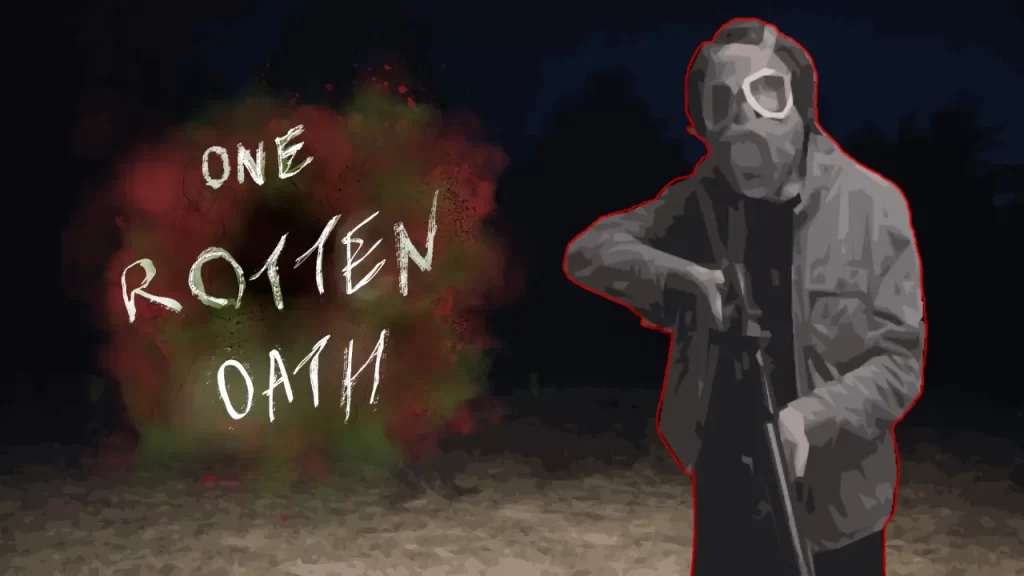
There are plenty of horror games that lean on atmosphere, and plenty of shooters that throw players into chaos, but One Rotten Oath looks like it is doing something far stranger than simply picking a lane. Created by Piotr Bunkowski, the game is a story-driven FMV and FPS hybrid with horror elements, mixing rotoscoped live-action visuals, retro-inspired survival gameplay, and a narrative that sounds more unstable the deeper you get into it.
Set in the aftermath of a chemical disaster known only as The Leak, One Rotten Oath places players on bunker watch as the last scraps of normal life cling on in a ruined world. Between the mutant attacks, collapsing systems, and hints that the game itself may not be behaving as it should, it feels like the kind of project that is not especially interested in playing things safe. We caught up with Piotr to talk about blending film and games, building dread through limitation, and creating something that looks, feels, and moves unlike much else around it.
For anyone discovering your work through One Rotten Oath, how would you introduce yourself, and what first pulled you toward making games in the first place?
I’m an indie dev who has a soft spot for the FMV games. I have one project under my belt that I did back in high school called A Trip to Yugoslavia.
FMV is a weird and niche genre that sparked my interest way back, when I got my first PC. My uncle bought me a Windows 98 machine, but he was actually scammed. The computer didn’t have a sound card, barely a 1 GB HDD, and there was no 3D acceleration on my graphics card. Then I got my hands on Mad Dog McCree, and I was blown away that my weak PC could display such photorealistic graphics.
It was a different time. I always wanted to know how these kinds of games were made, and I guess I finally know!
One Rotten Oath has a very striking setup straight away, with its post-apocalyptic bunker setting, chemical-disaster backstory, and an uneasy sense that reality is fraying at the edges. Where did the original idea for the game begin?
The first thought about One Rotten Oath came to me around 2017. I always wanted to do a wave-based survival title, where you defend your base in a Resident Evil-style gameplay. I lacked the ability to make it then. Eventually, it all came rushing back in 2024, when I was stuck in traffic. I thought to myself, “If not now, then when?”.
You previously created A Trip to Yugoslavia while still in high school, which is a pretty remarkable starting point. Looking at One Rotten Oath now, how do you feel you have changed as a developer since that first release?
Well, I’ve changed a lot, yet I kind of circled back to my roots.
You know, I actually left GameDev for 5 years. After the failure of the second project (Purgatorium: A Family Torn Apart), I thought that I couldn’t do this anymore. I was depressed, which resulted in a lot of mental battles with myself. I was working on every position that wasn’t related to games. I even worked as a hotel receptionist.
Everything changed when I got the job as a video game reviewer in 2023. When I saw the games that solo devs and small teams were making, I thought that I could do so as well, and there’s still a place for me out there.
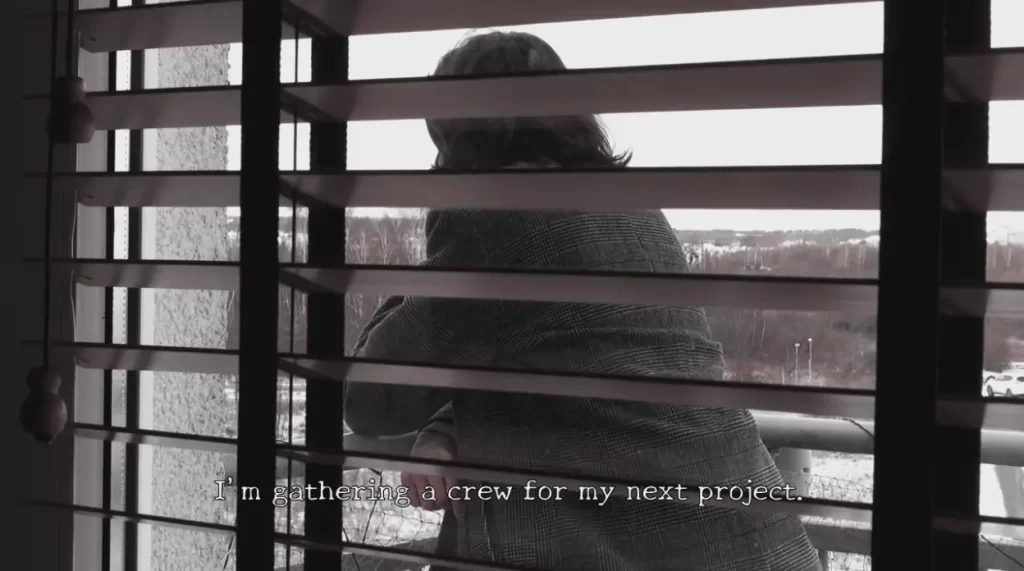
This game blends FMV, FPS, horror, and even visual novel elements, which is not exactly the most conventional mix. What made you want to bring those styles together rather than sticking to one clearer genre lane?
I’m always thinking outside the box, which is both a blessing and a curse.
I started from the FMVs, so I knew from the start that I wanted to get back to my roots. FPS and horror are basically my favourite genres, and as I’ve said, I sat on the idea for One Rotten Oath for quite some time now.
As for the visual novel segments, I’ve had a lot of photos from the old military terrains in Tczew. I was supposed to use them for a project that never came out, and I didn’t want to waste them, so the backgrounds came easily. The visual novel style also weirdly fits with the FMVs in terms of a ‘retro feel’. This type of storytelling is also easy to optimise code-wise.
All things considered, I knew this wouldn’t be a standard game. It wasn’t meant to be.
One of the most interesting things about the game is its visual style, with 2D rotoscoped sprites placed into 3D environments. What drew you to that look, and what did it allow you to do creatively that a more standard approach would not?
I’m not gonna lie, I’m awful with the 3D models. I also thought that they wouldn’t really fit the real-life aesthetic of the FMVs.
I was known for using real actors in my games. At the end of the day, it was fitting to do so. I unrolled the cheap green screen in a 42m2 apartment and got to work with my old cameras.
What’s even more interesting, when I was showcasing the game at events such as Poznań Game Arena 2025, people straight up told me that the game wouldn’t have caught their attention if it weren’t so weird in its graphic style.
I was afraid that a lot of people would call it cheap, but it turned out to be uncanny enough to catch attention.
Cutting actors and enemies out frame by frame sounds like a huge amount of work, especially across roughly 3,000 frames. What was the biggest challenge in making that process actually work in practice?
So, before I get into the actual details, the story here is that 5 years ago, I was working on the Unity engine. This time around, I used GDevelop (before they started promoting AI helper as one of the main engine features). I wanted to know how far I could push it, and I’ve heard that it’s similar to engines such as Construct3.
What I didn’t know then was that GDevelop could play only one video per scene. This made the game impossible to create. The problem was that everything was already recorded. I cut out the actors frame-by-frame because the engine took this for sprites, so I was fine.
The entire process took 6 months on a daily basis before and after work.
Some people are still calling me mad for going through with this idea. Overall, there’s a lot of code wizardry here. For example, sprites are rendered in 640×360 on a 720p level. Then everything is upscaled to your current monitor resolution in order to work. Otherwise, the game would simply crash.
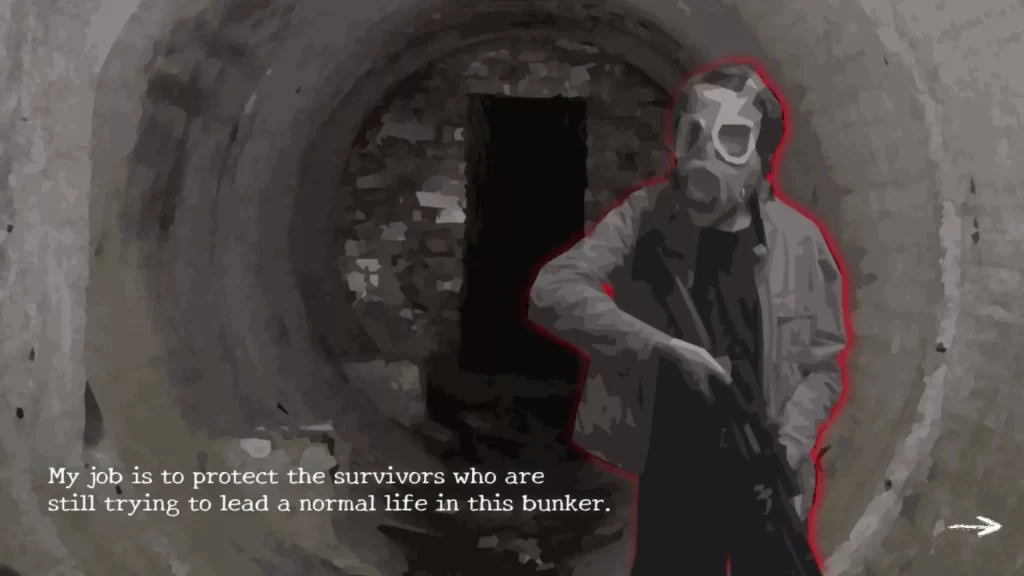
There is something really tense about the idea of a night watch made worse by a generator failing in random 60-second intervals. Why was that time-based survival structure the right fit for the kind of horror you wanted to create?
Today, the world is basically screaming at you with all the flashy images and fast, relentless commercials. My game is kind of a slow burn and won’t get your attention in the first 3 seconds, but I wanted it to be accessible for the people who have a short attention span or not much time to play games anymore.
Early QA phases of One Rotten Oath also showed that 60 seconds on a timer was enough to make the rounds tense, a bit challenging and not boring in the long run.
One Rotten Oath also uses first-person tank controls, which immediately gives it a more deliberate and uneasy feel than a modern fast-moving shooter. Was that choice always part of the vision, and what did you want players to feel through that restriction?
Actually, no. At first, I wanted it to be a rail-shooter similar to the aforementioned Mad Dog McCree, but I couldn’t quite pull it off.
When I coded the basic movement, I felt like that’s it. The game needs tank controls, because this will fit its retro vibe as well. Then, the gameplay mechanics, such as blinking (quick turn), came naturally.
Eventually, I’ve felt that this restriction ramps up the tension without the need for cheap scares. This was right up my alley.
Beyond the survival and combat, there is also this fascinating layer where One Rotten Oath starts to fall apart and reveal truths hidden in the code. At what point did that meta side of the story become part of the concept?
The meta side of the game was actually one of the first things on the list. After the 5-year hiatus, I felt that I had something to say.
The story shown in the meta element parts of One Rotten Oath is full of half-truths. Some of the things actually happened to me throughout those 5 years of absence from the GameDev scene. I’d like to say more here, but I’m afraid I’ll spoil a lot of the game.
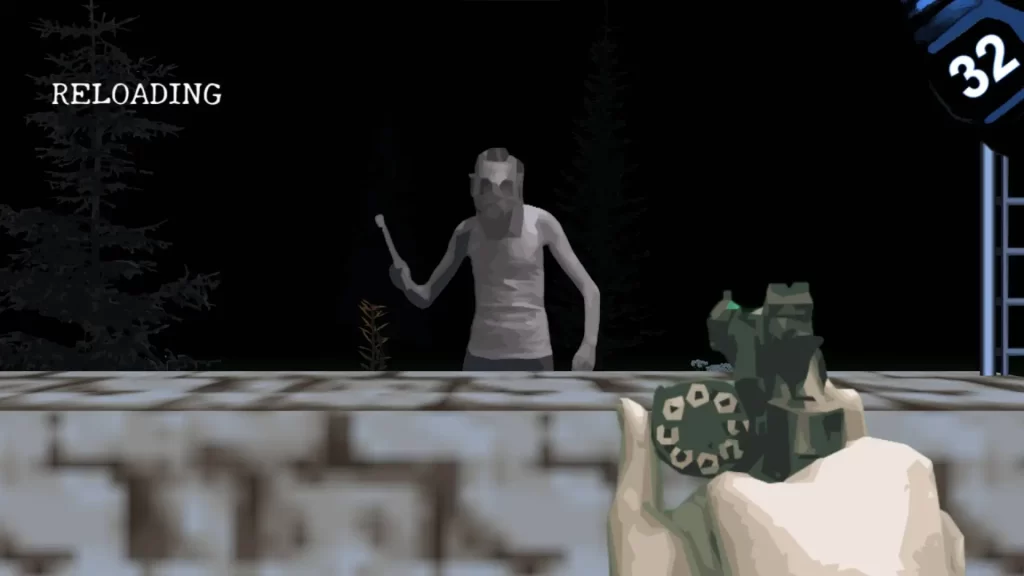
One Rotten Oath seems interested in disorientation in more ways than one, through the weather, visibility, sound cues, sensors, and the sheer awkwardness of trying to hold a space together under pressure. How did you go about building tension without relying only on jump scares or brute force?
I’m a bit tired of games that use jump scares as their main way of providing scares to the players.
I guess I wanted to make people feel uneasy. Like they don’t belong to the world they move around in. Just like I felt throughout the years.
Actually, I was more afraid of the fact that One Rotten Oath would mostly make people laugh, rather than convince them of my way of building the uneasy setpieces. Glad to see I was wrong about that and the game managed to scare lots of people with its atmosphere alone (and maybe controls too).
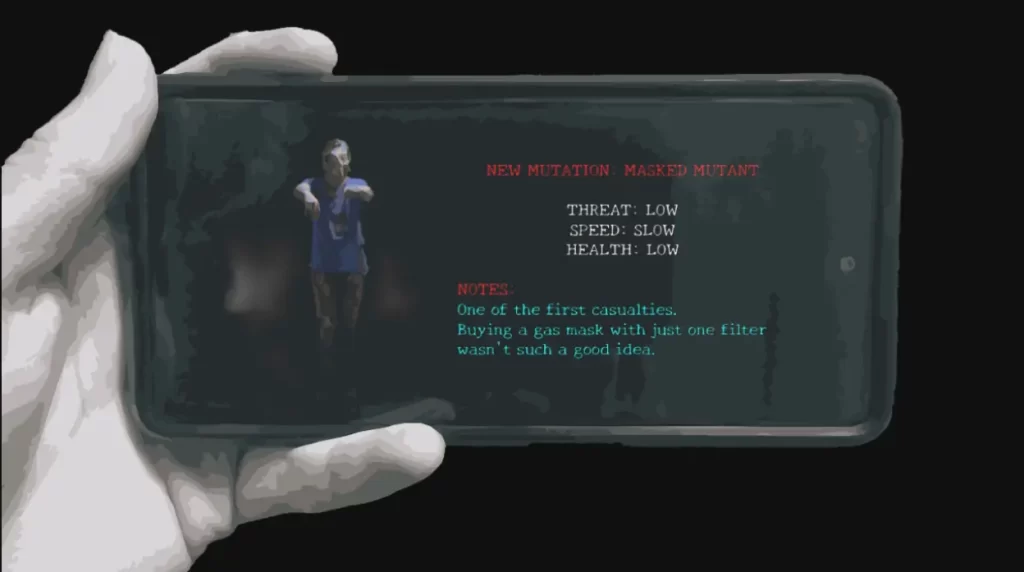
The mutants themselves sound memorable, from masked creatures to mutated football players. How much fun did you have coming up with enemy ideas, and did any particular design end up becoming a favourite?
I’m glad you like the mutants SFXs! That’s basically me coughing into the mic. I was healing from pneumonia and decided that it was the best time to record. I had to heal up a bit longer, but it was worth it!
As for the enemy ideas in One Rotten Oath, I basically opened up my wardrobe and looked for the clothes that I’m willing to sacrifice. I had a lot of weird and not-quite-matching outfits, so I needed to make the most of what I had. My favourite one has to be a mutated local football player, because I was totally desperate with matching clothes here. I remember that I also tore my shirt apart, so that the fake blood could be more visible.
During post-production, it was barely seen, so there’s that. Players are also completely hating that one due to how feral he is in-game.
The live-action material was shot in Tczew and Gdansk, and some of the mutant roles were even performed by you and your brother. How personal did the project become while making it, especially with those practical and family-driven elements involved?
One Rotten Oath started out as a solo project, but turned out to be one big family affair!
Aside from the story that’s a bit personal by itself, I was afraid to engage someone else in production. I mean, I didn’t know if One Rotten Oath would actually see the light of day. I didn’t want to waste anyone’s time either. I learned that the hard way with my previous unreleased project.
As time went by, I decided to ask my brother for help, since I was basically jumping out of the fridge. It’s understandable, because I was all of the sprites. Paweł gave mutants more versatility than I’d give when I was still doing that solo.
I’m super grateful for his help, and I’m glad he tagged along. I guess we’ll be remembering this fondly in like 10 years or so. It was a great experience!
Music and sound seem especially important in a game where players are using cues to work out where danger is coming from. What was it like collaborating with Olga Lewińska, and how important was the soundtrack in shaping the mood of One Rotten Oath?
We’ve collaborated so much that Olga is actually my fiancée now! Life can write surprising scenarios.
Getting back on track, the entire soundtrack was recorded in one go on a Kurzweil piano. Olga looked at the One Rotten Oath screenshots and then let herself go. It was amazing to watch her compose the entire thing in one sitting. Without her songs, I don’t think the game would be as uneasy as it is now. I tried to record as much as I could myself as well in terms of SFXs. Royalty-free songs and sound effects can surprise you in the wrong way, if you’re not careful, so I wanted to play it safe. If you have musicians around you, why not ask them for help?
I mean, you never know what might happen in the end, right?
Finally, now that One Rotten Oath is out in the world, what do you hope players take away from it once they have sat with its horrors, its weirdness, and the story hiding underneath it all?
I hope that players will see that One Rotten Oath is not only about surviving in-game, but also outside of it. The world goes so fast that we barely think about people on the other side of the screen. I hope that players find something in One Rotten Oath that speaks to them. I know that it helped me defeat all the demons that kept me behind all those years, and I’m not planning to stop now.
A big thank you to Piotr Bunkowski for taking the time to speak with us about One Rotten Oath. It is always refreshing to see a developer lean into something a bit weirder, rougher around the edges in the right ways, and far more interested in identity than trend-chasing. Between the FMV elements, the rotoscoped visuals, the survival tension, and that creeping sense that the game itself may be coming undone, this is clearly not trying to blend into the crowd.
One Rotten Oath feels like the sort of project that sticks in your head because it takes risks, not just in how it looks, but in how it tells its story and builds discomfort. That alone makes it the kind of game we are always happy to shine a light on.
One Rotten Oath is developed and published by Piotr Bunkowski. You can get One Rotten Oath on Steam right now for £5.32. Want to check out more of our interviews? Click right here.