Independent games have always sold themselves partly on the people behind them.
The rough edges matter. The weird personal ideas matter. The fact that one person spent three years drawing every frame, or that a tiny team built an entire world while working second jobs, matters.
Indie games are not automatically better because they are made by fewer people, but there is often an intimacy to them that larger productions struggle to replicate. You can feel the particular interests, compromises and slightly questionable decisions of the people responsible.
That human connection is now becoming a marketing point in its own right.
As generative AI spreads across game development, some studios are making a point of declaring that their work was created without it. “No Gen AI” seals are appearing on storefronts and promotional materials. Developers are publishing statements explaining that every image, word, model and piece of music was human-made, created by a person.
Being human-made is no longer simply assumed.
It is becoming something developers feel they need to prove.
One in three new Steam games now carries an AI disclosure
Generative AI is no longer a fringe part of game development.
An analysis of approximately 53,600 Steam games released between July 2023 and July 2026 found that around 30.8% of games released during 2026 carried an AI-generated content disclosure. The equivalent figure was 10.9% in 2024 and 19.9% in 2025.
That does not mean one in three new Steam games was entirely produced by someone repeatedly typing “make it more cinematic” into a mysterious black box.
Steam’s disclosure can cover a wide range of uses. One game might contain a handful of generated placeholder images that were accidentally left in the finished build. Another might use generated voices, character portraits or localisation. Others may be built heavily around AI-produced artwork, dialogue or live content.

Those differences matter.
Valve’s current content survey focuses specifically on AI being used to create material that ships with a game and is consumed by players, including artwork, sound, narrative and localisation. Steam says general efficiency tools built into development software are not the focus of the disclosure.
That is a useful distinction because “this game used AI” can otherwise mean almost anything.
There is a meaningful difference between asking a coding tool to explain an error during prototyping and replacing an illustrator, writer or performer with generated material that appears throughout the finished game.
Treating those situations as identical makes the conversation easier to shout about, but much less useful.
Human-made is becoming a badge of trust
Some developers have responded to the spread of AI by making their position unmistakable.
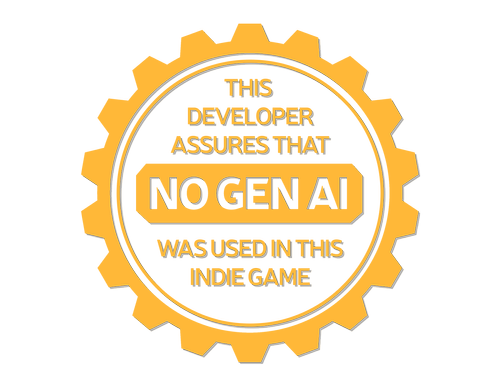
Polygon Treehouse, the independent studio behind Röki and Mythwrecked: Ambrosia Island, helped create a freely available “No Gen AI” seal. Developers can place it on store pages or marketing materials to assure players that generative AI was not used in the creation of their games.
The seal has appeared alongside games including Rosewater, Astral Ascent and Quarterstaff. Other studios have written their own statements, including D-Cell Games, which stressed that every part of its rhythm game Unbeatable was created by human beings.
It is easy to understand the appeal.
Players increasingly want to know what they are supporting. For those concerned about training data, creative jobs, copyright or the sheer volume of generated material flooding digital platforms, a human-made declaration offers a quick answer.
It also gives indie developers another way to differentiate themselves.
When storefronts are crowded with thousands of releases, “made entirely by people” becomes part of the pitch. It communicates care, intention and craft before someone has even played the game.
The slight absurdity is that human involvement used to be the default assumption.
Now, developers are adding labels to prove it happened.
The indie response has been particularly fierce
You might expect independent developers to be the most enthusiastic adopters of generative AI.
Small studios rarely have enough money, enough people or enough time. A tool promising cheaper artwork, quicker writing, instant voices or faster code seems specifically designed to solve the problems they face.
That is certainly how the technology is often marketed.
Yet much of the loudest resistance has also come from independent developers.
In interviews with more than 30 game makers, GamesRadar found widespread concern that generative AI could weaken creative work, remove entry-level opportunities, create legal uncertainty and damage trust with players. Several developers argued that solving difficult creative problems is not an inconvenience to be automated away; it is the reason they make games in the first place.
That point feels especially relevant to indie development.
Constraints often shape the most interesting decisions.
A studio that cannot afford hundreds of detailed backgrounds may develop a striking minimalist style. A developer unable to record thousands of voiced lines might create a more expressive text system. A team short on animation resources may build an entire mechanic around still images, silhouettes or deliberately limited movement.
Those choices can become the game’s identity.
Ask a machine to smooth over every limitation, and you may also erase the unusual decisions that make the human-made project worth noticing.
But cost and access are real problems
It would still be dishonest to pretend human-made production is always an accessible choice.
Artists deserve to be paid properly. So do writers, musicians, voice actors, animators, programmers and everyone else involved in creating a game.
The unavoidable consequence is that good creative work can be expensive.
For a funded studio or major publisher, that cost should simply be part of making the product. When a large company uses generative AI primarily to cut staff, reduce freelance spending or accelerate content production for shareholders, sympathy is understandably limited.
A solo developer with no publisher and several hundred pounds left in the bank is in a very different position.
That does not make every decision automatically ethical. It does explain why the cheaper option can feel impossible to ignore.
Generative AI is increasingly being adopted because it promises to reduce development costs and shorten production times. However, using it can also introduce questions around ownership, licensing and whether the final material is legally protectable. Clear records of where assets came from and how much human creative control was involved are becoming increasingly important.
AI may look like the cheap option at the start.
The reputational or legal cost may appear much later.

We are not writing this from a position of purity
Indie-cent Exposure used AI-generated imagery when we launched.
Our original logo, mascot and some of the graphics needed to get the website ready were produced using AI tools.
That was never the plan.
We had arranged for a graphic designer to create the work, but they were unable to complete the job and eventually stopped responding. We were trying to get the site launched in time for ENDIX, we needed the imagery to make that happen, and we did not have the budget to simply start again with another designer at short notice.
Indie-cent Exposure is completely self-funded.
Every bill, event cost and piece of work commissioned for the site comes from our own pockets. We are attempting to compete for attention with publications backed by larger teams, established audiences and significantly more money.
That is not a complaint.
It is simply the reality of trying to build something independent without financial backing.
At the time, AI felt like the only realistic way to get the site ready for launch. We used it despite never wanting those images to become the permanent face of what we were building.
We have been called out for that decision on social media, and we understand why.
Artists are watching companies use technology built around creative work while removing the people who originally made that work possible. They are being asked to compete with tools capable of producing endless material in seconds. Anger towards that situation is completely reasonable.
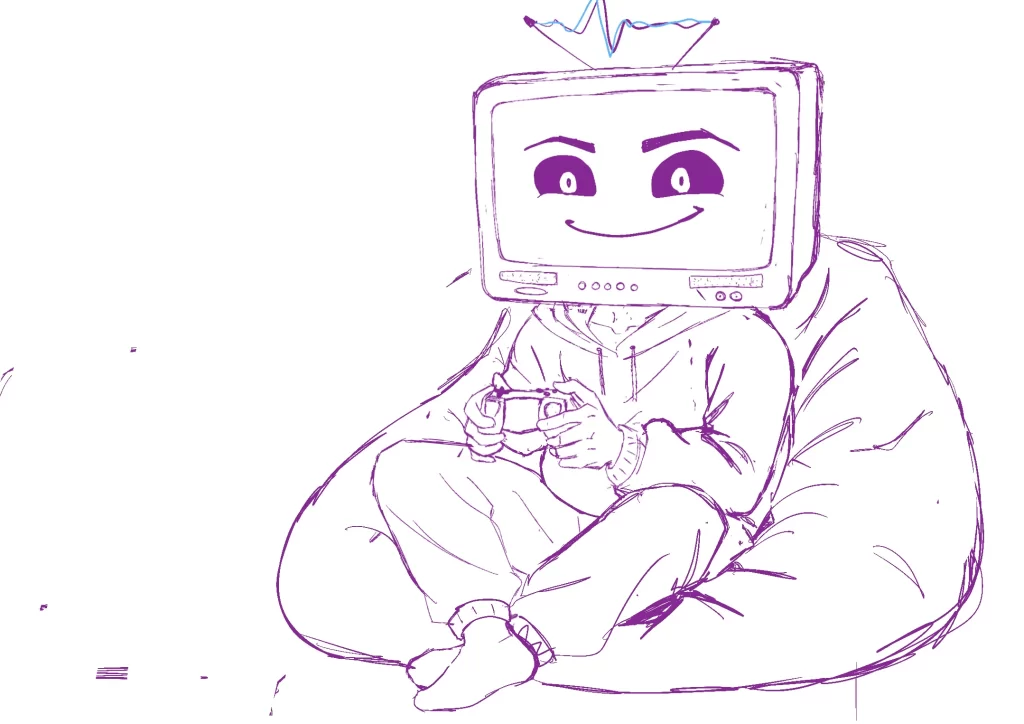
We have since replaced our original logo. And an independent artist (who is human) is now working on replacements for the other AI-generated imagery across the site (get a sneaky peek of the new mascot below).
That is what we wanted to do from the beginning, and it means we can move towards artwork that feels properly ours while also supporting another independent creative.
We are not sharing this as an excuse or asking for immunity from criticism.
We are sharing it because the reality is more complicated than good people making everything themselves and bad people pressing the AI button.
Sometimes people use these tools because they do not value artists.
Sometimes they use them because they cannot afford an artist to create human-made work.
Sometimes, as in our case, they tried to commission someone, the arrangement collapsed, and a deadline left them feeling that very few workable options remained.
Context does not erase responsibility.
But it should still matter.
Not every use deserves the same reaction
The current conversation often leaves very little room between absolute rejection and enthusiastic adoption.
One side treats any contact with generative AI as evidence that the creator does not care about art. The other treats every criticism as fear of technology or resistance to progress.
Neither position leaves much space for reality.
Consider several different examples:
- A major publisher replaces paid illustrators with generated artwork across a commercial release.
- A solo developer generates temporary concept art during prototyping, then commissions final assets from an artist.
- A team uses AI-generated voices throughout a game because hiring performers would cost more.
- A programmer uses a tool to explain unfamiliar code but writes and reviews the final implementation themselves.
- A small creator uses generated artwork for launch materials, openly acknowledges it and later pays an artist to replace it.
All of those involve AI.
They do not involve the same intent, impact or level of creative replacement.
Players are still entitled to reject any of them. Nobody is owed a purchase simply because they had limited resources or a difficult deadline.
But a useful disclosure should help people understand what happened, not flatten every situation into the same warning label.
Transparency needs to go further than a Steam box
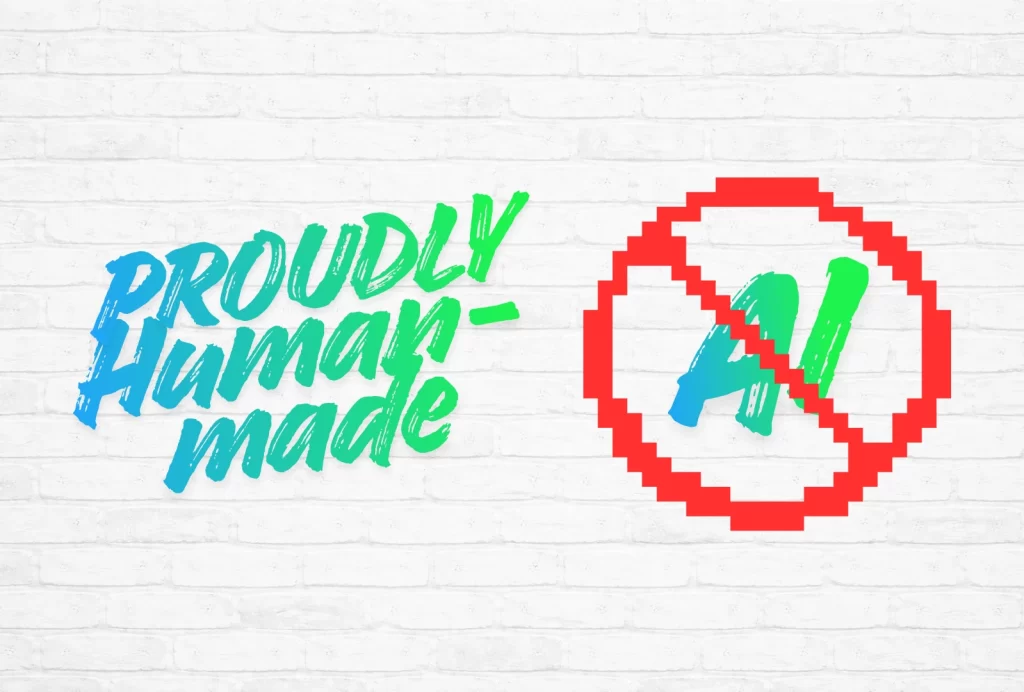
Steam’s disclosure requirement is a reasonable starting point to highlight games that are not “proudly human-made”.
Valve asks developers to explain how generative AI was used when it contributed to content players will see or hear. That information can then appear on the store page, giving customers a chance to make their own decision.
Developers interviewed about the policy have broadly supported that principle, arguing that players have a right to know how games were made and what their purchase is supporting.
The problem is that disclosures can be vague.
Saying “AI was used during development” does not tell someone whether it generated one texture, every character portrait or half the dialogue.
Better transparency would answer a few straightforward questions:
- What was generated?
- Did it remain in the finished game?
- Was it used as temporary material or final content?
- Did it replace work that would otherwise have gone to a person?
- Were artists, writers or performers involved in editing and directing the output?
- Does the developer plan to replace any generated assets later?
Those answers will not satisfy everyone.
They will at least allow people to respond to what actually happened.
“Proudly human-made” should not become a purity test
There is value in developers declaring that their games were human-made and without using generative AI.
It lets players support the working practices they believe in. It celebrates the people responsible for the finished work. It may also help genuinely handcrafted games stand out within an increasingly crowded market.
But there is a risk of turning that label into another weapon.
Small creators are already placed under intense scrutiny while enormous companies frequently absorb controversy and carry on. A solo developer can be harassed over one generated image while a multinational publisher quietly embeds AI throughout its production pipeline.
That imbalance should make us cautious.
“Human-made” is useful information.
It should not become a badge used to decide which struggling creators are morally pure enough to participate in the industry.
The focus should remain on transparency, labour and impact.
- Who benefited from the decision?
- Who lost work because of it?
- How much generated content reached the customer?
- Was the developer honest?
- Did they respond constructively when challenged?
Those questions tell us more than a binary label ever could.
AI does not automatically make indie development sustainable
There is also little evidence that using generative AI guarantees commercial success.
Sulka Haro’s analysis found that AI-disclosed games accounted for around a third of Steam releases during the second quarter of 2026 but only an estimated 10% of sales. That shows human-made games are appearing to be much more successful. The study uses review-based revenue estimates, so the figures are not exact, but the broader conclusion is clear: AI is helping more games reach the storefront, not necessarily helping those games find audiences.
That distinction matters.
Generative tools lower certain barriers, allowing more material to be created more quickly. But releasing more games into an already overcrowded market does not solve discoverability.
It may make it worse.
A generated store capsule can get a game listed. It cannot guarantee a coherent visual identity.
AI-written dialogue can fill a world with words. It cannot guarantee that anyone will care about them.
Generated code can produce a working feature. It cannot decide whether the feature makes the game more enjoyable.
The difficult part remains the same: making something with enough vision, judgement and personality that another human being wants to spend time with it.
The human element may become more valuable
As generated material becomes more common, visible human craft may become more desirable.
Not because everything made by a person is automatically excellent. Human beings have produced more than enough terrible art, broken games and dreadful dialogue without machine assistance.
What people value is intention.
They want to feel that a choice was made for a reason. That a character was written by a human with something to say. That an image reflects an artist’s taste rather than the statistical average of thousands of other images.
Independent games are particularly well placed to offer that.
Their greatest advantage has never been scale.
It is specificity.
The personal obsession. The strange mechanic. The art style created because the developer could not afford to imitate anyone else. The story nobody at a large publisher would have approved.
Generative AI is very good at producing more.
Indie games succeed when they give us something particular.
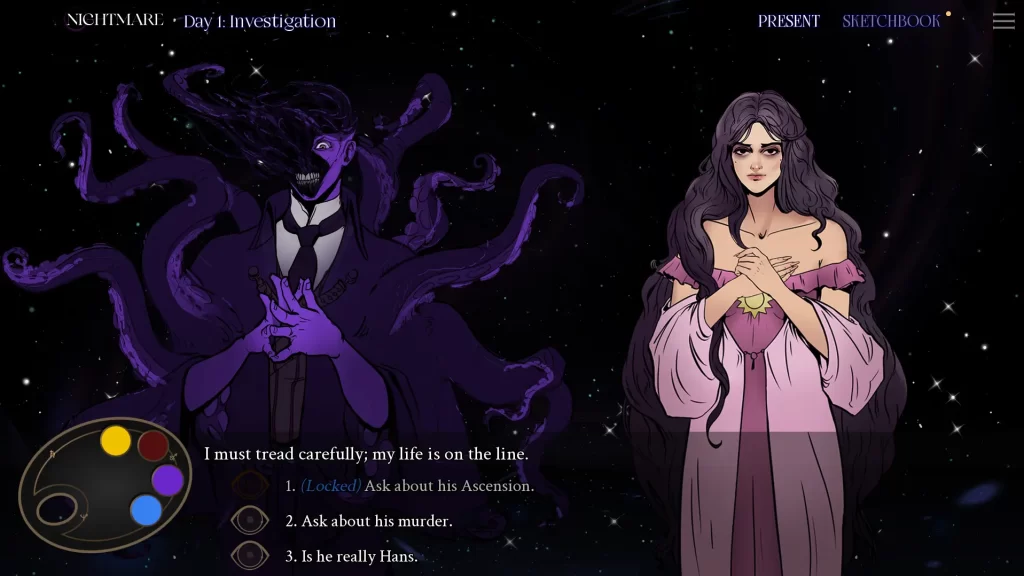
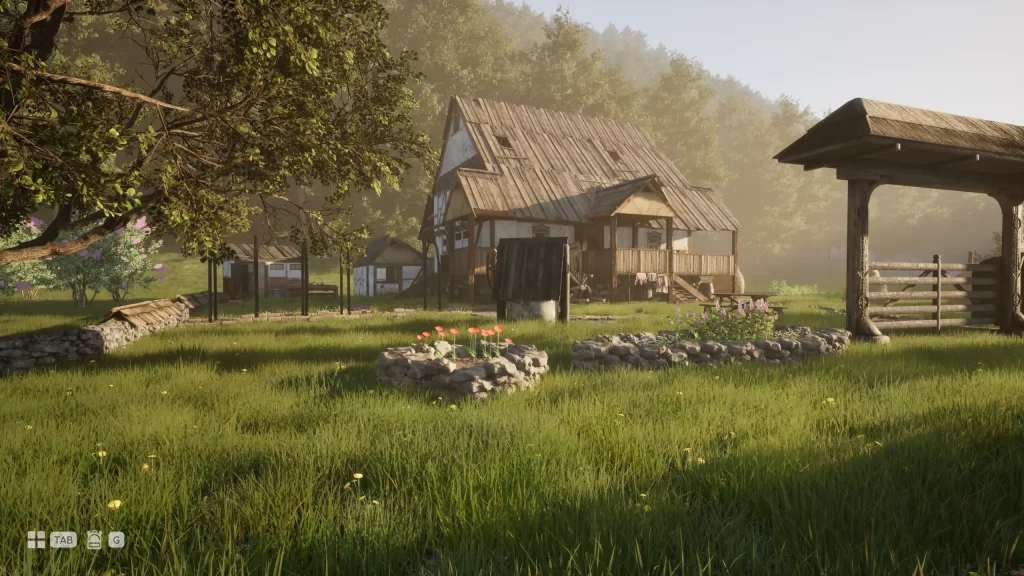
Where does Indie-cent Exposure stand on “proudly human-made”?
“Proudly human-made” is becoming a meaningful selling point, and that is not surprising.
Players deserve to know whether the art, writing, voices and music they are buying were created by people. Developers who choose not to use generative AI should be able to say so clearly and benefit from the trust that decision creates.
But the conversation needs room for honesty without demanding perfection.
There is a difference between a corporation replacing paid creatives to improve its margins and a self-funded creator using temporary AI imagery because a commission collapsed days before launch.
That difference does not mean nobody can criticise the smaller creator.
It means the criticism should acknowledge what actually happened.
Our own experience taught us that using AI may solve an immediate problem while creating a different one. It got Indie-cent Exposure launched when we had little time and no spare budget, but the imagery never represented what we truly wanted the site to be.
Replacing it with human-made work from an independent artist feels better because it is better.
The artwork will be created for us. It will support another creative person. And it will carry a story that goes beyond how quickly an image could be produced.
That does not change the fact that we used AI at launch.
It shows what we chose to do next.
Perhaps that is where the wider conversation needs to go.
Not towards pretending context makes every decision acceptable. Not towards treating every human who has ever touched an AI tool as permanently unwelcome.
Towards transparency, accountability and giving people the information they need to decide what they support.
Human-made may become one of indie gaming’s most powerful labels.
It will mean the most when it represents how people are being valued, not simply another badge placed on a store page.
We’ve plenty more in-depth articles like this one that takes a detailed look into human-made games; to check them out, head over to our deep dives section.