Buying a new game used to feel like a treat.
Now it can feel like a minor financial decision requiring several tabs, a household budget and a quiet conversation with yourself about whether you really need to eat somewhere nice this month.
The standard price of a major console release has settled around £69.99 in the UK. Nintendo has pushed even further in some cases, with Mario Kart World priced at £66.99 digitally and £74.99 physically through its official store. Deluxe editions regularly climb towards £90 or £100 before downloadable content, season passes, virtual currency and suspiciously expensive cosmetics enter the picture.
The cost of the hardware is rising too. Microsoft has announced another round of worldwide Xbox console price increases from 1 August 2026, adding $100 to its 512GB models and $150 to its 1TB systems in the United States, with corresponding changes elsewhere.
Gaming has never been a particularly cheap hobby.
But it is becoming harder to ignore how much money the biggest releases now expect players to hand over before they have even discovered whether the game is any good. It’s even crazier when you think of games that have been remade/remastered going for high prices as well, like Halo Campaign Evolved, which is around £49.99. Crazy when you think this is like, the fourth time this game has been released?
This all raises an obvious question for independent developers.
As AAA games become more expensive, will more players start looking towards smaller, cheaper and stranger alternatives?
Possibly.
But it is not quite as simple as placing a £14.99 indie beside a £69.99 blockbuster and waiting for everyone to make the sensible choice.
The £70 game is now normal
The move towards £70 games did not happen overnight.
Publishers spent years testing higher prices through deluxe editions, early-access packages, season passes and increasingly complicated bundles. The standard edition may have remained relatively stable for a while, but the amount required to receive the “complete” launch experience kept creeping upwards.
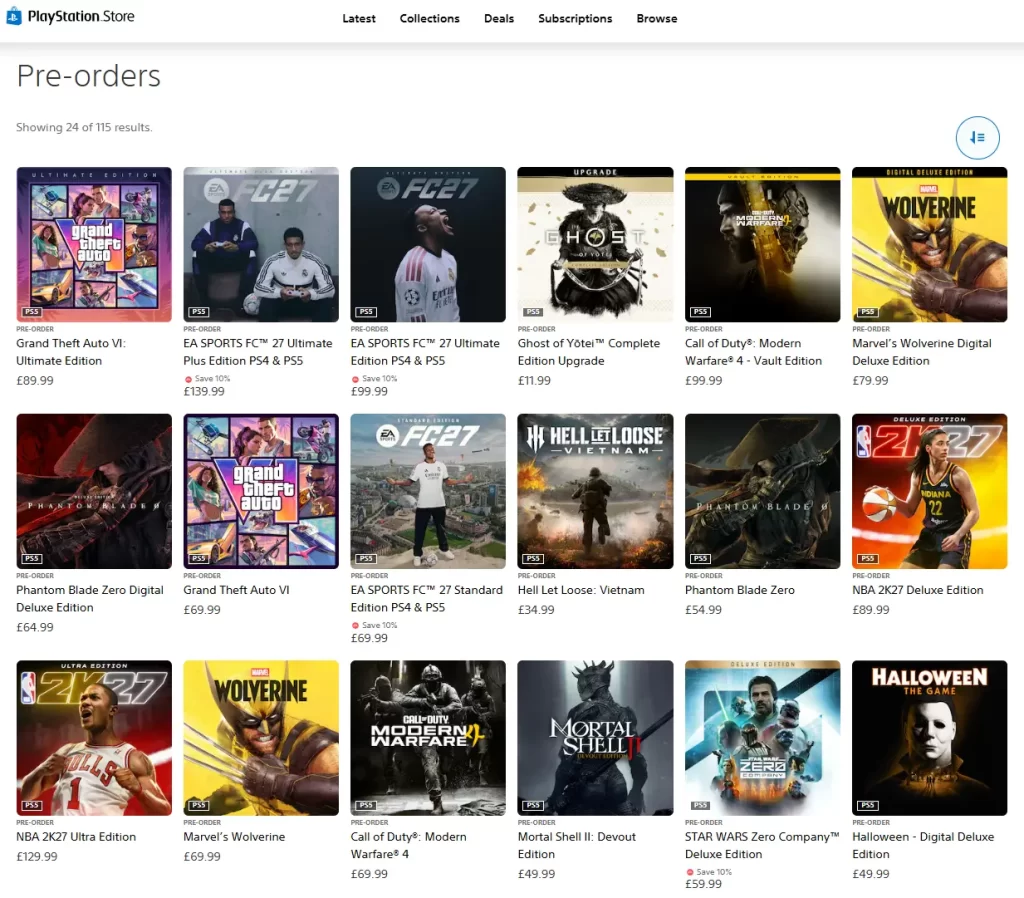
Now, £69.99 is a familiar sight across the PlayStation and Xbox stores.
Current PlayStation listings include standard editions of games such as EA Sports FC 27, Call of Duty: Modern Warfare 4, NBA 2K27 and Marvel’s Wolverine at £69.99. Deluxe and ultimate editions sit considerably higher, with some reaching £99.99 or beyond.
Not every major release costs the maximum, of course. Plenty still launch at £49.99 or £59.99, while sales can reduce even the most expensive titles surprisingly quickly.
But the top end has shifted.
A player buying two new AAA games at launch can now spend around £140 before considering hardware, online subscriptions or additional content.
For many households, that is not an impulse purchase.
It is a choice.
Higher prices make experimentation harder
The more expensive a game becomes, the safer the purchase needs to feel.
Someone spending £70 is more likely to choose a familiar franchise, a developer they already trust or a game supported by overwhelmingly positive reviews. They may watch more footage, wait for technical analysis and study every mention of performance before committing.
That behaviour makes sense.
A disappointing £10 game is annoying.
A disappointing £70 game feels like you have been personally mugged by a marketing campaign.
Higher prices can therefore make players more cautious, but that does not automatically benefit indies. Cautious players might simply buy fewer games, wait for discounts or return to something already sitting in their backlog.
Still, lower-priced indie games offer something increasingly valuable: permission to take a chance.
A game costing £10, £15 or £20 does not need months of research behind it. An interesting trailer, unusual mechanic or enthusiastic recommendation may be enough.
That lower financial risk makes experimentation easier.
Players can try genres they would never touch at full AAA prices. They can support a strange narrative game, a short horror experience or a deliberately awkward simulator without needing it to justify the next six weeks of their free time.
Indies do not just compete by being cheaper.
They compete by making curiosity affordable.

One blockbuster or several smaller games?
The comparison is difficult to avoid.
For the price of one £69.99 release, a player could potentially buy three or four smaller indie games. During a Steam sale, they could buy enough to ensure none of them is ever installed.
That makes indie gaming look like an obvious value proposition.
But quantity alone is not the point.
Four mediocre games are not automatically better than one excellent game. A 100-hour RPG someone loves may provide more personal value than ten smaller titles they barely remember.
The more useful comparison is variety.
One AAA purchase usually provides one particular experience. The same budget spread across indies could cover a narrative adventure, a tactical RPG, a puzzle game and something involving running a deeply questionable takeaway.
That variety is one of the independent scene’s greatest strengths.
Indie developers do not need to satisfy the entire market with every project. They can pursue smaller ideas for narrower audiences, producing games that would never survive the approval process inside a risk-averse multinational publisher.
When major releases cost more, that variety becomes even more appealing.
Players may still buy the blockbuster they have been waiting for.
They might simply buy fewer of them and fill the spaces between with something smaller.
Shorter games may begin to feel like better value
The industry has spent years teaching players that value means length.
A game with 80 hours of content is considered generous. A game lasting four hours is expected to justify its existence as though it has arrived at a disciplinary hearing.
That attitude has encouraged enormous maps, endless collectables, repetitive side activities and progression systems designed to keep players occupied long after the central idea has run out of energy.
It has also created a peculiar contradiction.
People say they want games to provide hundreds of hours, then complain that they have no time to finish anything.
As prices rise, publishers may feel even greater pressure to advertise scale. A £70 game apparently needs a huge world, years of support and enough content to prevent anyone seeing their family before Christmas.
Indie games can offer an alternative.
A focused experience that lasts five or ten hours may provide better value than a bloated one lasting 60, provided those hours are memorable.
Our recent list of indie games you can finish in a weekend was built around exactly that idea. Games such as INSIDE, A Short Hike and What Remains of Edith Finch do not need hundreds of hours because they know what they are trying to achieve.
The fact that a game ends is not evidence that it failed to provide value.
Sometimes it means the developers respected your time.


AAA prices do not exist in isolation
Players are not only paying more for individual games.
Console prices, subscriptions, additional storage and online services all contribute to the broader cost of staying involved.
A player may already be paying monthly for PlayStation Plus, Xbox Game Pass or Nintendo Switch Online. They may need additional storage because modern downloads are enormous. They may have spent several hundred pounds on the console itself before buying a single game.
That changes how every new purchase feels.
Subscriptions can soften the impact by offering access to large libraries for a monthly fee, but they can also reshape expectations. A player accustomed to hundreds of included games may become reluctant to pay £20 for an indie release they might finish in one weekend.
The same service that introduces someone to an independent game can therefore make buying one separately feel less appealing.
This leaves indie developers caught between two very different expectations:
Players who see £20 as wonderfully affordable beside a £70 blockbuster.
And players who see £20 as expensive because Game Pass already offers them hundreds of alternatives.
Both groups are looking at the same number.
They are simply measuring it against different things.
Indies cannot win by racing to the bottom
It would be dangerous for independent developers to treat rising AAA prices as an instruction to remain permanently cheap.
Indie games cost money to make.
Artists, programmers, writers, musicians, performers, translators, testers and marketers all need to be paid. Even a solo project carries software costs, platform fees, contractors, hardware, lost income and years of personal labour.
A lower budget than a AAA production does not mean no budget.
Yet independent developers are often nervous about charging more than £15 or £20. They fear players will compare their game to larger productions or complain about its length, graphical style or perceived lack of content.
That pressure has contributed to a crowded market where many games launch at increasingly low prices. An analysis of successful Steam releases found the median price among the platform’s top 50 games dropped from $19.50 in February 2023 to $15.64 in October 2025, even as the average price remained relatively stable.
Lower prices can attract more players.
They can also leave developers needing an unrealistic number of sales simply to recover what they spent.
A game priced at £9.99 does not place the full amount into the developer’s pocket. Platform fees, taxes, publisher shares and regional pricing all reduce the final return.
Selling thousands of copies may sound successful from the outside while still leaving a studio unable to fund its next project.
If independent games respond to expensive blockbusters by endlessly undercutting each other, the result will not be a healthier industry.
It will be more developers making less money.

Price needs to match the game, not the label
There is no correct indie price.
The term covers everything from one-hour experimental projects to expansive RPGs built by dozens of people. Treating all of them as though they belong below £20 makes no sense.
Some games are naturally suited to a lower entry price. They may be short, mechanically simple or designed to spread quickly through groups of friends.
Others represent years of development and contain enough depth, production work and content to justify £25, £30 or more.
Players are often willing to pay those prices when the value is clear.
The problem is expectation.
A £30 indie game may be judged more harshly than a £70 sequel because the sequel’s price has become normal, while the indie is expected to explain why it has the confidence to ask for more.
That is backwards.
Games should be priced according to their scope, audience, costs and quality rather than whether a multinational publisher’s logo appears at startup.
Being independent should not mean apologising for charging enough to survive.
The biggest indies have already changed expectations
The line between indie, AA and AAA has become increasingly blurry.
Some independently developed games now arrive with large teams, substantial publisher backing and years of anticipation. They may cost far more than the traditional £10–£15 indie price while still sitting below the largest blockbuster releases.
That middle space could become increasingly important.
Players may not be choosing strictly between a tiny solo project and a £70 production. They may instead gravitate towards polished £25–£40 games that offer strong production values without carrying the cost or excess associated with AAA development.
This is where independent and smaller-scale publishers have an opportunity.
They can provide experiences that feel substantial without needing to become enormous. They can fund distinctive games, avoid building everything around recurring spending and charge a price that supports the people making them.
The return of a healthier middle market would be good for everyone.
Players receive more choice.
Developers gain room to make ambitious projects without needing blockbuster sales.
Publishers are not gambling hundreds of millions on every release.
Rising AAA prices may help create that space, but only if players stop treating anything below AAA scale as something that should also be below takeaway prices.

Expensive AAA games can make indies look more attractive
There is also a simple psychological effect at work.
A £19.99 game looks different when sitting beside something priced at £69.99.
The indie no longer feels like a relatively expensive digital purchase. It feels like the affordable alternative.
This is particularly powerful when the smaller game offers a clear idea that can be understood immediately.
A player may hesitate over an unfamiliar £20 release in isolation. Put it beside a blockbuster costing more than three times as much, and the risk becomes easier to accept.
That does not mean every indie should market itself by attacking AAA games.
Constantly presenting independent development as the virtuous opposite of corporate gaming becomes tiresome and often unfair. Plenty of talented people work on major releases, and plenty of indies are capable of cynical pricing, unfinished launches and dreadful business decisions.
The comparison is useful because it highlights choice.
Players do not need to abandon AAA gaming to support indies.
They only need to recognise that the same budget can now be distributed differently.
Sales culture complicates everything
Launch prices are only part of the story.
Players know major games will eventually be discounted. Some wait months for 30% or 40% off. Others expect a title to join a subscription service or appear in a bundle. Not to mention sites like Loaded.com that sell game keys at reduced prices before they’ve even launched.
That can reduce the advantage indie games gain from a lower starting price.
Why buy a new £20 indie game when last year’s £70 blockbuster is currently £24.99?
Steam has trained PC players especially well to wait. Wishlists notify people about discounts, seasonal sales arrive constantly, and enormous backlogs make urgency difficult to maintain.
Indies often participate in the same cycle because discounts create visibility and generate notifications. But smaller developers have less room to absorb aggressive price cuts.
A major publisher can reduce an older game by 75% to encourage DLC sales or expand an audience.
A solo developer may simply receive 75% less money.
The industry has created a strange environment where players complain about launch prices while also expecting almost everything to become dramatically cheaper within months.
That makes setting a sustainable indie price even harder.

Players still need to know the game exists
Cheaper games do not sell themselves.
The biggest obstacle facing indies remains discoverability.
A £15 game buried beneath thousands of Steam releases is not meaningfully competing with a £70 blockbuster that appears across storefront banners, adverts, livestreams and social feeds.
Players cannot choose the affordable alternative if they never encounter it.
This connects directly to our recent deep dive into Steam visibility. Smaller studios are expected to generate wishlists, build communities, contact creators and bring an audience with them before storefront algorithms begin offering meaningful help.
Rising AAA prices may make players more receptive to indie recommendations.
It does not automatically deliver those recommendations to them.
Independent media, curators, content creators, festivals and word of mouth therefore become even more important.
The opportunity exists.
Someone still has to point players towards it.
Higher prices could make players more selective, not more adventurous
There is another possible outcome.
Players might not respond to expensive games by buying more indies.
They might simply buy less.
A person who previously bought six major releases each year may reduce that to three. The remaining money may go towards bills, subscriptions, older games or nothing gaming-related at all.
The idea that every pound not spent on AAA games will flow towards independent developers is optimistic.
Household budgets do not work like genre-specific investment funds.
Gaming competes with films, music, books, meals out and every other form of entertainment. When the hobby becomes more expensive, some people step away rather than explore deeper.
That is why indies need to offer more than a low price.
They need identity.
A game must give someone a reason to choose it over the backlog they already own, the subscription library they already pay for, and every other affordable release available that week.
Cheap is helpful.
Interesting is essential.
Indies can offer something expensive games often cannot
Large publishers are under enormous pressure to reduce risk.
When a game costs hundreds of millions to produce and market, it needs to appeal to a vast audience. That encourages familiar mechanics, recognised franchises and design choices carefully tested to avoid alienating too many people.
The result can still be excellent.
It can also feel safe.
Indies have more room to be particular.
They can tell culturally specific stories, explore uncomfortable ideas, build games around one unusual mechanic or deliberately create something that will only appeal to a small group.
That is the real opportunity created by rising AAA prices.
Not simply being cheaper.
Being different enough to make the lower financial risk feel exciting.
A player may be less willing to gamble £70 on something unfamiliar, but perfectly happy to spend £15 discovering a game unlike anything else they have played.
Indie developers should not attempt to beat AAA publishers at scale.
They should offer experiences scale makes difficult.
The final words
Rising AAA prices probably will push more players towards indie games.
But not automatically, and not because independent games are simply the budget version of the real thing.
The opportunity comes from contrast.
When one game costs £70, a £15 or £25 release becomes easier to try. When major productions keep growing larger, shorter focused experiences become more appealing. When expensive development encourages safer ideas, smaller games can offer the surprise players are missing.
That should be good news for indies.
But developers should not respond by undervaluing their work.
A race to the bottom helps storefronts and bargain hunters more than it helps the people making games. Independent studios need prices that reflect their costs, labour and ambition, even when that means asking for more than players traditionally associate with the indie label.
Players also need to reconsider how they measure value.
A game is not worth more because it contains a larger map.
It is not worth less because one person made it.
And it does not need to last 100 hours to justify costing more than a cinema ticket.
Rising AAA prices may encourage players to look elsewhere.
What they find when they do matters far more than the saving.
Indies have an opportunity to become the exciting choice, not merely the cheaper one.
That is a much stronger position to build from.
Want to check out more of our deep dives into topics covering the gaming industry? Click right here.
This post contains a few affiliate links to various platforms. That means if you click on them and buy something, we may earn a small commission. They don’t affect the price if you do; they just help us bring in funds to help us keep the site running. But don’t feel like you need to use them if you don’t want to. Your support in reading our content is more than enough to keep us happy.