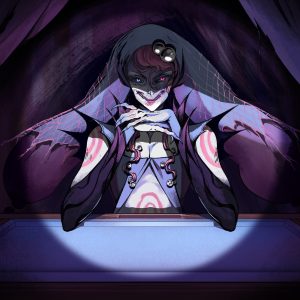
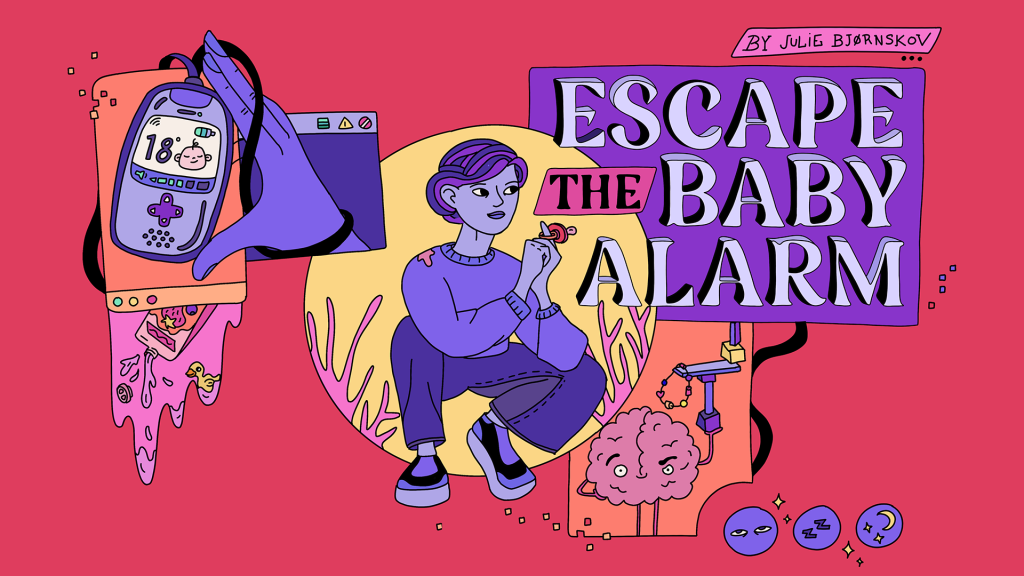
Parenthood does not exactly get the cosy puzzle game treatment very often, which is part of what makes Escape the Baby Alarm stand out straight away. Created by Danish developer Julie Normann Bjørnskov, the game blends escape-room-inspired puzzles with the mess, noise, care, and emotional weight of early parenthood. The result is something hand-drawn, heartfelt, a little surreal, and refreshingly honest.
Rather than turning parenting into a punchline or pushing it into the background, Escape the Baby Alarm puts those everyday moments front and centre. From sleep deprivation and sensory overload to love, pride, and the strange logic of life with a baby, it looks to turn lived experience into something playful, thoughtful, and deeply human.
We caught up with Julie to talk about drawing from personal experience, building puzzles around chaos, and creating a game that explores a side of life that games do not often make space for.
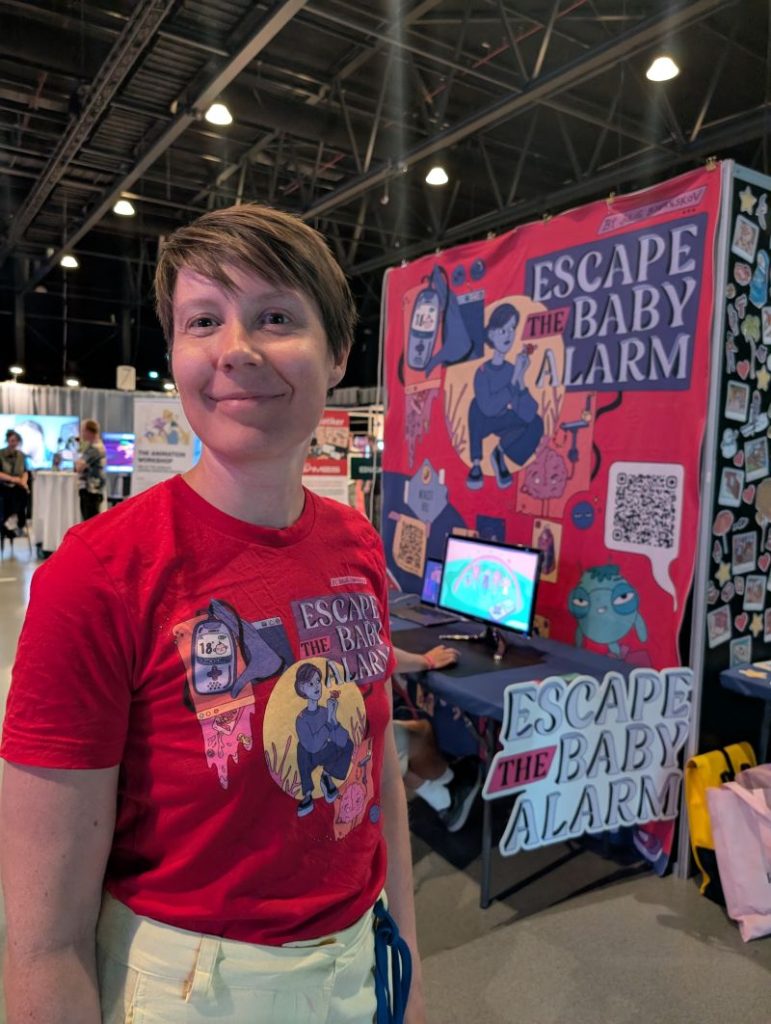
Escape the Baby Alarm takes a very different route from most puzzle games straight away. At what point did you realise early parenthood was something you wanted to explore through a game?
I have two children myself, now aged 4 and 7, but for me, becoming a parent for the first time was such a big and life-changing experience. There are so many facets and nuances in the transformation you go through when you become a mother, and all the emotions you experience are incredibly fascinating. The more I thought about it, the more important it felt to bring that perspective into the world of games. In Denmark, there are not many women who make games, and especially not mothers, so I felt I had something important to contribute to the gaming world, also because I have so much at heart that I want to express about it.
Escape the Baby Alarm is rooted in your own experience as a new mother. How did that personal starting point shape the project, and was there ever a moment where it shifted from being an idea into something you knew you had to make?
There’s a story I always tell when I present the game. It’s about an experience I had when my oldest daughter was just a couple of weeks old.
For the first time, I went out on my own to do some shopping with her. I only needed to go to the store to buy a single litre of oat milk, but suddenly, that short trip became something completely different. Everything had become dangerous. I had my daughter in a wrap and kept thinking: what if a shelf fell on her? People could cough on her, bump into her. What if she got too hot or too cold? Everything felt overwhelming and frightening.
But I managed to buy that one litre of oat milk and fought my way back home to the apartment. And there stood my husband and the roommate I was living with at the time. I remember they just casually said, “Well done.” But hello… where was the celebration? The confetti? The little brass band playing a victory tune? I did this! It should be celebrated!
That moment really captures what my game is about: in it, all the small victories of parenthood are celebrated. Even something as simple as putting a carton of oat milk in the fridge while holding a baby is a big achievement – and it deserves confetti.
A lot of games borrow from fantasy, horror, or adventure, but this pulls from baby alarms, exhaustion, mess, and daily routines. What interested you about turning those very real, very ordinary moments into something playful and interactive?
I have a love for magical realism, and for how an ordinary everyday life can suddenly gain an extra layer of surrealism and something supernatural. I find it fascinating, everything that happens between the conscious and the subconscious, and how you can be so deeply shaped by those subconscious layers.
That’s also why I think it fits so well with Escape the Baby Alarm, especially the sleepless nights where you drift in and out of dreams and wakefulness. It’s an interesting state, because the realistic world we know becomes blended with our subconscious world, and maybe there’s something in it that’s trying to tell us something. something we can use to develop ourselves or guide the direction we should take.
And parenthood is, of course, full of great and funny stories that can feel overwhelming when you’re in the middle of them, but with a bit of distance, they become really good entertainment.
There is a lovely contrast in how Escape the Baby Alarm sounds both chaotic and calm at the same time. How did you approach balancing the stress of early parenthood with the warmth, humour, and comfort that also seem central to the experience?
I use humour a lot because it’s a really good tool for telling slightly difficult stories, but also for shifting perspective on things. It can feel overwhelming to never be able to find your things because you’re so tired all the time, but at the same time, it’s also kind of funny to think that you’re so exhausted you’ve actually put your shoes in the fridge.
The whole game experience is calm, and there are no points or time pressure. I thought it was important that this game becomes a kind of breathing space where you can enjoy the journey and play at a relaxed pace, especially because the subject can bring up many emotions. Escape the Baby Alarm is also the kind of game I personally prefer, where you have time to immerse yourself and just enjoy the visual journey without having to rush. That’s something that is really lacking in the everyday lives of most parents.
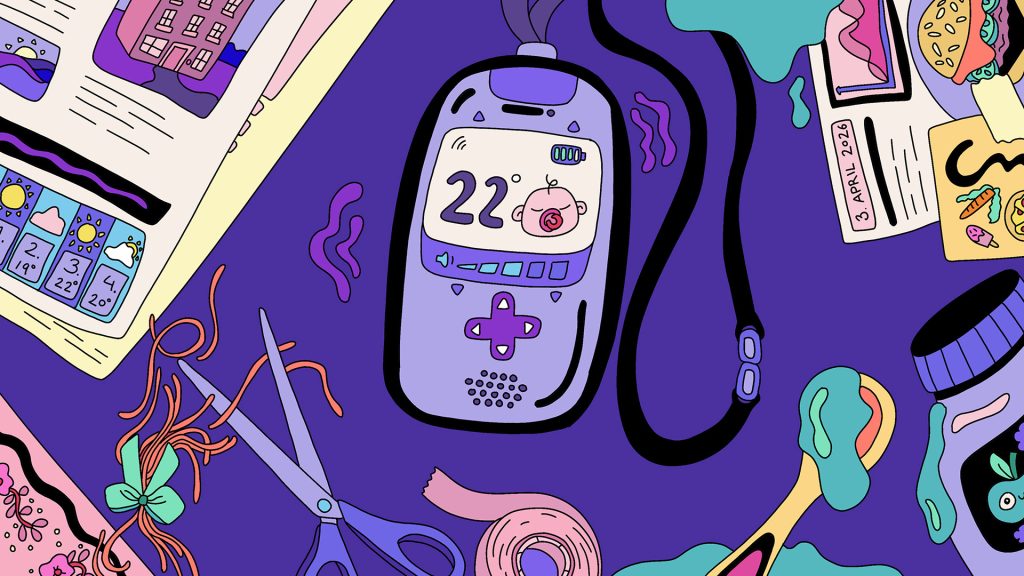
Escape-room elements feel like a clever fit here, because parenthood can probably feel like solving one strange puzzle after another. What made that structure the right one for Escape the Baby Alarm’s story?
That’s exactly what you’re saying. It’s a big puzzle trying to make parenthood fit together. I remember how you would plan all the naps and outings, and I had this feeling that if you just packed the right things and followed the right route over uneven ground, then everything would be perfectly fine.
Of course, it never really worked out perfectly to time the naps. But when it did, and when you remembered everything and had planned it all well, it was also the best feeling in the world. The feeling when you just managed to prevent a meltdown, because you remembered to bring your favourite book on the train!
That’s the feeling I hope the puzzle in Escape the Baby Alarm can bring to life as well.
The hand-drawn presentation of Escape the Baby Alarm sounds like a huge part of the game’s identity. How important was it for the visuals to feel personal, tactile, and perhaps a little imperfect in the way real life often is?
When I draw, I put a lot of small details into the work, some fun little moments, reactions, and emojis of how I feel while making the drawing. I really hope people can see that this is human-made, with a lot of love and a lot of imperfect details, because that is what it is to be a parent. You do not have a chance to make everything perfect, but you have a lot of love to give to the world.
In a way, it’s a form of loving recognition of everything parents out there do, which I translate into illustrations, one illustration at a time.
Your background spans illustration, animation, game design, sound, music, and graphic design. When working on Escape the Baby Alarm, which part of the creative process came most naturally first: the visuals, the mechanics, the mood, or the sound?
I always start with emotions and the mood I want to set. One of the things I am working on is atmosphere, and it can be very easy to imagine exactly what the precise mood should feel like. But bringing it to life often requires many combined elements. It is both the visuals, the game mechanics, the text, and the music that ultimately create the atmosphere together.
That is why I am also really happy that I can work with all these elements to evoke the exact feelings I want to bring forward.
And then I make a lot of sketches. I have the entire storyline of the game sketched out on long rolls of analogue paper.
You have spoken about wanting to create projects that touch people and make sense emotionally. When designing puzzles for Escape the Baby Alarm, how did you make sure they were not just clever to solve, but also meaningful within the emotional world of the game?
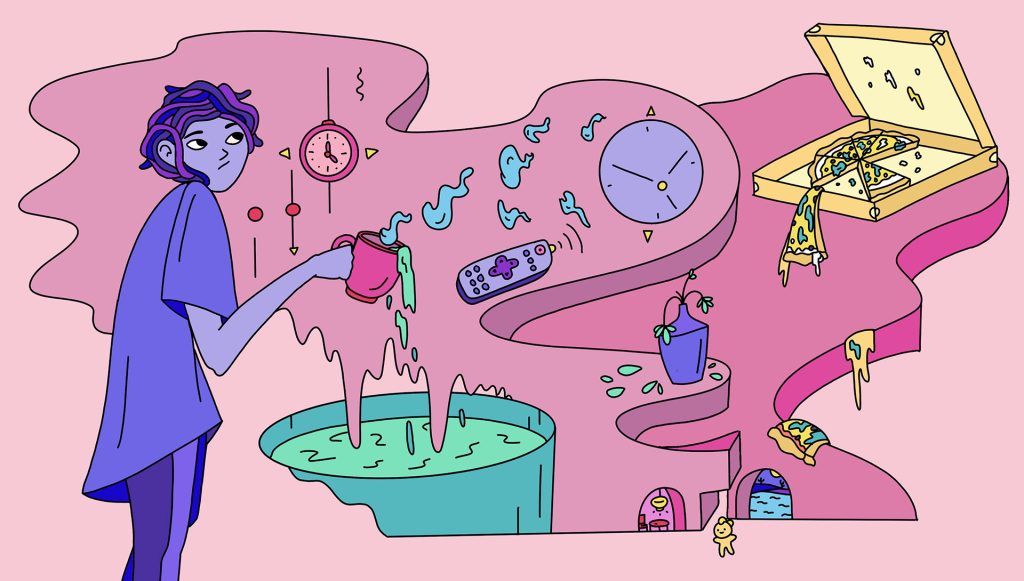
When I develop puzzles for Escape the Baby Alarm, I always start from a feeling. It can be a feeling of being overwhelmed, of everything spilling over and becoming too much. Lunchboxes that need to be packed, mornings, shoes that are always soaked from water, and time that is never enough, but sometimes also moves too slowly.
Then I work with these fragments and eventually shape them into a puzzle. There are often many thoughts behind my puzzles, and many of them might only be faintly felt. But I believe they somehow find their way out to the people who are meant to solve them.
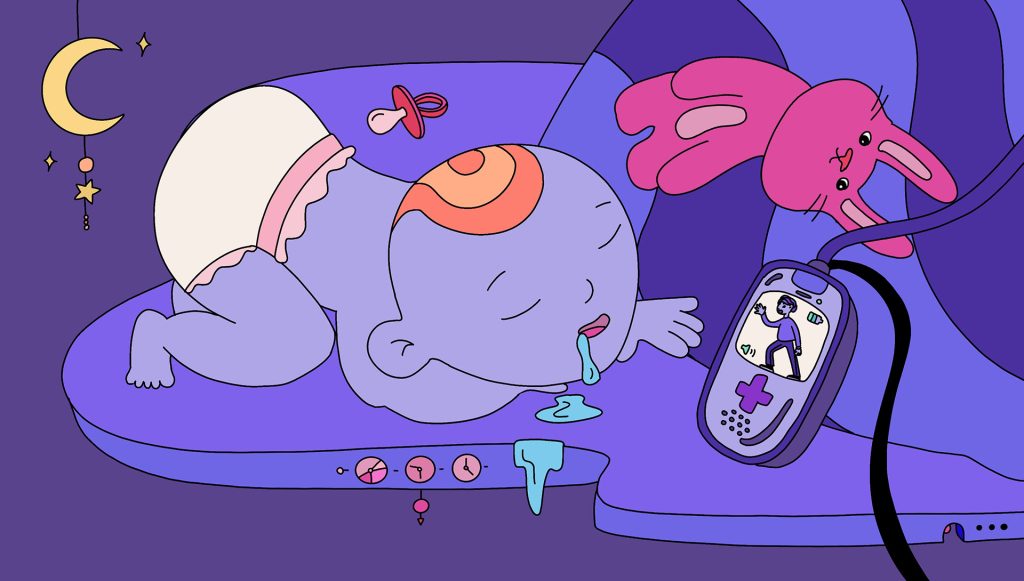
Parenthood is often talked about in extremes, either as pure joy or total chaos, but rarely in a way that holds both at once. Was it important for you to show the contradictions of that experience rather than tidy it into one clear tone when designing Escape the Baby Alarm?
For me, it’s about showing everything with honesty, and how emotions are often a complex mix of feelings, which makes it very complicated and nuanced.
If you see a parent yelling at a child, it often comes from concern, from a fear that something dangerous might happen to the child, rooted in a desire to protect and show love.
Whereas sometimes, you also present an image to the world of sitting and playing and being fully present with your child, but inside, you might actually be incredibly bored.
Parenthood contains so much; it holds so much, and I want to show it and be honest about that.
Do you think making a game like Escape the Baby Alarm changed how you looked at your own experiences as a parent, either while developing it or after stepping back and seeing the finished work take shape?
One of the reasons I’m making Escape the Baby Alarm is also to process my own experience of becoming a parent. I find it incredible how much I have developed myself and my view of people through being a parent and having children. I constantly become wiser about who I am as a parent, what I carry with me, and where I want to go.
And the game definitely helps me focus on some of those things and dare to get a little closer to my own feelings, because I think it’s important that they are included.
And when I look back on the whole journey I’ve been through (it’s now been a couple of years since my children were babies), I feel incredibly proud of myself for having made it through, and of my husband and me for creating such wonderful children.
That is the feeling I hope people take away from Escape the Baby Alarm: that they should be proud of what they do as parents. It is hard work, but it is worth it when you look at your wonderful children.
Games still do not often centre experiences like motherhood or early parenting in such a direct way. Did you feel you were filling a gap, or was Escape the Baby Alarm more about telling the story that felt most honest to you, regardless of what the wider games space tends to focus on?
This is definitely a story I needed to make. I had to create this story in order to move forward with my artistic work, because it is so important to me. At the same time, I’m glad to be able to fill that gap, because I hope it’s a gap that will be filled with many more to come.
What do you hope players take away from Escape the Baby Alarm, whether they are parents themselves, know someone going through that stage of life, or are just curious about a perspective games do not often explore?
I hope they enjoy the journey and the story, and become curious about the development one goes through as a parent, and see it as something positive, that we as human beings gain a kind of extra “superpower” by becoming parents. We learn to look a little more kindly at ourselves and at each other as parents, and to support one another in raising a whole generation of new, strong individuals, which takes a lot of work.
I hope people enjoy solving the puzzles and allow themselves to be surprised when things sometimes go in a different direction than expected, and that they keep trying until they hopefully make it through the whole game. And I really hope they find it fun, haha and that they can look at the chaos of parenthood with a bit of humour, because otherwise we’d probably all just be hiding in the pantry eating snacks in silence. If it can make people laugh along the way and feel proud of themselves, then I feel my mission is complete.
Looking back at the project now, was there a particular scene, mechanic, or moment that made you think, yes, this is exactly what I wanted Escape the Baby Alarm to say?
Yes, there is a scene at the end of Escape the Baby Alarm that is very special to me. It is a scene where you click through different layers of the main character, gradually revealing and blurring who she is underneath. For example, holes appear in her, and she transforms; she starts to forget who she is and feels insecure. But in the end, new things begin to grow through the holes. She finds herself and builds a new identity as a parent around that, without forgetting who she is.
It really sums up her entire development throughout the game, and I think the scene turned out incredibly well.
Finally, after turning such a personal and emotionally rich subject into a game, what has the response meant to you so far, and what do you hope comes next for both Escape the Baby Alarm and your creative work more broadly?
The response to Escape the Baby Alarm means so much because it is such a personal game. When people feel seen and reflected in it, it simply makes me incredibly happy.
It is my first game on Steam and my first longer game with so much personal depth, so I hope I can continue to grow from this experience. I have so many games I want to make, and so much I want to say. But next time it will probably not be quite as focused on becoming a new parent, because it is both emotionally intense and also extremely difficult to get a game out into the world, but it was important for me to release it.
I will still take the unique stories of family life and emotions with me into all the games I create in the future, but they will likely explore somewhat broader themes.
A big thank you to Julie Normann Bjørnskov for taking the time to speak with us about Escape the Baby Alarm and the ideas behind it. It is exactly the kind of game we love shining a light on at Indie-cent Exposure: creative, personal, a little unexpected, and unafraid to explore spaces games too often leave untouched.
Escape the Baby Alarm is proof that even the most familiar parts of life can become something thoughtful, playful, and memorable in the right hands. Sometimes all it takes is a fresh perspective, a strong creative voice, and maybe a baby alarm going off somewhere in the background.
Check out the Escape the Baby Alarm demo trailer below and play it during Steam Next Fest this week:
Enjoyed this little chat with Julie and the deep dive into Escape the Baby Alarm? Find more just like it over on our interviews page.