Keeping a crumbling underwater station alive already sounds stressful enough without discovering that one of your colleagues is actively trying to make everything worse.
That is the situation at the heart of Nifland.
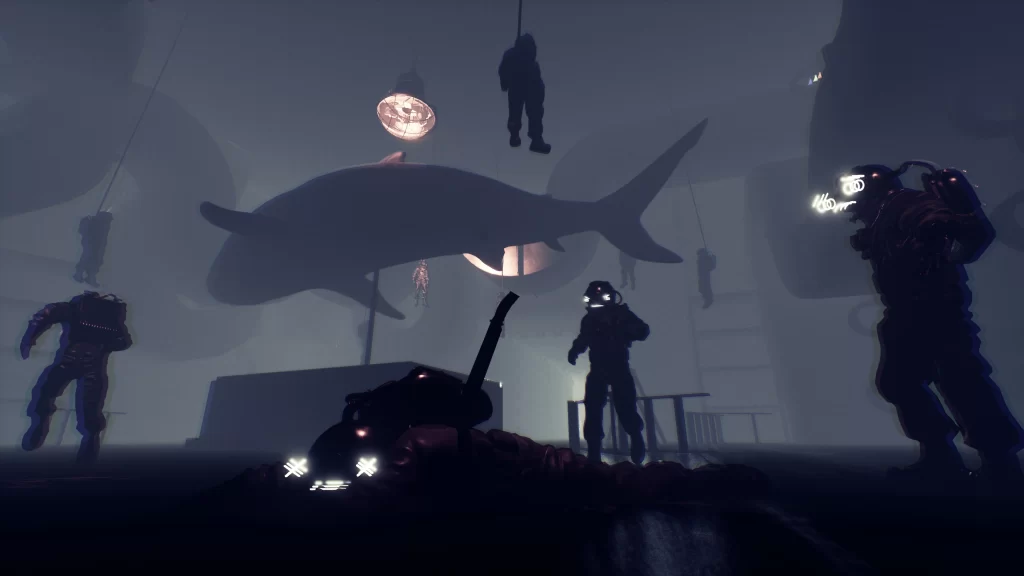
Developed by Teacups Corporation, Nifland is a multiplayer horror game for three to five players set somewhere beneath an endless ocean, although calling it simply an underwater facility does not quite cover things. The station exists inside a paranormal dream; its machinery does not always behave logically, strange creatures roam the corridors, and apparently even reality itself becomes increasingly difficult to trust.
Then there is the traitor.
While the crew scramble to complete maintenance jobs, manage their air and keep the station from collapsing around them, one player is secretly working against everyone else. Every unexplained disappearance, suspicious decision and conveniently timed disaster becomes another reason to start wondering whether the thing you should really be afraid of is wearing the same diving suit as you.
And somewhere amid all that existential underwater horror is a walrus you can ride.
Naturally, we had questions.
We caught up with Teacups Corporation to talk about building paranoia between friends, designing horror around dream logic, making accusations feel more meaningful than simply pointing fingers, and exactly how a rideable walrus fits into all of this.
Nifland announcement trailer
Before we sink too far beneath the ocean, could you introduce yourselves and tell us a little about Teacups Corporation? Who makes up the team, and how did Nifland first come about?
Teacups Corporation is a small independent team. We prefer to keep ourselves relatively private, so we don’t really put individual members at the centre of the project. We’d rather have people know NIFLAND than know us.
It’s actually difficult to say where the original idea for NIFLAND came from, because there wasn’t one big moment where we suddenly knew what the game was going to be. It changed a lot while we were making it, including some pretty fundamental things.
I think the one thing that survived all of those changes was the kind of feeling we wanted from it. You’re somewhere strange with a few other people; you need those people to survive, but at the same time you have reasons not to completely trust them.
From there we just kept adding things we found interesting and removing things that didn’t work. Horror, social deduction, survival mechanics and some really absurd ideas gradually ended up in the same game. At some point that strange combination stopped feeling like a collection of ideas and started feeling like NIFLAND.
The core combination of survival horror and social deduction immediately creates two different threats: whatever is lurking in the station and the person standing beside you. Was that clash between external horror and distrust within the group the starting point for the game?
It wasn’t really the starting point, but it became a big part of NIFLAND as we developed it. We liked the idea that players have more than one thing to worry about.
If something goes wrong, you don’t always know what caused it. Maybe it’s just the station, maybe it’s one of the creatures, or maybe another player did it. That uncertainty works really well with the traitor mechanic, because people can start blaming each other even when the traitor had nothing to do with what happened.
Nifland seems to have evolved quite significantly during development, with earlier public versions presenting a larger multiplayer group and a very different environment. What pushed you towards the current three-to-five-player underwater dream setting, and when did you realise this was the stronger version of the game?
We reduced the player count mostly because the game felt more dynamic with fewer people. It’s also just easier to get a match going when you don’t need a big group of players every time.
The old setting was much simpler. We had the ship, the forest and a few other areas, but eventually we wanted to do something stranger with NIFLAND. That’s where the underwater dream came from. It gave us much more room for surreal locations, creatures and things that wouldn’t really make sense in a normal setting.
We didn’t have a specific moment where we said, “this is the version.” It just started feeling more like the game we wanted to make.
Three to five players is relatively intimate for social deduction. Does deliberately keeping the group small make every disappearance, lie, and suspicious bit of behaviour feel more personal in Nifland?
Yeah, definitely. With only a few players, it’s much harder to disappear into the group. If someone goes missing or starts acting strangely, people notice pretty quickly.
It also means you spend more time around the same people during a match, so you start paying attention to what they’re doing. Even small things can become suspicious when you already know one of those people might be working against you.
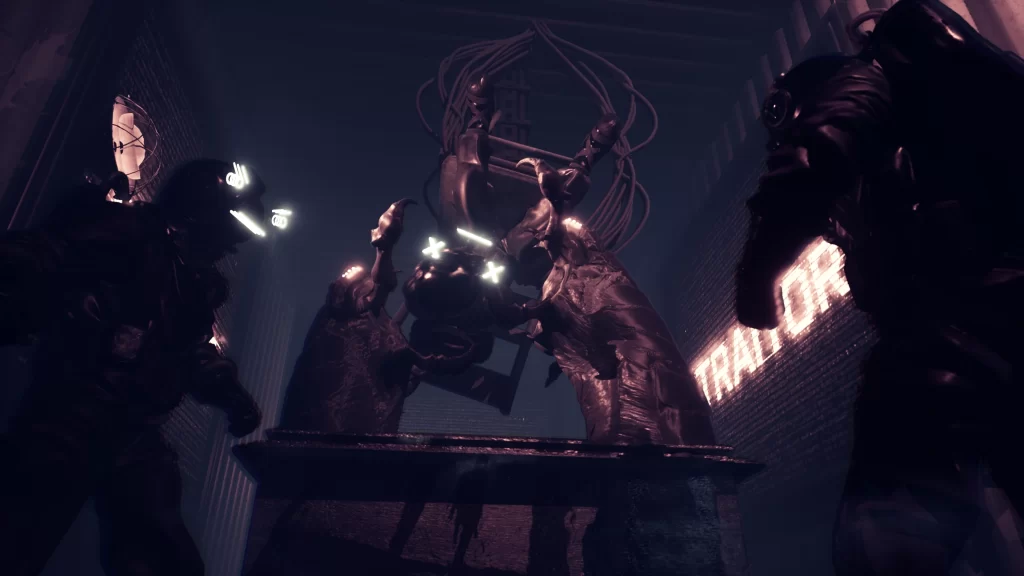
Maintenance tasks are not simply busywork here, because repairing machinery and responding to problems forces players to spread across the station. How do you design objectives that naturally create opportunities for paranoia rather than obviously shepherding somebody towards their inevitable murder?
Every player has their own tasks, and those tasks are in different parts of the station. So sooner or later the group has to split up.
The tasks give players a reason to move around the station, and being alone naturally creates opportunities for the traitor.
Air supply adds another layer of pressure on top of keeping the facility operational. How important is resource management to the horror, and can a clever traitor manipulate those systems in ways that look like ordinary mistakes?
Air is basically another thing players have to worry about while everything else is going on. You can’t spend the whole match thinking about the traitor because you still have to keep yourself alive.
The traitor can’t directly sabotage the air system at the moment. We have other tools for creating that kind of confusion, like the voice recording mechanic.
Social deduction games can sometimes become a contest of who can shout the loudest once accusations start flying. You describe proving somebody is guilty as much harder than accusing them. What systems are you using in Nifland to encourage actual deduction rather than simply mob rule?
Accusing someone is easy, but actually doing something about it is harder. You still have to catch that person, knock them out and get them to the cage. They can run away, fight back, or other players can interfere.
So even if everyone thinks they know who the traitor is, they still have to actually deal with that person before they can vote on what happens to them.
When the crew finally does decide somebody is the traitor, you hint that the station has a rather grotesque way of delivering judgment. Without completely spoiling it, how important was it that accusing someone carries some weight rather than being a disposable voting screen?
It was pretty important. We didn’t want it to end with a voting screen, and then the accused player just disappears.
If you’ve actually caught someone and brought them there, we wanted something to actually happen after the vote. I think it’s better not to say exactly what that is.
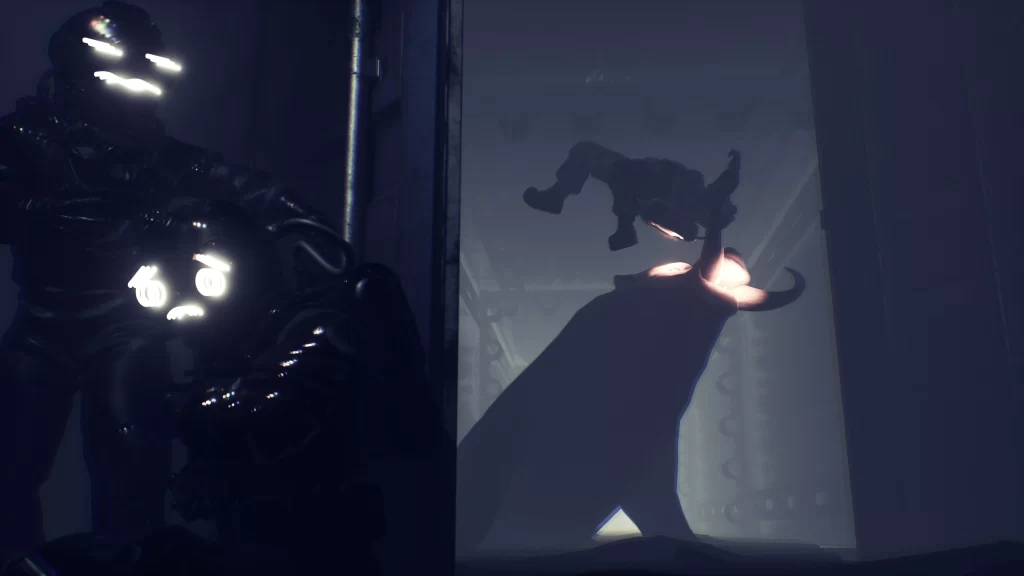
The traitor also needs to have fun without being so powerful that the rest of the crew never stands a chance. What can they actually do to sabotage a match, and how do you balance giving them meaningful tools while still leaving clues behind for observant players?
Most of the tools aren’t exclusive to the traitor. Everyone can use things like traps, mines or the pipe, so seeing someone with one of them doesn’t immediately tell you anything.
The traitor does have a couple of unique advantages. They can kill other players, and they have an ability that lets them see players through walls for a short time before it goes on cooldown. But a lot of what they do still uses the same tools everyone else has, which makes it harder to tell what their intentions actually are.
Then there are the entities roaming the station, some of which apparently follow rules that only really make sense inside the dream. How do you design enemies around strange behaviour while still giving players enough information to eventually learn how to survive them?
We don’t want the entities to be completely random. They can behave strangely, but there is still a rule behind what they do.
For example, the Stalker Doll can follow a player when nobody is looking at it, but it freezes when someone watches it. You might not understand that the first time you see it, but after a few encounters you can start figuring out how it works.
Dream logic gives you enormous creative freedom, but it could also become an excuse for absolutely anything to happen. What rules have you created for yourselves so Nifland remains mysterious without simply feeling random?
We don’t really have a rule for what can or can’t exist in the dream. That’s part of the fun of it. But if something actually affects the player, we try to make sure it follows some kind of logic.
Something can look completely absurd, and you might never get an explanation for why it’s there, but it shouldn’t just behave randomly.
Horror and absurdity seem deliberately intertwined too. You can encounter something deeply unsettling and then, apparently, ride a walrus. How do you judge when something ridiculous strengthens the surreal atmosphere rather than completely puncturing the tension?
We don’t really want NIFLAND to be serious all the time. The absurd stuff is part of the game too, and sometimes we just add something because we think it’s funny.
The walrus is probably the best example. There’s no deep reason why you can ride it. We just liked the idea. As long as something still feels like it belongs in NIFLAND, we’re usually happy to keep it.
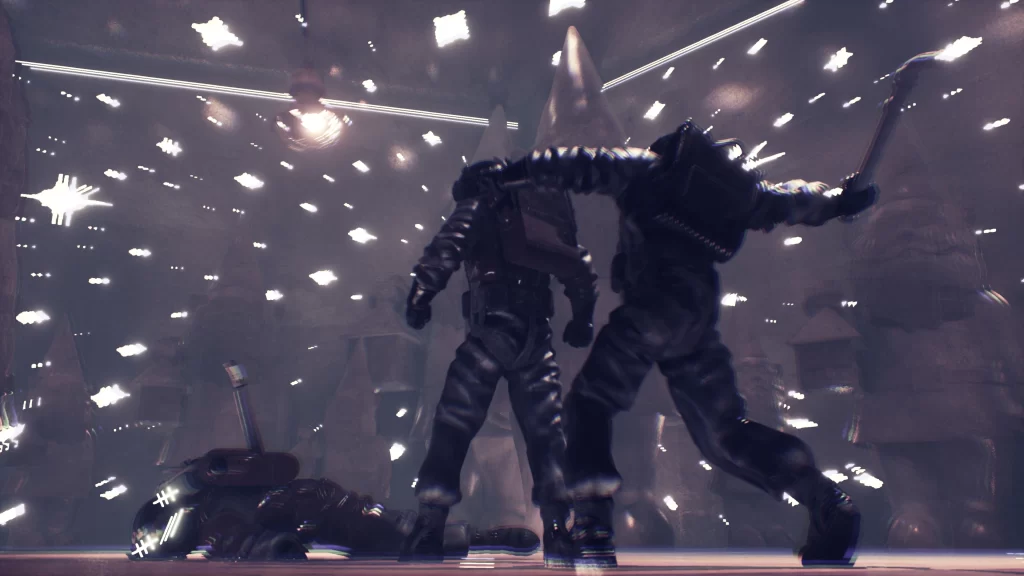
Multiplayer horror often creates comedy naturally because scared people do stupid things. How much are you designing specific funny moments in Nifland, and how much are you simply building systems and trusting players to generate the nonsense themselves?
We don’t really try to plan those moments. We put things into the game that we think will be fun to use, and then players usually find much funnier ways to use them than we expected.
That’s especially true in multiplayer. Give people traps, weapons, a traitor and a few strange creatures, and something stupid is going to happen sooner or later.
The first full trailer is now out, and Nifland is becoming much more visible to players. What are you most interested in learning once larger groups actually start getting their hands on it? Is there anything about social behaviour that you simply cannot properly test inside the development team?
Probably the social side of the game. Right now we’re testing with a pretty small group, and after a while everyone starts to know the game and each other too well.
I’m mostly curious to see how completely new players behave. They’ll probably misunderstand things, suspect people for reasons we never expected, or find ways to play that we haven’t even thought about. That’s difficult to test with the same group of people over and over again.
Finally, imagine five friends finish their first proper night with Nifland. What would make you happiest to hear afterwards: that the creatures terrified them, that they completely misjudged who the traitor was, or that an argument about something incredibly stupid followed them out of the game and into Discord?
Honestly, probably a mix of all three. I don’t think we’d want people to come away from NIFLAND remembering only the horror or only the social deduction.
If they got scared, accused the wrong person, did something stupid and then spent another ten minutes talking about the match afterwards, I’d be pretty happy with that.
A big thank you to Teacups Corporation for taking the time to speak with us about Nifland.
Social deduction works best when a game gives players just enough information to believe they understand what is happening, then gives them plenty of reasons to doubt it. Putting that inside a malfunctioning station governed by dream logic seems like a particularly cruel way of taking advantage of that.
There is plenty here that can kill you without any help from your friends. Machinery needs attention, air needs managing, creatures wander the corridors, and reality itself appears increasingly unreliable.
But none of those things can look you directly in the face and insist they definitely did not sabotage the station.
That honour belongs to your mates.
And if the paranoia all becomes a little too much, apparently there is always the walrus.
Check Nifland out on Steam now!
On the lookout for more Q&As like this Nifland one? Go over to our Interviews section, where we have chats with game devs and more folk in the gaming/indie world.